





A New Race in Low-Earth Orbit
For decades, low-Earth orbit (LEO) was the exclusive domain of national space agencies. Now, a paradigm shift is underway, driven by private enterprise and supported by NASA's strategy to become a customer rather than an owner of orbital infrastructure.
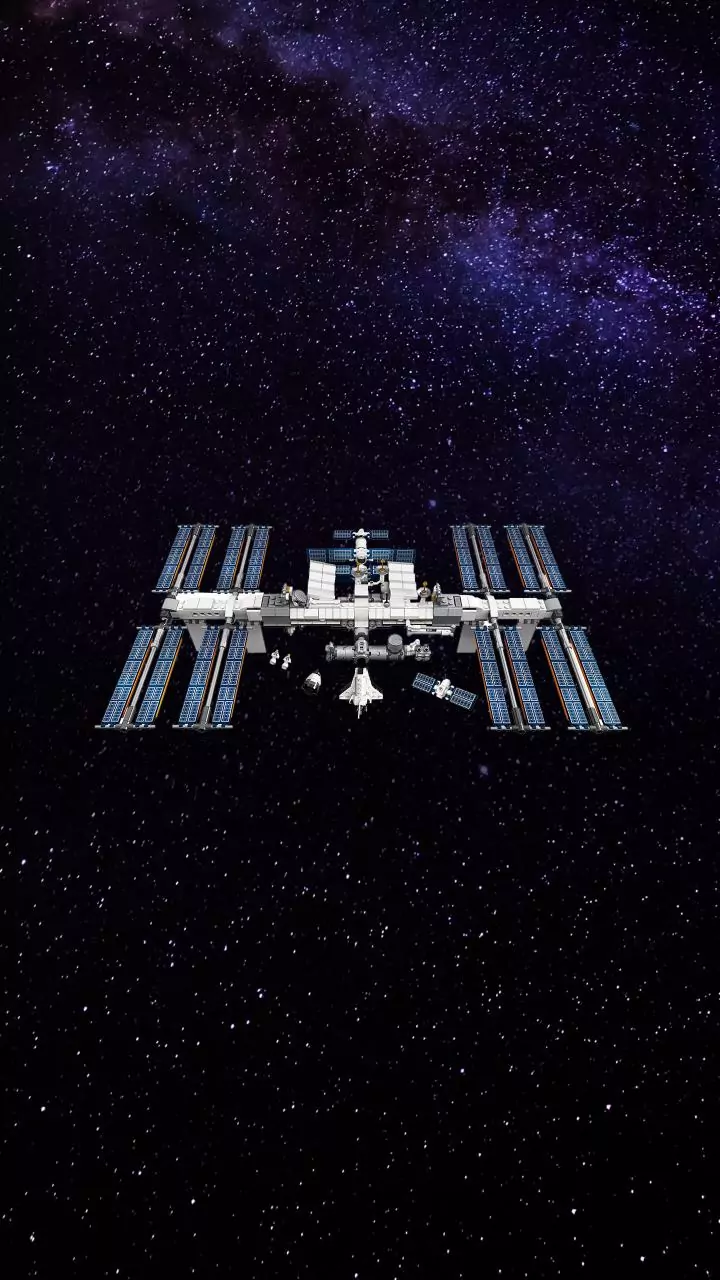
Companies like Axiom Space, Vast, and a partnership between Sierra Space and Blue Origin are at the forefront of this commercial space rush. Axiom Space is pursuing a unique strategy, initially attaching its own modules to the ISS before separating to become a free-flying station later this decade. The company has already flown multiple private astronaut missions to the ISS, gaining valuable operational experience. Meanwhile, California-based Vast is developing Haven-1, a single-module station intended to be the first standalone commercial platform in orbit, with a launch targeted for early 2027. Further on the horizon are ambitious projects like Starlab and Orbital Reef, envisioned as 'mixed-use business parks' in space.
The Inflatable Revolution
A key innovation powering this new era is the inflatable habitat. Instead of launching rigid metal cylinders, which are constrained by the size of a rocket's fairing, companies are developing expandable modules. These structures launch in a compressed state and inflate in orbit to create a much larger internal volume for the same mass. Sierra Space's LIFE (Large Integrated Flexible Environment) habitat is a leading example, designed to inflate into a three-story structure that can comfortably house four astronauts with room for science labs. These soft-good structures are far from being simple balloons. They are constructed from multiple layers of high-tech, interwoven fabrics like Kevlar that provide robust protection from micrometeoroid impacts and radiation, in some cases superior to traditional aluminum modules. The technology, first trialed by NASA and later advanced by Bigelow Aerospace with its BEAM module on the ISS, is now mature enough to form the backbone of entire commercial stations.
Science and Manufacturing in Microgravity
The primary purpose of these new stations is to create unprecedented access to microgravity for research and manufacturing. The near-weightless environment of LEO offers unique advantages. Without gravity-driven convection, it's possible to grow purer crystals for semiconductors and pharmaceuticals. In biology, scientists can study disease progression and cell behaviour in ways that are impossible on Earth, leading to potential breakthroughs in medicine. Bioprinting tissues and even organs is another promising field, as the delicate structures aren't crushed by their own weight during formation. Axiom Space is actively building a university alliance to promote access to microgravity research, aiming to lower the barrier for entry. Companies also see a future for in-space manufacturing of high-value products, from exotic fiber optics to specialized metal alloys that benefit from the absence of gravity-induced defects.
Beyond the Science Lab
While science is the anchor tenant, the business model for these private stations is diverse. They are being designed to support a range of activities, including space tourism, media production, and sovereign astronaut programs for countries without their own space capabilities. The goal is to create a thriving LEO economy where NASA is just one of many customers. This transition is critical for maintaining a continuous U.S. presence in orbit after the ISS is deorbited, a key strategic goal to avoid ceding leadership in space. The success of these commercial ventures relies heavily on the falling cost of launches, driven by reusable rockets from companies like SpaceX. By providing reliable and more affordable access to orbit, these private stations are set to unlock a new chapter of human activity in space, transforming it from a frontier of exploration into a place of business.