





A Mindset of Total Redundancy
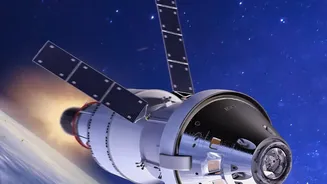
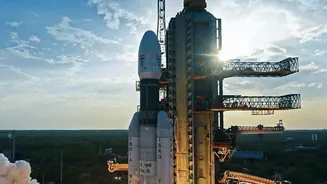
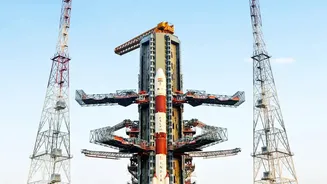
The term 'zero-defect' in the context of Gaganyaan is about a culture of perfection and exhaustive preparation. Human safety is paramount. This means every single component, from the launch vehicle to the crew module, must be 'human-rated'—a certification
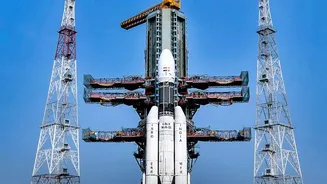
that involves layers of redundancy and rigorous testing far beyond what's required for a satellite launch. ISRO's approach is to anticipate failures and build systems that can withstand them. This involves multiple backup systems for every critical function, ensuring that if one part fails, another seamlessly takes over. This philosophy is embedded in every stage, from design and manufacturing to the extensive series of qualification tests.
The Crew Escape System: A High-Speed Ejection Seat
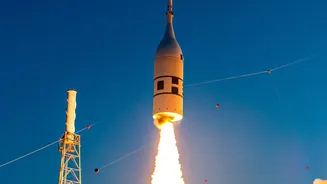
The most critical moments of a mission are at the launch pad and during the ascent. If a catastrophic failure occurs on the rocket, the Gaganyaan’s Crew Escape System (CES) is the astronauts' ultimate lifeline. This system is a set of powerful, quick-acting solid-fuel motors positioned atop the crew module. If the onboard computers detect a serious anomaly, the CES can ignite in milliseconds, pulling the crew module and its occupants away from the failing rocket at incredible speed. ISRO has successfully conducted multiple tests of this system, including a Pad Abort Test in 2018, which demonstrated a successful escape from a simulated emergency on the launch pad itself. Another test flight successfully demonstrated the system's ability to work during ascent at high speed.
A Symphony of Parachutes for a Safe Return
Getting the astronauts safely back to Earth is as challenging as launching them into orbit. The Gaganyaan crew module relies on a complex, ten-parachute deceleration system to slow its descent before splashing down in the sea. The sequence is meticulously choreographed: first, two small parachutes deploy to separate the apex cover, followed by two drogue parachutes that stabilise the capsule and significantly reduce its speed. Finally, three large main parachutes are extracted to ensure a gentle landing. ISRO, in collaboration with DRDO, has conducted numerous Integrated Air Drop Tests (IADT), dropping a mass equivalent to the crew module from aircraft like the IL-76 and Chinook helicopter to validate the performance and reliability of this crucial system under various conditions. The system even has built-in redundancy, designed to land safely even if one of the three main parachutes fails to open.
Creating a Habitable Bubble in Space
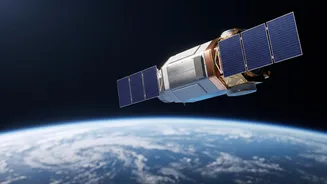
Once in orbit, the astronauts' survival depends on the Environmental Control and Life Support System (ECLSS). This system is responsible for creating a miniature, Earth-like biosphere inside the crew module. It provides a continuous supply of oxygen, removes carbon dioxide exhaled by the crew, and filters the air of any contaminants. The ECLSS also maintains the cabin at a comfortable temperature and pressure, and manages humidity to protect both the crew and the sensitive electronic equipment. For the short duration of the Gaganyaan mission, all essential supplies like oxygen and water are carried from Earth, and waste is stored for later disposal.
Testing Every Possible Scenario
The path to a human-rated system is paved with relentless testing. Before any astronaut boards Gaganyaan, a series of uncrewed test flights are planned to demonstrate the technology's readiness. These demonstrator missions will validate every aspect of the spacecraft, from the launch and orbital manoeuvres to the fiery re-entry and splashdown. Recent tests have also qualified other critical systems, such as the Crew Module Uprighting System, which ensures the capsule orients correctly after splashing down in the ocean, and the mechanisms that disconnect the crew module from the service module before re-entry. Each successful test builds confidence and brings ISRO one step closer to ensuring the safety of India's future vyomanauts.