






The Persistent Problem of Water Quality
Across India, access to reliably safe tap water is not a guarantee. Contamination from industrial and agricultural runoff, inadequate sanitation, and aging infrastructure can introduce a host of harmful substances into the water supply, from chemical
pollutants and heavy metals to dangerous pathogens. While several water purification technologies exist, many are too expensive, energy-intensive, or complex for widespread, decentralised use, especially in rural or low-income areas. This creates a pressing need for a solution that is not only effective but also affordable, scalable, and sustainable. The answer, it turns out, might be lying in heaps at rice mills across the country.
What Exactly Is Biochar?
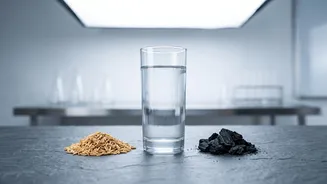
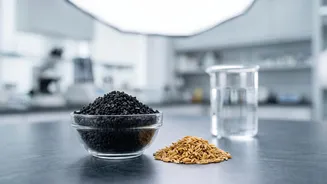
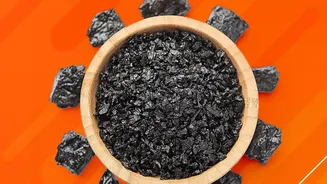
Think of biochar as a supercharged version of charcoal. It is a carbon-rich material produced by heating organic matter, like wood, manure, or agricultural waste, in a closed container with very little oxygen. This process, called pyrolysis, is different from simply burning the material, which would produce mostly ash. Instead, pyrolysis creates a stable, highly porous substance. The resulting biochar has an incredibly large surface area at a microscopic level, riddled with nooks and crannies. While traditionally used to improve soil fertility, scientists and engineers have found that this unique structure makes it an excellent material for filtration.
Why Rice Husks are the Ideal Ingredient
While many organic materials can be turned into biochar, rice husks are a particularly promising feedstock for several reasons. First, they are an abundant waste product. India is one of the world's largest rice producers, generating millions of tonnes of rice husks annually that are often discarded or burned. Using this waste gives it value and creates a circular economy. Second, the unique composition of rice husks, which are high in silica, helps create a sturdy biochar with an excellent porous structure ideal for trapping contaminants. The process is straightforward and can be done using relatively low-tech methods, making local, community-scale production feasible.
The Science of Clean Water
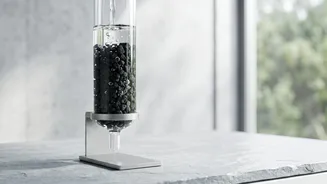
The magic of biochar filtration lies in a process called adsorption. Unlike absorption, which is like a sponge soaking up water, adsorption happens when contaminants physically stick to the surface of the biochar. As water passes through a rice husk biochar filter, the vast network of pores traps suspended solids. On a chemical level, the massive surface area provides countless sites for organic pollutants, pesticides, and even some heavy metals to bind to, effectively pulling them out of the water. Some studies show that biochar filters can be even more effective than standard activated carbon for removing certain types of emerging pollutants. For best results, biochar is often used as one stage in a multi-barrier system, often after sand and gravel filters have removed larger particles.
The Low-Cost, Sustainable Advantage
This is where rice husk biochar truly shines. Its primary raw material is an agricultural waste product, which is often available for free or at a very low cost. The production process (pyrolysis) can be designed to be energy-efficient, with some systems using the gases produced during the process to power themselves. This makes it a significantly cheaper alternative to commercial activated carbon, which is often made from non-renewable sources like coal and requires a more energy-intensive activation process. The resulting filter systems are simple to build and maintain, making them a powerful tool for empowering local communities to manage their own water safety.
Challenges and the Road Ahead
Despite its immense potential, there are hurdles to overcome for widespread adoption. The effectiveness of biochar can vary depending on the feedstock and the exact temperature and conditions of the pyrolysis process. Ensuring consistent quality and developing standardised guidelines are crucial next steps. Research is also ongoing to better understand the filter's lifespan and the best ways to safely dispose of or regenerate the 'spent' biochar once its pores are saturated with contaminants. However, with organisations developing handbooks and promoting open-source designs, the movement to bring this technology from the lab to villages is gaining momentum.