


A Frozen Time Capsule
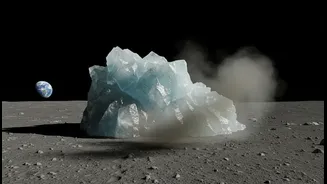
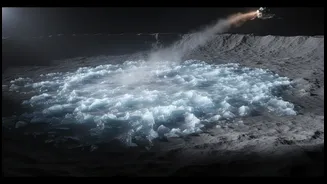
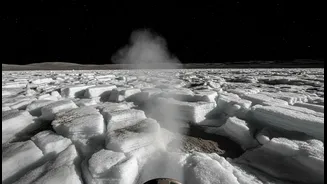
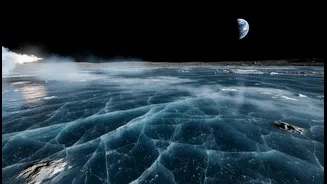
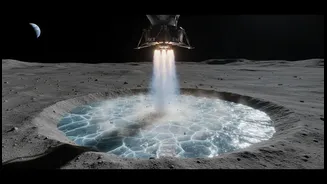
For decades, the Moon was considered a dry, barren world. But recent discoveries have confirmed the presence of water ice, particularly in permanently shadowed regions (PSRs) at the lunar poles. These areas, which haven't seen sunlight in billions of years,
are incredibly cold, acting as cosmic refrigerators. The ice locked within these craters isn't just water; it’s a priceless scientific archive. This ancient ice is thought to contain materials from comets and asteroids that impacted the Moon long ago, preserving prebiotic organic molecules—the potential building blocks of life. By studying this ice, scientists hope to unlock secrets about the origin of water in our inner solar system and maybe even the origins of life on Earth. Because Earth's geology is so active, our planet has erased most of this ancient history. The Moon, by contrast, has kept the receipts.
The Problem with Landing
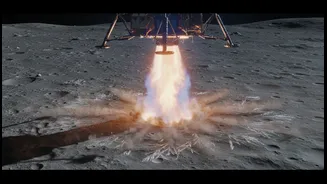
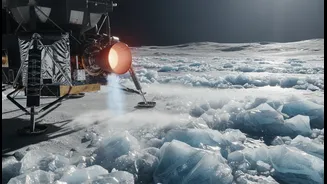
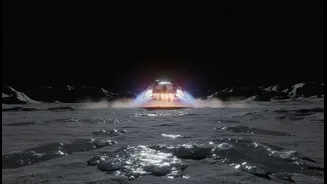
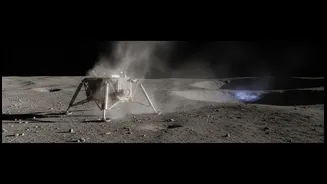
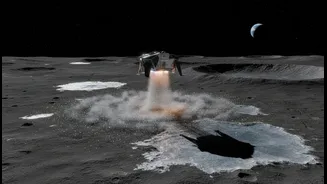
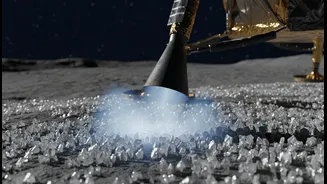
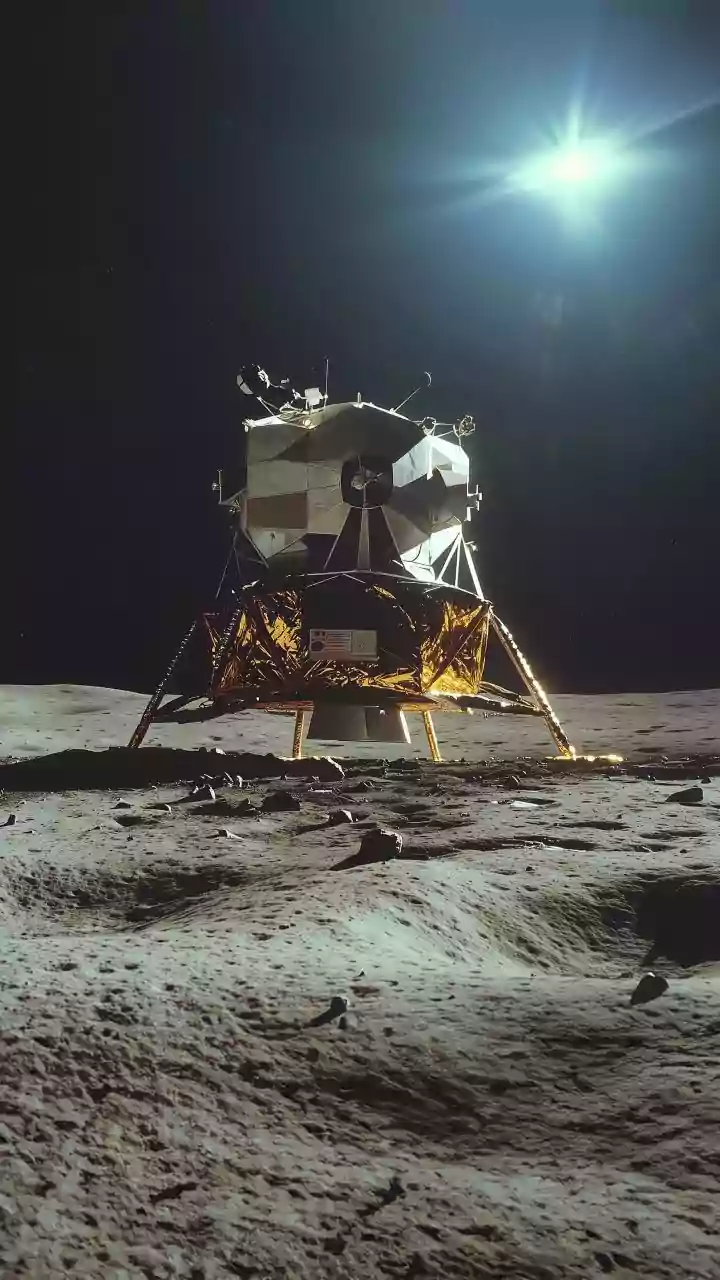
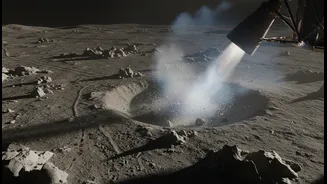
The irony is that our method of arrival threatens this pristine environment. A lunar lander, whether for a robotic or human mission, must fire powerful rocket engines to slow its descent. This process releases a significant plume of exhaust gases. In the near-vacuum of the lunar environment, these gases expand rapidly and can travel vast distances. Computer simulations from researchers at Johns Hopkins APL and the European Space Agency show that exhaust from a single mid-sized lander can spread across the entire Moon in a matter of hours or days. The primary components of this exhaust, such as water vapor and unburnt fuel like methane, don't just dissipate. They hop across the lunar surface in a process called ballistic sedimentation until they find a place cold enough to freeze and settle—the very same permanently shadowed craters that hold the ancient ice.
What's at Stake for Science and Business
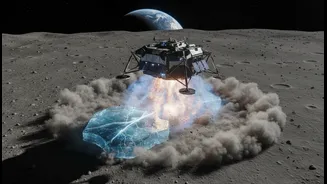
This man-made contamination poses a serious threat. When exhaust gases freeze onto the native ice, they can obscure or alter its chemical signature. A key goal for scientists is to analyze the isotopes within the lunar ice to determine its origin. Frozen exhaust from Earth-made rockets could hopelessly confound those measurements, making it difficult to distinguish between what is native to the Moon and what we brought with us. This isn't just a scientific dilemma; it has business implications. The lunar ice is a cornerstone of plans for a sustainable human presence on the Moon. It can be mined for drinking water, breathable oxygen, and, crucially, can be split into hydrogen and oxygen to create rocket propellant. A future lunar economy could depend on this resource. If our early exploration efforts contaminate these reserves, it could complicate future extraction and purification processes.
A Global, Persistent Issue
Recent studies underscore the scale of the problem. One simulation showed that within a few months, about 20% of the water vapor from a lander's exhaust could freeze out near the poles. Another study focusing on methane, a key organic component in some propellants, found that over half of the exhaust could become trapped in the polar cold traps within roughly seven Earth months. Surprisingly, the contamination is global. A landing near the south pole can lead to significant deposits at the north pole, as molecules hop across the lunar surface. While some of the contamination may be temporary and eventually sublimate away, the frequency of planned missions under programs like Artemis means new layers of pollutants could be added before the old ones disappear. With heavier landers planned for future missions, the amount of exhaust will only increase.
Finding a Cleaner Path Forward
The scientific community is not calling for a halt to exploration, but for a smarter, more careful approach. Researchers are urging that monitoring the spread of exhaust gases become a routine part of mission planning. Potential mitigation strategies include designing landers with cleaner-burning engines or choosing landing sites more carefully. For example, landing in slightly warmer areas might prevent some gases from immediately freezing, though this must be balanced with mission objectives. There's also a critical need to conduct baseline studies of the lunar environment while it is still relatively pristine. Understanding the current state of the lunar volatiles is essential before widespread activity begins. As the European Space Agency's planetary protection officer, Silvio Sinibaldi, noted, the goal is to protect our investment in space science from being hindered by our own activities.