

Why the South Pole is Prime Real Estate
The Moon's South Pole is a region of stark contrasts and immense opportunity. It features what are known as "permanently shadowed regions" or PSRs—crater floors that have not seen direct sunlight in billions of years. These areas are among the coldest
places in our solar system, making them perfect cold-storage traps for water ice. Conveniently, nearby crater rims and mountains are in near-constant sunlight, providing an ideal location for solar panels to power a future base. This unique combination of eternal darkness and near-eternal light makes the South Pole the most strategic location for building a sustainable lunar outpost, a concept NASA calls the Artemis Base Camp.
Water: The Liquid Gold of Space
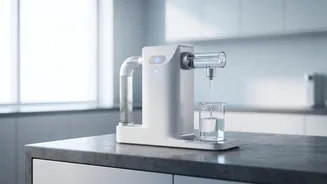
On Earth, water is essential for life. In space, it is the ultimate currency. The enormous cost of launching materials from Earth means that finding resources on-site is a game-changer. This concept is called In-Situ Resource Utilization (ISRU), and water is its most valuable target. The ice found at the South Pole can be melted and purified for drinking. More importantly, through a process called electrolysis, the water molecules (H2O) can be split into their component parts: breathable oxygen for life support and liquid hydrogen, a powerful rocket propellant. The ability to refuel spacecraft on the Moon would transform it from a destination into a deep-space service station, a critical stepping stone for future missions to Mars and beyond.
The Blueprint for a Lunar Outpost
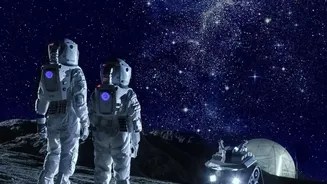
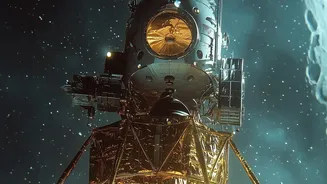
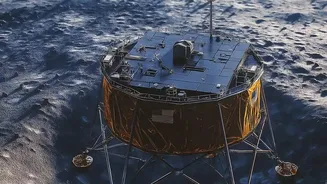
The Artemis Base Camp won't be built overnight. NASA's plan involves a phased approach, starting with robotic missions to scout the terrain and test technologies. The blueprint for the base itself includes several key elements. A Foundation Surface Habitat will serve as the astronauts' home and laboratory, designed to support a crew of four for up to a month at a time. For mobility, astronauts will use an unpressurized Lunar Terrain Vehicle (LTV) for short trips, much like an advanced moon buggy. For longer expeditions, a larger, pressurized Habitable Mobility Platform will function as a high-tech camper van, allowing crews to explore for weeks on end. Power is another critical component, with plans for advanced solar arrays and even a small nuclear fission power unit to ensure the base has electricity through the two-week-long lunar nights.
The Robotic Prospectors and Miners
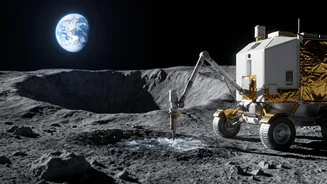
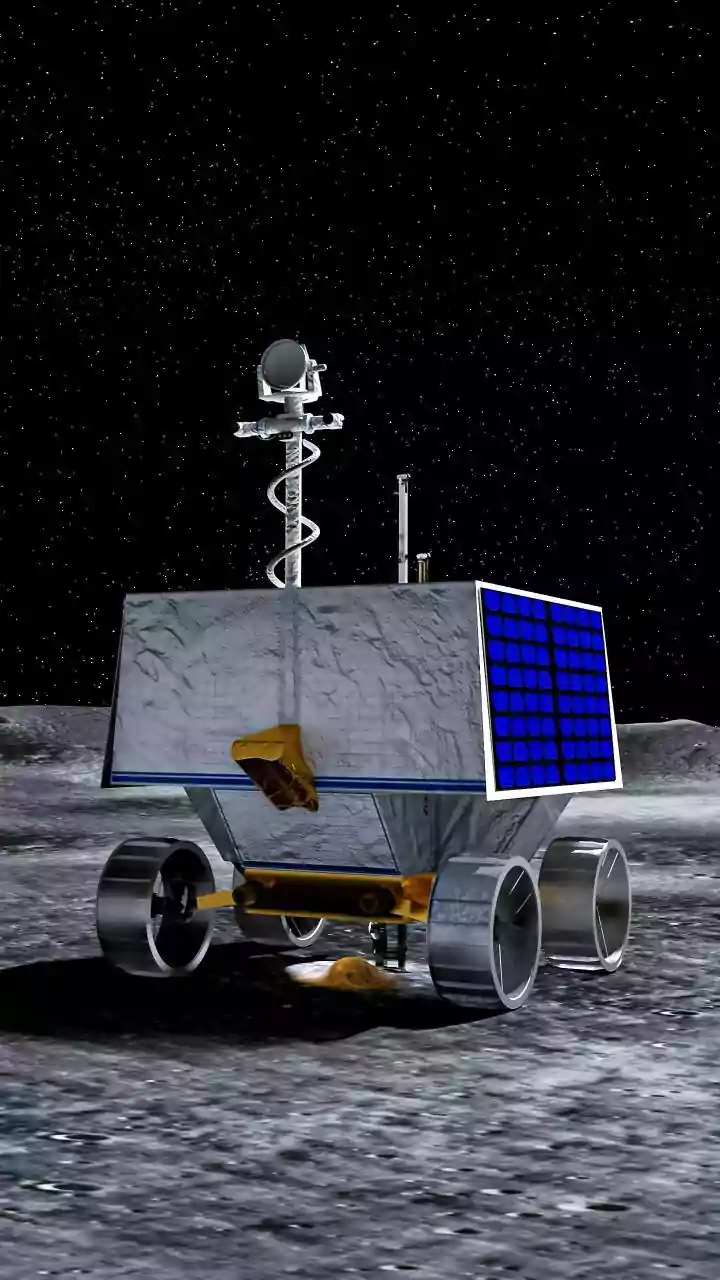
Before astronauts can set up camp, NASA needs to know exactly where the most accessible, high-concentration ice deposits are. That's where robotic prospectors come in. A key part of this effort was the planned VIPER (Volatiles Investigating Polar Exploration Rover), a golf-cart-sized robot designed to drive into shadowed craters, drill into the lunar soil (regolith), and directly analyze the ice. Although the specific VIPER mission was cancelled, the objective of robotic resource mapping remains central to the Artemis program. Future missions, including those from commercial partners, will carry instruments to hunt for these deposits. Once located, extraction could involve robotic miners that heat the frozen regolith, causing the ice to turn into vapor which is then collected and stored.
Overcoming the Lunar Challenges
Building and living on the Moon is one of the greatest engineering challenges humanity has ever faced. The environment is incredibly hostile. There is no atmosphere to protect against radiation or micrometeoroid impacts. Temperatures can swing by hundreds of degrees, from scorching heat to unimaginable cold. Perhaps the most difficult challenge is the lunar dust, or regolith. This fine, abrasive powder is as sharp as tiny shards of glass and clings to everything due to static electricity. It can damage spacesuits, clog machinery, and pose a health risk to astronauts if inhaled. Successfully establishing the Artemis Base Camp will require innovative solutions to overcome all of these dangers.