









The Perennial Problem of Predictable Delays
Jaipur's growth story is consistently undermined by a fundamental flaw: the inability to start projects on time. Whether it’s pre-monsoon drain cleaning, road repairs, or major infrastructure undertakings, work often commences perilously late. An hour
of rain is enough to expose the city's lack of preparedness, causing widespread waterlogging and traffic snarls. This isn't an unforeseen calamity; it’s a recurring administrative failure. Last-minute tenders and delayed work orders mean that by the time workers are on the ground, the window of opportunity has often closed. For instance, residents and former councillors recently pointed out that with monsoon approaching, crucial tree-pruning contracts had not been renewed, posing a safety risk from falling branches—a problem that should have been addressed months prior.
Case Study 1: Monsoon Mayhem
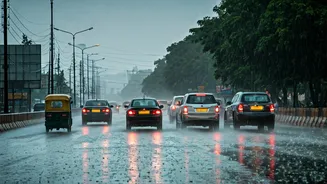
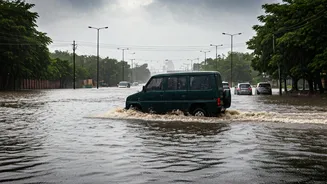
Every year, civic bodies like the Jaipur Development Authority (JDA) and Jaipur Municipal Corporation (JMC) claim to be prepared for the monsoon. Yet, every year, the first significant showers turn major roads into submerged canals and expose the hollowness of these claims. In late June 2026, pre-monsoon showers led to severe waterlogging at key locations like Jaipur Railway Station and the Walled City, with open road excavations filling with water to become dangerous hazards. Former officials have attributed this to maintenance tenders not being issued on time. The problem extends to heritage structures as well; blocked drains on historic gates cause rainwater to cascade down walls, leading to long-term damage that a timely cleaning could prevent. This reactive approach, where work only begins after public outcry or visible crisis, ensures the city is always one step behind.
Case Study 2: The Traffic Tangle
Jaipur's traffic congestion is a critical issue, with vehicle density at a worrying high. Major projects designed to alleviate this often become part of the problem due to staggering delays. The Civil Lines Railway Overbridge (ROB), initiated in 2021 with an 18-month deadline, is only expected to open in July 2026 after five years of construction. For years, commuters have endured disruptions, and the unfinished project even became a political point of contention, dubbed an "accident-prone zone" due to the lethargy. Similarly, the slow pace of metro construction has been cited as a major contributor to traffic woes, reducing road width and creating bottlenecks. While plans for a second phase of the metro were recently announced, the targeted completion is not until 2031. For daily commuters, these extended timelines mean years of continued struggle on congested roads.
Why Does This Keep Happening?
The reasons for these delays are systemic. They range from a complex web of governance split between the JDA and JMC, to political tussles and bureaucratic inertia. Chief Minister Bhajan Lal Sharma himself has warned officials that delays in public projects due to administrative laxity will not be tolerated, specifically pointing to hold-ups in approvals, land acquisition, and tendering processes. External factors, like a 40% spike in bitumen costs, can also derail road projects, but the core issue often lies within the administrative framework. Furthermore, ambitious but flawed long-term planning, such as the draft Master Plan 2047, which experts warn is scientifically unsound, threatens to further strain civic services and infrastructure by improperly expanding the JDA's jurisdiction. This creates a cycle where both immediate tasks and long-term visions are perpetually stalled.
The Only Way Forward: Start Early
The solution, while challenging, is simple in its concept: planning and execution must begin significantly earlier. For seasonal tasks like drain cleaning and tree pruning, tenders and work orders should be finalized in the winter, not weeks before the monsoon. JMC guidelines themselves state that pruning should be completed between April and June, a deadline that is frequently missed. For large infrastructure projects, streamlining the approval process, as directed by the Chief Minister, is critical. This requires a fundamental shift in mindset, from reactive crisis management to proactive, calendar-driven implementation. It means treating deadlines not as aspirational goals, but as absolute finalities, with the planning timeline adjusted backward from there. An early start provides a buffer for unexpected challenges—like supply chain issues or legal hurdles—preventing them from becoming project-derailing catastrophes.