





A New Motor for a Special Task
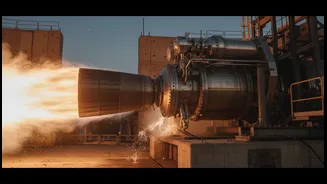
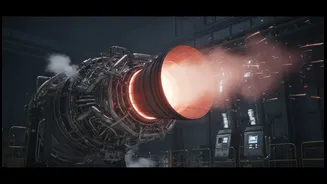
On July 3, 2026, the Indian Space Research Organisation (ISRO) successfully conducted the first ground test of a new solid rocket motor at the Satish Dhawan Space Centre in Sriharikota. This wasn't for a new satellite launch vehicle in the traditional
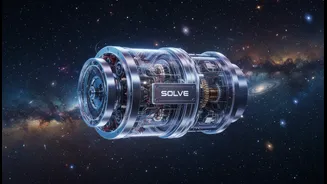
sense. Instead, this motor will power the Sub-Orbital Launch Vehicle for Experiments (SOLVE). SOLVE is a custom-built rocket designed for one critical purpose: to repeatedly test the safety systems for India’s ambitious Gaganyaan human spaceflight mission. According to ISRO, the motor performed exactly as expected, a significant milestone for the program.
The SOLVE Platform Explained
Think of SOLVE as a dedicated crash-test vehicle for space. Its job isn't to reach orbit, but to carry the Gaganyaan crew module to a sub-orbital altitude of about 10 to 17 kilometres and then release it. This allows engineers to simulate various flight conditions and test the module's complex recovery sequence without using a full-scale, expensive LVM3 rocket for every trial. The motor itself is a modified version of the proven strap-on boosters used on ISRO's workhorse rocket, the PSLV. Key modifications include a slower-burning propellant and a new thrust control system, designed to meet the specific requirements of these crucial safety tests.
The Parachute System's Critical Role
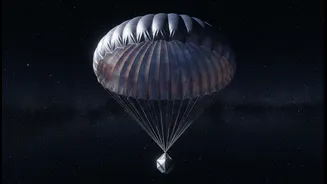
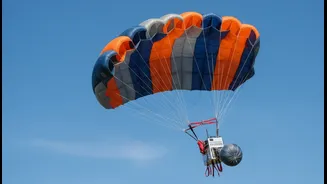
The primary system being validated by SOLVE is the crew module's parachute-based deceleration system. Getting astronauts into orbit is only half the mission; bringing them home safely is the ultimate objective. Once the crew module separates during its return or during an abort scenario, it needs to slow down dramatically for a safe splashdown in the sea. This is achieved through a meticulously choreographed sequence of 10 different parachutes. This includes smaller parachutes to stabilize the capsule and larger ones to slow its final descent. The SOLVE vehicle provides a flexible, cost-effective way for ISRO to test this entire parachute sequence repeatedly, ensuring it is reliable enough to trust with human lives.
Building Confidence, One Test at a Time
Human spaceflight is an endeavour where there is no margin for error. Safety systems like the Crew Escape System—which pulls the capsule away from the rocket in a launch emergency—and the parachute recovery system are non-negotiable. They must be proven to work flawlessly under every conceivable condition. This successful motor test for the SOLVE vehicle doesn't just validate a piece of hardware; it validates ISRO’s methodical and safety-first approach. Every successful ground firing and sub-orbital test builds a mountain of data and confidence, paving the way for the day Indian astronauts launch into orbit, secure in the knowledge that every precaution has been taken. This test is a testament to the fact that for every spectacular launch, there are countless hours of unseen, rigorous testing on the ground that make it all possible.