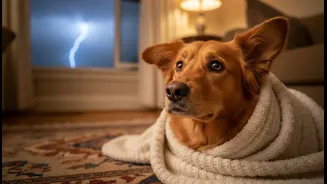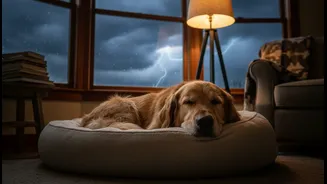





Understanding Your Pet's Storm Anxiety
A pet’s fear of storms is more complex than a simple dislike of loud noises. Their senses are far more acute than ours. They can often feel a storm approaching long before we can, thanks to their sensitivity to drops in barometric pressure. The low-frequency
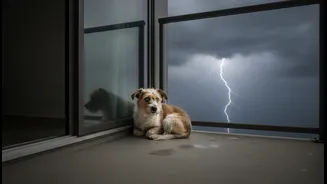
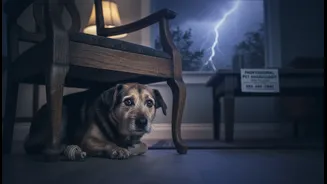
rumbles of distant thunder, inaudible to human ears, can be deeply unsettling for them. Furthermore, the buildup of static electricity in the air during a thunderstorm can cause an uncomfortable tingling sensation or even deliver small, startling shocks to their fur and noses. This sensory onslaught, combined with the startling flashes of lightning and loud claps of thunder, creates a terrifying experience. Their instinct is to hide, a natural survival response to perceived danger.
Location Is Everything
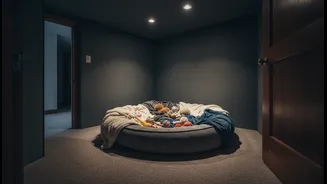
The first step in creating a safe space is choosing the right location. The ideal spot is an interior room on the lowest level of your home, with no windows. Basements, walk-in closets, or windowless bathrooms are excellent choices. The lack of windows is crucial as it blocks out the visual stress of lightning flashes. Most importantly, the space must be easily accessible at all times. Your pet should be able to retreat to this spot whenever they feel anxious, even if you are not at home. Never lock your pet inside a crate or room, as this can heighten their panic and lead to destructive behaviour or injury. The goal is to provide a sanctuary they can choose to enter, not a prison.
The Comfort of Familiarity
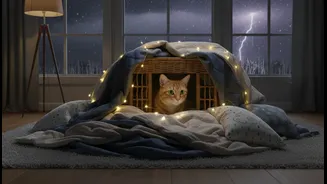
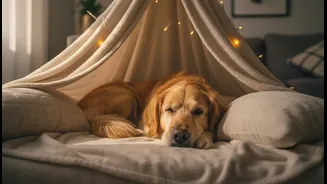
Once you've chosen a location, the next step is to make it feel like a familiar, comforting den rather than a strange, empty space. Move your pet's bed or favourite blanket into the room. Add a few well-loved toys and an article of your clothing, like an old t-shirt. Your scent is a powerful calming tool for your pet. The aim is to fill the space with positive associations. Don't wait for a storm to introduce them to the room. Spend short, happy periods of time there together during calm weather. Offer treats, play with a favourite toy, or simply relax. This practice helps your pet see the space as a place of safety and comfort, not just a place they go when something scary is happening.
Why Darker Is Better
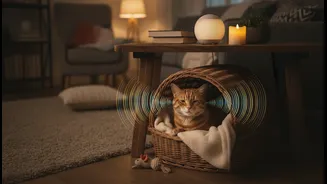
The headline's advice to make the room 'darker' is rooted in animal psychology. A dark, enclosed space mimics a natural den, which can be inherently calming for a frightened animal. It reduces sensory input, giving their overwhelmed mind a chance to settle. Darkness directly counters the stress caused by flashes of lightning, which can be disorienting and frightening. To enhance the effect, you can also introduce a source of white noise. A fan, a white noise machine, or even a radio or television turned to a constant sound can help muffle the jarring booms of thunder that are often the biggest source of fear. This combination of darkness and consistent, low-level sound helps to create a bubble of calm in the middle of a chaotic storm.
Stock Your Emergency Kit
A safe room is only truly prepared if it's stocked with essentials for an emergency. Prepare a 'go-bag' or waterproof container specifically for your pet and keep it in the safe room. This kit should contain at least a three-day supply of their food in a waterproof container and plenty of bottled water. Include any necessary medications, along with a copy of their medical records and your vet's contact information. A pet-specific first-aid kit with items like sterile gauze, antiseptic wipes, and bandage tape is also essential. Finally, make sure you have a spare leash, harness, and a sturdy carrier ready to go in case you need to evacuate. Having these items pre-packed means you can focus on your pet's immediate comfort, not scrambling for supplies.