



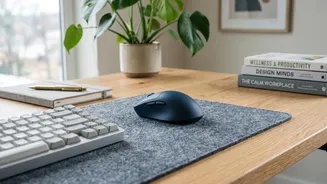


The Silent Toll of the Chair
Spending eight or more hours a day sitting down does more than just make you stiff. It's linked to a range of health issues, from musculoskeletal problems to an increased risk of chronic diseases like diabetes and heart disease. This prolonged sedentary
behaviour, often called 'the new smoking', leads to specific physical patterns. Your hip flexors shorten and tighten, your gluteal muscles weaken from disuse (a condition sometimes called 'gluteal amnesia'), and your thoracic spine—the upper and middle part of your back—becomes rigid, contributing to that familiar 'desk hunch' posture. Studies have shown that workers with sedentary jobs report high rates of neck, lower back, and shoulder pain. Even regular gym sessions can't fully undo the damage if the other 14 waking hours are spent sitting.
Mobility, Not Just Stretching
Many people confuse mobility with flexibility. Flexibility is your muscle's ability to lengthen passively, like holding a hamstring stretch. Mobility, on the other hand, is your ability to actively and controllably move a joint through its entire range of motion. It combines strength, stability, and coordination. Think of it as owning your movement, not just visiting a stretched position. While passive stretching can provide temporary relief from tightness, active mobility training creates lasting changes by strengthening the muscles around the joints, improving neuromuscular control, and teaching your body how to use its full range of movement safely. For desk workers, this is the key to counteracting the postural problems that sitting creates.
The Pillars of a Mobility Routine
A well-rounded mobility routine for a desk worker should focus on 'un-doing' the posture of sitting. This means targeting three key areas that suffer the most. First is the hips. Exercises that promote both internal and external rotation are crucial to counteract the constant flexion of sitting. Second is the thoracic spine. Restoring rotation and extension in your T-spine helps open up the chest, pull the shoulders back, and improve posture. This can alleviate a lot of neck and shoulder tension. Finally, shoulder mobility is essential. Sitting often leads to rounded shoulders and limited overhead range of motion. Drills that encourage scapular retraction and rotation can help reset this pattern and prevent future injury.
Your Foundational Mobility Toolkit
You don't need complex equipment to start improving your mobility. These simple but effective exercises can be done as a warm-up before your main workout or as a standalone routine. Cat-Cow: On your hands and knees, cycle between arching your back toward the ceiling (cat) and dropping your belly toward the floor (cow). This gently moves the spine through flexion and extension, releasing tension. 90/90 Hip Switches: Sit on the floor with both legs bent at 90-degree angles—one in front, one to the side. Without using your hands, rotate your hips to switch your legs to the opposite side. This is fantastic for hip internal and external rotation. Thoracic Spine Windmills (or Rotations): Lie on your side with your knees bent. Extend your arms in front of you. Keeping your knees together, open your top arm like a book, following it with your head and eyes, to feel a stretch across your chest and upper back. Wall Slides: Stand with your back against a wall, with your feet slightly forward. Press your arms against the wall with elbows bent at 90 degrees. Slowly slide your arms up the wall, trying to keep your forearms and wrists in contact, then slide back down. This helps improve shoulder mobility and posture.
Integrating Mobility into Your Life
The key to seeing real benefits from mobility work is consistency. Aim to incorporate these movements into your daily life. A 10–15 minute session before your main gym workout is a perfect dynamic warm–up that prepares your joints for the load ahead. You can also perform these exercises on your 'rest' days as a form of active recovery, which promotes blood flow and reduces stiffness. Some people even find it useful to break up the workday with a few quick mobility drills, like seated spinal twists or neck stretches, right at their desk. The goal is to make movement a regular habit, not just a one–hour event in an otherwise sedentary day.