


The Dawn of Orbital Computing
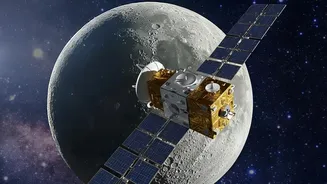
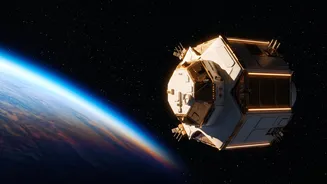
On October 1, 2026, Indian startup TakeMe2Space launched its MOI-1A satellite, described as the nation's first orbital computing satellite. Unlike traditional satellites that collect vast amounts of raw data and beam it back to Earth for analysis, this
new class of spacecraft processes information directly in orbit. Think of it as a small, powerful computer in space, equipped with advanced processors capable of running artificial intelligence models while circling the planet. The core idea is to move the analysis from the ground to the satellite itself, enabling it to 'think' and send back only the most critical insights, rather than terabytes of unprocessed imagery.
A Leap Beyond Simple Automation
For years, space missions have used automation, but orbital AI represents a significant leap. Previous ISRO missions, including the successful Chandrayaan-3, used AI for crucial tasks like autonomous navigation and hazard avoidance during its lunar landing. However, the new generation of orbital computing focuses on data, not just navigation. Instead of just following pre-programmed commands, these AI-enabled satellites can be tasked with specific analytical jobs. For instance, customers in sectors like agriculture or insurance can upload their own AI models to the satellite to look for specific changes on the ground, such as crop health or infrastructure damage, and receive targeted results. This transforms satellites from passive observers into active, intelligent analysts in space.
India's Strategic Edge in the Space Economy
This technological pivot gives India a crucial advantage in the rapidly growing global space economy, which is projected to reach $1.8 trillion by 2035. By developing the capability for in-orbit data processing, India strengthens its data sovereignty, reducing reliance on foreign infrastructure for critical analysis in sectors like defence and disaster management. It also opens up new commercial frontiers. Startups like TakeMe2Space and partnerships between firms like NeevCloud and Agnikul Cosmos are pioneering 'orbital data centres'. These ventures offer faster, more efficient data services by cutting down the massive bandwidth and time required to downlink raw data, positioning India as a competitive player in advanced, high-value space applications.
Unlocking New Scientific and Commercial Frontiers
The ability to run complex AI models in space promises to revolutionize multiple industries. For agriculture, it means faster analysis of crop health and soil conditions. For disaster management, it allows for near real-time identification of flood-affected areas or wildfire spread. Furthermore, it enables more efficient Earth observation, as satellites can be programmed to spot specific anomalies or changes without human intervention. ISRO has already been leveraging AI to process vast amounts of data from its observation satellites and is encouraging private sector innovation in this domain. The success of orbital computing will likely accelerate the development of even more sophisticated applications, from climate monitoring to urban planning.
The Future: A Network of Intelligent Satellites
The launch of a single AI satellite is just the beginning. The long-term vision involves creating entire constellations of intelligent, interconnected spacecraft. These networks could collaborate on complex tasks, process information with unprecedented speed, and provide insights that are currently impossible to achieve. This shift is not unique to India; global players like NASA and ESA, as well as private companies, are also heavily investing in AI for autonomous operations and data analysis. However, by fostering a robust ecosystem of both government-led missions and private startups, India is ensuring it remains at the forefront of this technological wave. The ultimate goal is to build a new layer of digital infrastructure in orbit, making space an extension of our terrestrial data economy.