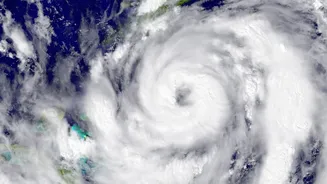







Arnab's Landfall and Current Status
Cyclone Arnab crossed the Andhra Pradesh and Yanam coasts on the morning of Wednesday, October 28. According to the India Meteorological Department (IMD), the system made landfall as a 'Very Severe Cyclonic Storm' with sustained wind speeds of 125-135
kmph, gusting up to 150 kmph. The landfall process was completed by mid-morning, with the storm's center moving entirely over land. Since making landfall, Arnab has weakened into a 'Severe Cyclonic Storm' and is expected to gradually lose intensity as it moves further inland over the next 48 hours. Authorities have been on high alert, with Doppler Weather Radar systems continuously monitoring the storm's progression.
Andhra Pradesh: The Epicenter
Andhra Pradesh is bearing the brunt of the cyclone's impact. The storm made landfall between Bapatla and Visakhapatnam, close to Yanam. Extremely heavy rainfall has been forecast for coastal districts, including Kakinada, Visakhapatnam, Anakapalli, and Konaseema. The state government has undertaken massive preparations, evacuating tens of thousands of people from vulnerable low-lying areas to safer shelters. Reports from the coast describe uprooted trees and damage to thatched houses and power infrastructure. Chief Minister N Chandrababu Naidu has been reviewing relief operations, and teams are on standby to restore power and clear debris once conditions permit. More than 12 million people are estimated to live along the cyclone's projected path.
Odisha: On High Alert
Neighboring Odisha is also on high alert for heavy rainfall and strong winds, particularly in its southern districts. The state has deployed over 300 response teams, including National Disaster Response Force (NDRF) and Odisha Disaster Rapid Action Force (ODRAF) units. While not in the direct line of landfall, the system's vast rain bands are expected to cause significant downpours across the state. The government has set up nearly 2,000 shelters and evacuated approximately 48,000 people as a precautionary measure. Authorities have warned of potential damage to crops and infrastructure due to the heavy rain and squally winds.
Rainfall Expected in Other States
The impact of Cyclone Arnab is not limited to the coast. As the system moves inland and weakens, it is forecast to bring widespread rain to several other states. Heavy showers are expected in Telangana, Chhattisgarh, Jharkhand, and West Bengal. The IMD has also predicted that the system will lead to heavy to very heavy rainfall in parts of East Uttar Pradesh and Bihar later in the week, around October 29 and 30. Even northeastern states like Assam, Meghalaya, and Nagaland are likely to experience increased rainfall and thunderstorms. Authorities in these regions are advising residents to stay cautious.
Safety Measures and Official Advisories
With the storm now over land, the primary threats are torrential rain, flooding, and strong winds. It is crucial to follow official advice. Stay indoors and avoid unnecessary travel. Do not venture into waterlogged areas. Ensure your mobile phones are charged and have an emergency kit with essentials like food, water, and first aid. Rely on information from official sources like the IMD and local disaster management authorities. Several train services have been cancelled or rerouted, and flights at airports in Andhra Pradesh, including Visakhapatnam, have been suspended. The government has deployed thousands of medical and emergency personnel to assist in affected areas.