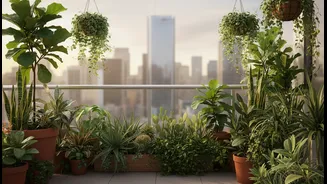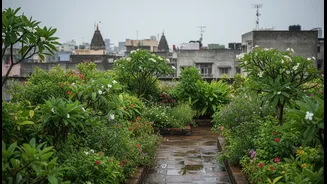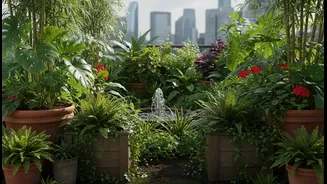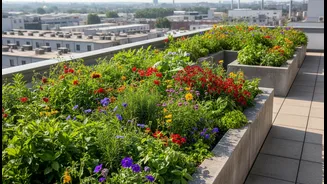




The Science of Natural Cooling
Urban areas often experience a “heat island effect,” where concrete and asphalt absorb and radiate the sun’s heat, making the city significantly warmer than surrounding rural areas. A bare concrete terrace acts like a giant heat panel on your home. During
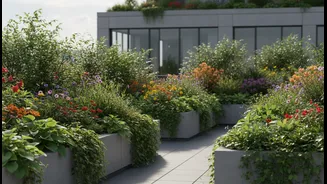
the day, it soaks up solar radiation, and at night, it releases that heat into the rooms below. A green terrace disrupts this cycle in two key ways. First, the layer of soil and plants acts as a natural insulator, preventing the roof slab from getting hot. Second, through a process called evapotranspiration, plants release water vapour, which actively cools the surrounding air, functioning like a natural air conditioner. Studies have shown this can reduce a roof's surface temperature dramatically, leading to indoor temperatures that are several degrees cooler.
Beyond the Thermometer: Added Benefits
The advantages of a terrace garden extend far beyond just cooling. These green spaces act as mini-ecosystems, improving local air quality by filtering pollutants and absorbing carbon dioxide. They can become a habitat for birds and pollinators, increasing biodiversity in a concrete jungle. On a personal level, a terrace garden provides a peaceful escape for relaxation and can boost mental well-being. It also offers the rewarding opportunity to grow your own fresh, pesticide-free vegetables, herbs, and flowers, bringing you closer to your food source. Furthermore, green roofs can help with stormwater management by absorbing rainwater, which reduces the burden on city drains during heavy monsoons.
First Steps: Safety and Preparation
Before you start buying plants, there are crucial foundational steps. The most important considerations are waterproofing and load-bearing capacity. Constant watering means water seepage is a major risk if your terrace is not properly sealed. It is essential to apply a high-quality waterproofing membrane to prevent leaks that can cause long-term structural damage. It's also wise to consult a structural engineer to understand the weight your roof can safely handle. A garden with wet soil and containers can be very heavy. Finally, ensure there is a proper drainage system to allow excess water to flow away, preventing waterlogging and protecting both your plants and the building.
Choosing the Right Plants and Pots
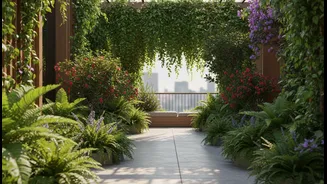
For a successful and low-maintenance terrace garden in India, choose plants that are suited to your local climate. Hardy, drought-tolerant species are often a good starting point. For maximum cooling, focus on plants that provide good ground cover or create shade. Creepers like bougainvillea and passion flower, or even vegetables like bottle gourd, can be trained on a trellis to create a cooling green canopy. Grasses, flowering shrubs like hibiscus, and herbs like mint and tulsi are also excellent choices. When it comes to containers, lightweight options like geo-fabric grow bags are preferable to heavy concrete pots, as they reduce the overall load on the terrace and offer better root aeration.
Creating a Sustainable Oasis
To make your garden thrive, use a lightweight potting mix instead of heavy garden soil. A combination of cocopeat, compost, and perlite is a popular choice that retains moisture while ensuring good drainage. Consider installing a drip irrigation system. This will save water—a precious resource—and ensure your plants get consistent moisture without daily effort. A shade net can be a lifesaver for more delicate plants during the peak of summer, protecting them from the harsh afternoon sun. By planning your layout and choosing the right elements, you can create a garden that is not only beautiful and cooling but also sustainable and easy to manage.