




Delhi's Driverless Leap Forward
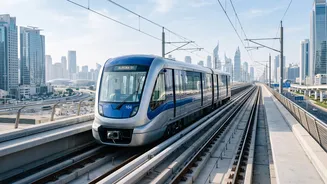
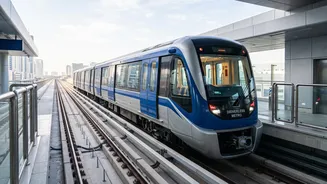
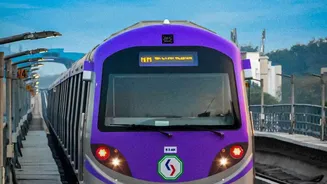
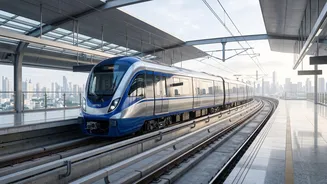
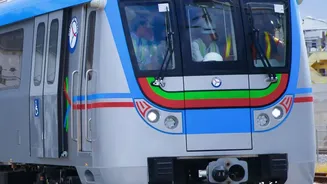
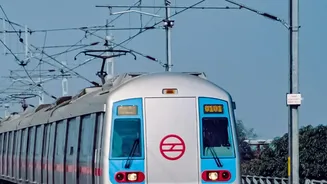
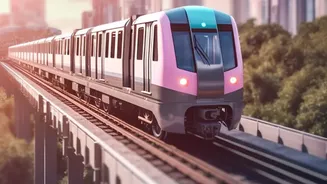
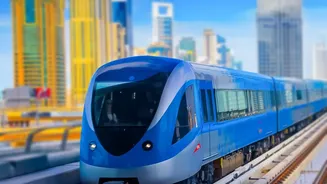
The Delhi Metro began its foray into driverless technology in December 2020 on the Magenta Line, with the Pink Line following suit in 2021. Today, these lines form a 120-kilometre automated corridor, making Delhi's network one of the largest of its kind
globally. Operating under the Unattended Train Operation (UTO) system, around 100 trains run without a driver, guided by sophisticated automated control systems. This has led to increased operational flexibility, reduced human error, and greater reliability, with trains conducting exhaustive self-tests before service. The success of this automation was highlighted on November 2, 2026, when these two lines alone served a record 1.6 million passengers in a single day.
The Human Story Behind Automation
The most pressing question surrounding this technological shift was the fate of the train operators. In a move that counters the common narrative of automation leading to redundancies, the DMRC has confirmed that no train operators have been laid off. Since the transition to driverless operations began in 2020, the corporation has focused on redeploying its skilled workforce. This decision addresses a major concern often cited by critics of automation, who point to potential job losses as a significant drawback, especially in a country with a large workforce like India. The DMRC currently employs approximately 3,000 train operators across its entire network.
From Driver's Cabin to Control Centre
So, where did the drivers go? Instead of being made redundant, former train operators have been strategically retrained and reassigned to other critical operational roles. These new responsibilities include station management, where they oversee the smooth functioning of entire metro stations, and crowd control, a crucial task in a system that serves millions daily. This approach leverages their existing knowledge of the metro system's operations while equipping them with new skills. By moving experienced personnel into these roles, the DMRC ensures that institutional knowledge is retained and applied to enhance other aspects of the commuter experience.
Upskilling for a Future-Ready Metro
This successful redeployment was made possible by a concerted focus on training and upskilling. The DMRC Academy, a premier training institute, is equipped with state-of-the-art simulators, including for Unattended Train Operation (UTO), and demonstration rooms for various metro systems. The academy regularly conducts customised training programs to build competency for different roles within the metro ecosystem. The DMRC's emphasis on a 'multi-skilling' concept involves reshuffling staff between jobs after a certain period, with dedicated 'reshuffling training' provided to employees taking on new responsibilities, such as moving from train operations to station operations.
A Potential Blueprint for India Inc.
The success of the DMRC's driverless operations, coupled with its commitment to retaining staff, has sparked a national debate. Vikas Kumar, the Managing Director of DMRC, has advocated for other metro projects across India to consider this model, citing the gains in efficiency and reliability. However, experts advise a cautious approach, noting that the high upfront capital costs must be weighed against India's lower staffing costs compared to many Western nations. While automation is a global trend, the argument is that India must perform its own cost-benefit analysis. Nonetheless, the DMRC's achievement serves as a powerful case study, demonstrating that technological advancement and job security do not have to be mutually exclusive.