








The Psychology of Personal Space
Before you buy a single container, understand why personal zones are so effective. A shared bathroom can be a source of daily friction when boundaries are blurred. Designating specific areas for each person isn't just about tidiness; it's about respect
and ownership. When individuals have a dedicated spot for their belongings, they are more likely to keep it organized. This simple act reduces clutter and minimizes the classic 'who left this here?' arguments that disrupt household harmony. Assigning a drawer, a shelf, or even a portable caddy to each person creates a functional system where everyone knows where their items belong and, just as importantly, where they don't.
How to Map Your Territory
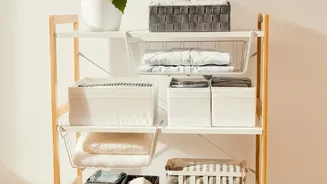
The first practical step is to declutter. Empty every cabinet, drawer, and shelf to get a clear picture of what you own. Be ruthless: toss expired products and items you haven't used in the last year. Once you're left with only the essentials, you can start assigning zones. A simple approach is to give each person a shelf in the medicine cabinet or a specific drawer. If space is tight, think vertically. Use wall-mounted shelving or over-the-door organizers to create new storage real estate. For a truly clear division, colour-coding can be a game-changer. Assign each person a colour and use coloured bins, baskets, or even just labels to mark their territory.
Essential Tools for Effective Zoning
The right tools can make or break your organizational system. Portable shower caddies are a fantastic solution, especially for families or roommates. Each person can keep their daily essentials—shampoo, soap, toothbrush—in their own caddy, which they can take to and from their bedroom. This drastically reduces shower and counter clutter. Inside drawers, utensil trays or adjustable dividers are perfect for separating smaller items like makeup, dental care, and grooming tools. For under-sink areas, which can easily become a jumble of cleaning supplies and backstock products, use stackable clear bins. This allows you to see everything at a glance without having to pull everything out.
Zoning Beyond the Countertop
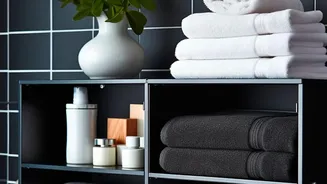
A common mistake is to focus only on the vanity area. To achieve true bathroom harmony, you need to apply the zoning principle to every part of the space. In the shower, a multi-shelf caddy can be divided, with each person getting their own tier. Towel storage is another critical area. If you're tired of damp towels on the floor, install enough hooks for every member of the household. Assigning a specific hook to each person encourages them to hang up their towel every time. Even shared items, like extra toilet paper or hand soap, should have a designated 'communal' zone so everyone knows where to find them and when they need restocking.
Maintaining Harmony and Order
Creating zones is the first step, but maintenance is key to long-term success. The most important rule is to always clean up after yourself. This simple habit prevents clutter from accumulating. Agree on a weekly 'reset' where everyone spends five minutes tidying their personal zone and wiping down surfaces. For bigger tasks, a rotating cleaning schedule can ensure that chores like scrubbing the toilet or mopping the floor are shared equally. Open communication is crucial, especially when you first implement the system. Involve everyone in the initial setup and be open to tweaking the zones as needs change. The goal isn't to be rigid but to create a system that works for everyone using the space.