

Understanding Flexion and Extension
Before diving into the pose, let's clarify what 'flexion' and 'extension' mean for your spine. Spinal flexion is the act of rounding your back forward, like when you slump over or curl into a ball. Think of it as a forward bend that stretches the muscles
along the back of your spine. Spinal extension is the opposite: arching your back, which opens the front of your body and engages the muscles along your spine. Cat-Cow, known in Sanskrit as Marjaryasana-Bitilasana, is a dynamic sequence that moves the spine through both of these ranges. This deliberate movement helps improve mobility, lubricate the spinal discs, and increase body awareness.
The 'Cat' Pose (Marjaryasana): A Study in Flexion
The 'Cat' part of the sequence is a perfect example of spinal flexion. As you exhale and press your hands into the mat, you round your spine toward the ceiling, just like a cat arching its back. This action involves tucking your tailbone, drawing your navel toward your spine, and spreading your shoulder blades apart. The head gently releases downward without forcing your chin to your chest. This movement deeply stretches the muscles running along your spine (the erector spinae) and the muscles between your shoulder blades, while also engaging your abdominal muscles for support.
The 'Cow' Pose (Bitilasana): A Study in Extension
On the inhalation, you move into 'Cow' pose, which demonstrates spinal extension. The movement starts from the tailbone, which lifts toward the ceiling as your belly sinks toward the floor. Your chest broadens and moves forward, and your gaze lifts slightly ahead. This pose creates a gentle arch in the back, opening the chest and stretching the front of the torso and neck. It’s a mild backbend that helps counteract the effects of prolonged sitting and slouching, improving posture and flexibility.
How to Perform Cat-Cow Correctly
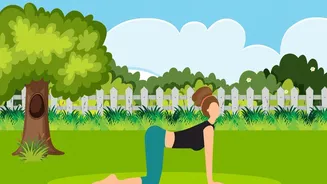
To practice, begin in a tabletop position on your hands and knees. Your wrists should be directly under your shoulders and your knees directly under your hips, with your shins and knees hip-width apart. Start with a neutral, flat back. As you inhale, drop your belly, lift your chest and tailbone, and look forward for Cow pose. As you exhale, press into your hands, round your spine up, tuck your tailbone, and release your head down for Cat pose. The key is to link your breath to the movement, flowing smoothly and slowly for 5 to 10 rounds. Let the movement ripple up the spine, initiating from your pelvis rather than your head.
Common Mistakes to Avoid
To get the most out of Cat-Cow, be mindful of common errors. Avoid moving too quickly; the benefits come from slow, controlled motion coordinated with your breath. In Cow pose, don't collapse into the lower back or crane your neck by looking straight up, which can compress the cervical spine. Instead, keep the back of your neck long. In Cat pose, make sure you're rounding the entire spine, not just the upper back. Also, keep a micro-bend in your elbows to avoid locking the joints and putting excess pressure on your wrists.
Modifications for Every Body
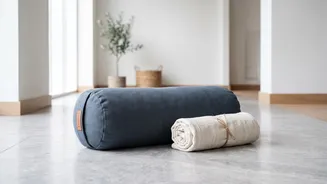
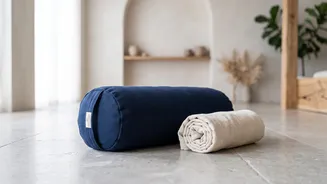
Cat-Cow is highly adaptable. If you have sensitive knees, place a folded blanket underneath them for cushioning. For wrist pain, you can come down onto your forearms, make gentle fists to keep your wrists straight, or place your hands on yoga blocks. The pose can also be done while seated in a chair by placing your hands on your thighs and moving through the same spinal motions, making it accessible for an office break or for those who can't be on the floor.