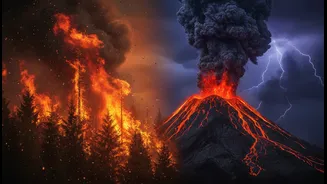




The Fiery Breath of Wildfires
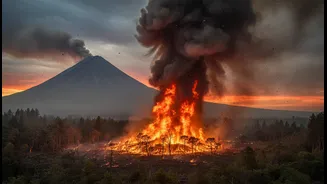
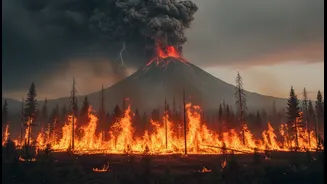
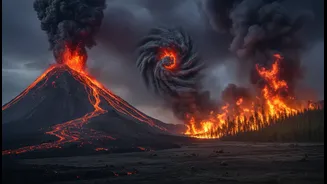
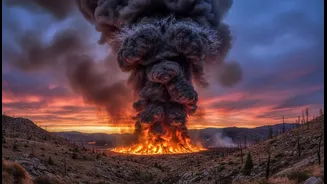
Wildfires have a complex and multifaceted relationship with the atmosphere. On the most basic level, they release immense quantities of carbon dioxide—a primary greenhouse gas—that was previously stored in trees, plants, and soil. When fires become more
frequent and intense, as they have in recent years, there may not be enough time for new vegetation to grow back and reabsorb all that released carbon, leading to a net increase in atmospheric CO2. But the impact doesn't stop there. Fires also produce a cocktail of other emissions, including methane and black carbon, a sooty pollutant that is particularly potent. This black carbon can absorb sunlight when in the atmosphere, creating heat. When it settles on snow and ice, it darkens the surface, causing it to absorb more solar energy and melt faster, further perpetuating warming in a dangerous feedback loop.
A Complicating Climate Feedback Loop
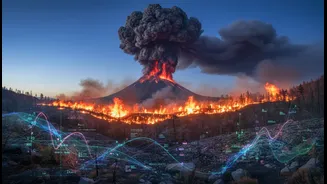
The connection between wildfires and climate change is a two-way street. A warmer, drier climate, which is driven by rising global temperatures, creates ideal conditions for fires to start and spread. Longer fire seasons and drought-stressed vegetation act as a tinderbox. As these climate-driven fires burn, they release more greenhouse gases, which in turn contribute to further warming and create even more fire-prone conditions. This self-reinforcing cycle makes it incredibly difficult to model future atmospheric conditions. Scientists can't just project human emissions; they must also account for how a changing climate might alter the frequency and scale of these massive natural carbon releases, a task filled with uncertainty.
Volcanoes: Earth's Temporary Sun Shield
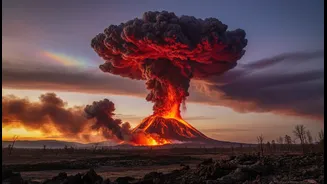
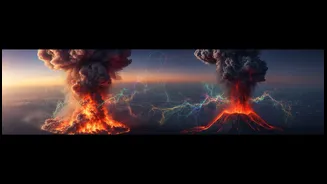
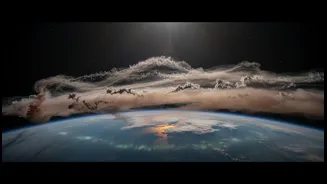
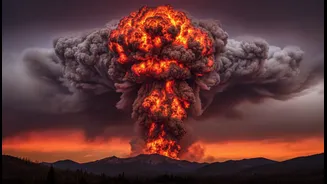
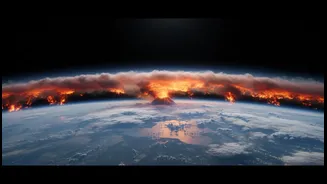
Unlike wildfires, the most significant immediate impact of a major volcanic eruption is often global cooling. This might seem counterintuitive, but it's not the lava or ash that causes it. The key ingredient is sulfur dioxide (SO2). When a powerful eruption blasts SO2 into the stratosphere, it converts into tiny sulfuric acid droplets, or sulfate aerosols. These aerosols form a reflective haze that scatters sunlight back into space, preventing it from reaching and warming the Earth's surface. A major event, like the 1991 eruption of Mount Pinatubo, can cause a temporary drop in global average temperatures for a period of one to three years. However, this cooling effect is short-lived, as the aerosols eventually fall out of the stratosphere.
The Challenge for Climate Models
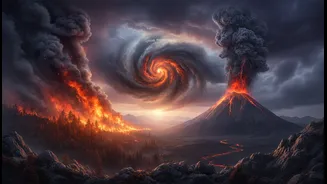
Both wildfires and volcanoes present a major headache for climate modelers. Their primary challenge is unpredictability. While scientists can model the ongoing effects of human emissions with some confidence, it's impossible to know when or where the next massive, climate-altering volcanic eruption will occur. Similarly, predicting the exact location and scale of future megafires is exceedingly difficult. These events are not smooth, gradual processes; they are abrupt shocks to the atmospheric system. Global climate models operate on coarse resolutions, which makes it hard to simulate smaller-scale phenomena like individual fires and their complex interactions with terrain and vegetation. Because these events introduce significant, short-term variability, they complicate efforts to discern long-term trends and refine projections for the coming decades.