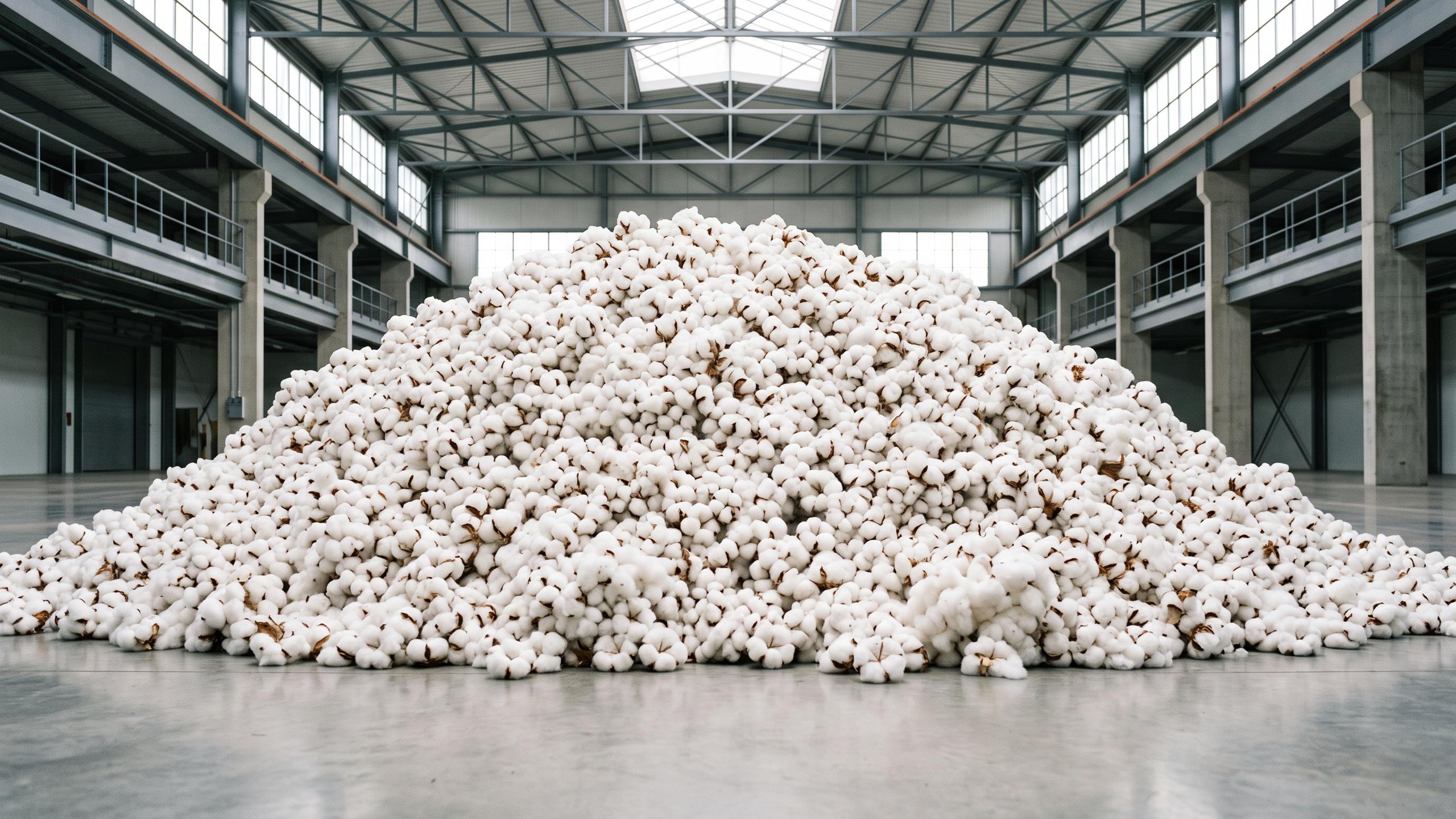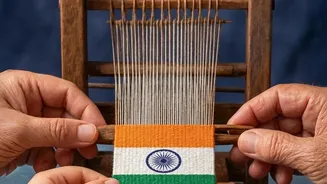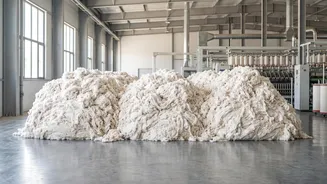






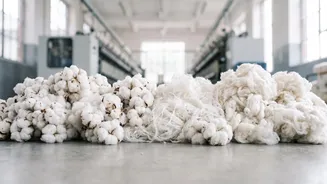


India's textile industry is a global powerhouse, but its success hinges on a delicate balance. A crucial factor is the price of cotton, and surprisingly, affordable imports often provide a vital lifeline for the nation's export competitiveness.
The Great Cotton Price Divide
For India's
textile manufacturers, the cost of raw cotton is the single most important variable, often accounting for 65-70% of yarn production costs. While India is one of the world's largest cotton producers, a peculiar situation often arises: domestic cotton prices can become significantly higher than international prices. This disparity puts Indian mills at a major disadvantage compared to competitors in countries like Bangladesh and Vietnam, who can source cheaper global cotton. In 2026, this has been a pressing issue, with domestic cotton yarn prices surging by approximately 60% through September. This price spike was driven by lower domestic production forecasts and strong demand, creating a critical challenge for exporters trying to price their goods competitively for global buyers.
Why Imports Become a Lifeline
When domestic cotton becomes too expensive, imports are not just an option; they are a necessity for survival in the export market. Access to competitively priced international cotton allows spinning mills and garment factories to keep their input costs in check. This enables them to offer final products—like readymade garments, which make up 44% of textile exports—at prices that can compete in markets like the US and the European Union. Recognizing this, the Indian government has periodically managed an 11% import duty on cotton. For much of 2026, this duty was waived to help ease the pressure on manufacturers. Industry bodies like the Southern India Mills' Association (SIMA) and the Confederation of Indian Textile Industry (CITI) have repeatedly advocated for removing this duty, arguing it is essential for providing a level playing field.
From Fibre to Finished Garment
The impact of high cotton prices cascades through the entire textile value chain. It begins with spinning mills, who find their margins squeezed. If they are forced to raise yarn prices, the weavers and knitters who buy that yarn face higher costs. Ultimately, the garment manufacturers who create the final products for export must either absorb these costs, hurting their profitability, or raise their prices, risking the loss of orders from international brands. These brands are highly price-sensitive and can easily shift their sourcing to other countries. Therefore, access to affordable imports acts as a crucial pressure-release valve. It ensures that even when domestic supply is tight or prices are high, manufacturers can secure the raw material they need without compromising their global standing. Moreover, mills sometimes import specific high-quality, contamination-free cotton to meet the stringent standards of global buyers, a need that can't always be filled by domestic supply.
The Delicate Policy Balancing Act
The decision to allow cheaper cotton imports is a complex one for policymakers, who must balance the interests of the textile industry with those of India's millions of cotton farmers. An import duty protects farmers from low international prices, ensuring they receive a fair rate for their crop, often through the Minimum Support Price (MSP) mechanism. However, when domestic prices soar well above global rates and the MSP, that same duty can cripple the downstream export industry. The current situation is particularly acute, with projections for the 2026-27 cotton crop expected to fall short of the country's demand, tightening supply even further. This has led to calls from industry for the duty-free import window, which was set to expire on October 31, 2026, to be extended to ensure stability.