




The Problem with Your Chair
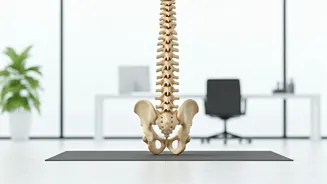
Our modern lives often involve long hours spent sitting, whether at a desk, commuting, or relaxing at home. While it may seem harmless, this prolonged sedentary state has a significant impact on our bodies. When you sit for extended periods, your hip
flexors—the muscles at the front of your hips—remain in a shortened, tightened position. [7, 8] Simultaneously, your gluteal muscles (the large muscles in your buttocks) become inactive and weak from lack of use. [7, 9, 10] This phenomenon is sometimes called 'gluteal amnesia' because the muscles essentially 'forget' how to fire correctly. [11, 20] This muscular imbalance can lead to a host of problems, including poor posture, lower back pain, and reduced hip mobility, as other muscles are forced to compensate for the weak glutes. [8, 9, 10]
Your Morning Saviour: The Glute Bridge
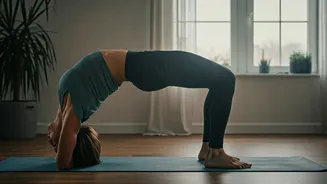
Enter the glute bridge: a simple, no-equipment exercise that serves as a powerful counter-movement to all that sitting. [1] By performing this exercise, you directly target and strengthen the gluteus maximus, the largest muscle in your body. [5, 17] Waking up these powerful muscles first thing in the morning helps 'remind' them of their job, which is to stabilise the pelvis and support the spine throughout the day. [6, 15] The glute bridge doesn't just strengthen weak muscles; it also helps to gently stretch and open up the tight hip flexors. [1, 16] This dual-action effect makes it an incredibly efficient exercise for restoring balance to your lower body, improving posture, and alleviating the strain that leads to lower back pain. [17]
How to Perform the Perfect Glute Bridge
Proper form is crucial to get the benefits and avoid injury. Here’s a step-by-step guide: 1. Lie on your back on a comfortable surface, like a yoga mat. Bend your knees and place your feet flat on the floor, about hip-width apart. Your heels should be about 6-8 inches from your buttocks. [2, 3] 2. Place your arms flat on the floor alongside your body. Before you lift, engage your core by gently pressing your lower back toward the floor. [5] 3. Squeeze your glutes and press through your heels to lift your hips off the floor. Raise them until your body forms a straight line from your shoulders to your knees. Avoid arching your back. [3, 5] 4. At the top, pause for a couple of seconds, squeezing your glutes tightly. You should feel the work in your buttocks, not your lower back. [3, 13] 5. Slowly and with control, lower your hips back to the starting position. [3] Aim for two to three sets of 10-15 repetitions. [13]
Make It a Habit
While the headline focuses on morning glute bridges, consistency is more important than timing. A morning routine is fantastic because it sets your body up for the day, but performing them whenever you can is what truly counts. Think of it as a daily dose of activation for your posterior chain. You can make the exercise more challenging over time. To increase difficulty, try a single-leg bridge by extending one leg straight while you lift your hips. [2, 5] You can also place a resistance band around your knees to engage your hip abductors or add a weight across your hips. [2, 6] If you feel your hamstrings or lower back working too much, bring your feet closer to your body and focus on initiating the movement by squeezing your glutes first. [3]
Beyond the Bridge: A Holistic Approach
A few morning glute bridges are a fantastic start, but they work best as part of a broader strategy to combat a sedentary lifestyle. The most effective way to counteract the effects of sitting is simply to sit less. Try to get up and move around for a few minutes every hour. [23] Consider setting a timer to remind you to stand, stretch, or take a short walk. Incorporating other simple desk exercises like neck rolls, torso twists, and calf raises can also provide relief and improve circulation throughout the day. [19, 24] Remember, the goal is not to find a single magic bullet, but to build small, sustainable habits that keep your body moving and prevent the stiffness and pain associated with a desk job.