






Brakes: Your First Line of Defence on Declines
Hill driving places an immense and unusual strain on your vehicle's braking system. Unlike city driving with its short stops, long downhill descents force you to apply brakes repeatedly or for extended periods. This constant friction generates a tremendous
amount of heat. If the system isn’t in optimal condition, this heat can lead to a dangerous phenomenon known as 'brake fade,' where the brakes become less effective and the pedal feels soft or spongy. This significantly increases your stopping distance, a risk you cannot afford on narrow, winding roads. Before your trip, it is crucial to have your brakes professionally inspected. A mechanic should check the thickness of your brake pads, the condition of the rotors, and the quality of your brake fluid. Brake fluid can absorb moisture over time, which lowers its boiling point and makes it susceptible to failing under the high-heat conditions of a mountain descent. Also, ensure your handbrake is functioning perfectly, as you will rely on it for starting on steep inclines. A thorough check ensures that your most critical safety system is ready for the intense demands of mountain terrain.
Battery: The Heartbeat in High Altitudes
Your car's battery is its unsung hero, but its performance can be significantly affected by the conditions of a hill drive. The engine works harder on steep inclines, and if you're navigating traffic on a ghat road, the frequent starts and stops put a heavy load on the battery. Furthermore, higher altitudes and colder temperatures, common in hill stations, can reduce a battery's efficiency. A cold battery produces less current, and the engine oil thickens in the cold, requiring more power to start the engine. If your battery is more than three years old or has been showing signs of weakness, getting it tested before you leave is a wise move. A simple visual inspection can also reveal potential problems. Look for any signs of corrosion—a white, powdery substance—on the terminals and ensure the connections are tight and secure. Corrosion can impede the flow of electricity, making it harder for the battery to do its job. A healthy, fully charged battery ensures your car starts reliably, whether you're at the base of the mountain or the peak.
Tyres: The Critical Point of Contact and Grip
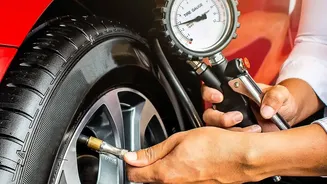
Your tyres are the only part of your car in direct contact with the road, and on the unpredictable surfaces of hill roads, their condition is paramount. Good grip, or traction, is essential for safely navigating sharp hairpin bends, steep inclines, and potentially wet or gravel-strewn patches. Before you set off, inspect your tyres for two key things: tread depth and pressure. The grooves in your tyres are designed to channel away water and maintain grip. If the tread is worn down, your car is more susceptible to skidding, especially on wet roads. As a rule of thumb, a minimum tread depth of 2-3mm is recommended. Tyre pressure is equally important. It should be set to the manufacturer's recommended level, which you can find on a sticker inside the driver's side door. Incorrect pressure can affect handling and stability. While some off-road enthusiasts lower pressure for specific terrains, for general hill driving on paved roads, sticking to the recommended PSI is best. Don't forget to check the spare tyre as well; ensure it is properly inflated and that you have the necessary tools to change it.