




A Map on a Plate
The story of chutney in India is as diverse as the country itself, with its origins rooted in ancient Ayurvedic practices where ground pastes were used for medicinal purposes. The word itself, derived from the Hindi 'chatni' meaning 'to lick', hints at its irresistible
nature. Each region, with its unique climate and local produce, has developed its own signature style. From the cooling, yogurt-based chutneys of the Himalayas to the fiery pastes of the south, these condiments are a delicious map of India's agricultural and cultural landscape. They tell a story of what grows locally, what has been preserved, and how communities have perfected the art of flavour over centuries.
The Fiery Heart of Andhra
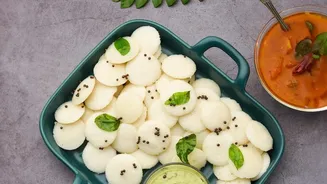
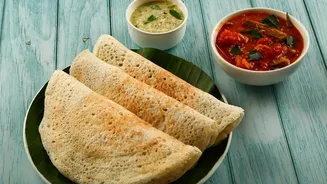
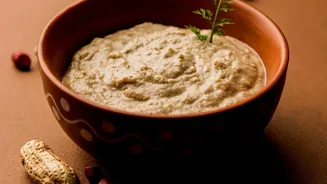
Travel to Andhra Pradesh and Telangana, and you'll find chutneys that are bold, robust, and unapologetically spicy. The most famous of these is the peanut chutney, or Palli Pachadi. Made from roasted peanuts, dried red chillies, and a hint of tamarind for tang, this chutney is creamy, nutty, and packs a signature punch. It's the quintessential partner to soft idlis and crispy dosas. Another star from this region is Gongura Pachadi, made from sour sorrel leaves. Its unique, tangy flavour is intense and unforgettable, often cooked with garlic and chillies until the leaves wilt into a dark, flavour-packed paste that pairs perfectly with hot rice and a dollop of ghee.
Nutty and Earthy Notes of the South
While coconut chutney is the undisputed king of South Indian breakfasts, another seed provides a deep, earthy flavour: sesame. Known as Ellu Thogayal or Ellu Chutney in Tamil Nadu and Karnataka, this preparation uses roasted black or white sesame seeds, ground with red chillies, tamarind, and sometimes a little coconut or garlic. The result is a thick, nutrient-rich paste with a profound nutty taste that is traditionally mixed with rice. Further south in Kerala, chutneys often feature fresh ingredients like coconut and green chillies, creating creamy and refreshing accompaniments for appams and dosas.
The Rustic Spice of the West
In Maharashtra, one condiment stands out for its raw power: thecha. The name comes from the Marathi word for 'to pound', and it's a rustic, coarsely crushed mix of green chillies, garlic, and often peanuts or cumin. It’s not a subtle flavour; it’s a fiery explosion meant to be eaten in small amounts with bhakri (millet flatbread) or pithla. Thecha embodies the bold and direct flavours of Maharashtrian home cooking. It can be made with either green chillies (hirvi mirchi thecha) or a red chilli version (lal mirchi thecha), each offering a different dimension of heat.
The Sweet and Sour Finish of the East
Head east to Bengal, and the role of chutney changes entirely. Here, it is often a sweet and sour affair, served at the end of a meal as a sort of pre-dessert palate cleanser. Bengali chutneys, or 'chatni', frequently feature fruits and are defined by their delightful tang. A classic example is a tomato chutney slow-cooked with sugar, dates (khejur), and sometimes dried mango pulp (aamshotto). Another staple is a raw mango chutney, or Kancha Aamer chutney, which balances the sourness of green mangoes with the sweetness of sugar or jaggery, often tempered with panch phoron, a five-spice blend that is the hallmark of Bengali cuisine.
Beyond the Familiar
The diversity doesn't stop there. In the Himalayan state of Uttarakhand, cooks make a unique chutney from roasted hemp seeds (bhang ki chutney), which has a smoky, nutty flavour. In Nagaland, axone, a chutney made from fermented soybeans, offers a strong, pungent taste that is central to Naga cuisine. And in Bastar, Chhattisgarh, tribal communities prepare Chaapda, a sharp and sour chutney made from red weaver ants and their eggs. These hyper-regional specialities, shaped by what can be foraged and preserved, are a testament to the endless innovation within Indian kitchens.