






Demystifying the 'Zone Two' Buzz
For years, the fitness world preached a 'no pain, no gain' mantra, suggesting that only breathless, high-intensity workouts were worthwhile. A growing body of research, however, points to the profound benefits of exercising at a lower intensity, specifically
in what is known as Zone 2. Think of it as your 'all-day' pace. In technical terms, it means working out at 60% to 70% of your maximum heart rate. In practical terms, it’s the level of effort where you’re breathing more deeply but can still hold a full conversation without gasping for air. It’s not a slow stroll, but it's far from a sprint. This moderate intensity is the sweet spot for building a strong aerobic base, which is the foundation of all fitness.
Why Your Desk Job Demands It
Long hours of sitting can take a toll on our metabolic health. This is where Zone 2 training becomes a powerful tool for office employees. At this intensity, your body becomes incredibly efficient at using fat for fuel instead of relying on carbohydrates. More importantly, it stimulates the growth and improves the function of your mitochondria. Think of mitochondria as the tiny power plants inside your cells. A sedentary lifestyle makes these power plants sluggish and inefficient. Regular Zone 2 exercise acts like a tune-up, building more mitochondria and making them better at generating energy. This not only improves your endurance but also enhances your overall metabolic health, reducing risks associated with a sedentary life.
Finding Your Personal Sweet Spot
You don't need a lab to find your Zone 2. The simplest way to estimate it is with a bit of math. First, find your approximate maximum heart rate (MHR) by subtracting your age from 220. For a 40-year-old, the MHR would be around 180 beats per minute (bpm). Zone 2 is then 60-70% of that number, which would be a target range of 108-126 bpm. A heart rate monitor or fitness watch can track this for you. However, an even simpler method is the 'talk test'. If you can comfortably speak in full sentences while exercising, you are likely in Zone 2. If you can sing, you’re probably going too easy (Zone 1). If you can only manage a few words at a time, you’ve pushed into higher zones.
Brisk Walking: Your Simplest Entry Point
Brisk walking is arguably the most accessible and effective Zone 2 workout. This isn't a window-shopping stroll; it requires a purposeful pace. For many people, this means walking at a speed that would cover a mile in about 15 to 20 minutes. You should feel your heart rate elevate and your breathing become more rhythmic. The beauty of brisk walking is its versatility. You can do it during your lunch break, as part of your commute by getting off public transport a stop or two early, or on a treadmill. It requires no special equipment beyond a good pair of shoes and puts minimal stress on your joints, making it a safe and sustainable choice for all fitness levels.
Cycling for Low-Impact Endurance
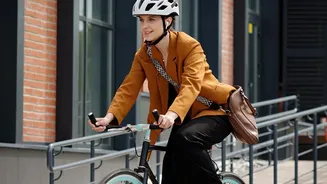
Cycling, whether on a stationary bike at the gym or outdoors on the road, is another fantastic low-impact option for Zone 2 training. It's particularly good for people who may have knee or joint issues that make running uncomfortable. The key, once again, is to resist the urge to go all out. Your goal is to find a steady cadence and resistance level that keeps your heart rate in that conversational Zone 2. You should feel like you could maintain the pace for a long time without burning out. An indoor bike can be a great option for office workers, allowing for a consistent workout regardless of weather or time of day, perhaps while catching up on a podcast or watching a show.