




1. Palani Panchamirtham
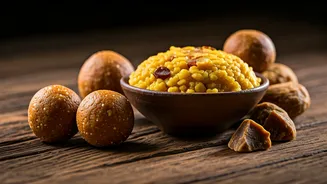
From the Arulmigu Dhandayuthapani Swamy Temple in Palani, Tamil Nadu, comes one of India’s most unique prasads. Panchamirtham, meaning 'five nectars', is a no-cook ambrosia that traditionally uses five main ingredients: crushed hill bananas, kandasari
sugar (a form of unrefined sugar), ghee, honey, and dates. Recreating this at home with organic, unrefined jaggery is not just an alternative—it’s a step closer to its rustic, authentic roots. The jaggery melts beautifully with the mashed bananas, creating a gooey, pulpy texture that refined sugar simply cannot replicate. The deep, molasses-like notes of the jaggery perfectly complement the sweetness of the dates and the floral hint of honey. A pinch of edible camphor (pacha karpooram) at the end lends it that unmistakable divine aroma, instantly transporting you to the temple’s sanctum.
2. Sabarimala Aravana Payasam
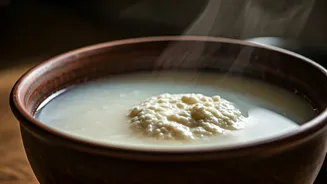
For devotees undertaking the pilgrimage to Sabarimala in Kerala, the journey concludes with two precious takeaways: a sense of spiritual fulfilment and a container of Aravana Payasam. This thick, dark, and intensely flavourful pudding is the epitome of slow-cooked perfection. It’s made with red matta rice, copious amounts of ghee, and, most importantly, jaggery. Using a dark, organic, unrefined jaggery is key to achieving the payasam's signature deep brown colour and rich, caramel-like taste. As the jaggery syrup bubbles and reduces, it coats each grain of rice, while the ghee adds a luxurious finish. Unlike sugar, which can sometimes be cloyingly sweet, jaggery provides a complex sweetness with earthy undertones that makes this prasad truly unforgettable. When you make it at home, the aroma of melting jaggery and ghee-fried coconut bits will fill your entire home with a festive, sacred fragrance.
3. Udupi Hayagreeva Maddi
Originating from the famous Udupi Krishna Matha in Karnataka, Hayagreeva Maddi is a protein-rich sweet with a fascinating legend. It is said to be the favourite of Lord Hayagreeva, an incarnation of Vishnu with a horse's head. The prasad is made from chana dal (Bengal gram), poppy seeds, coconut, and jaggery. The texture is its standout feature—a soft, slightly coarse pudding that’s both comforting and satisfying. When recreating this, organic jaggery is the perfect sweetener. It dissolves into the cooked dal to create a smooth, luscious consistency without becoming watery. The earthy sweetness of jaggery enhances the nutty flavour of the dal and toasted poppy seeds. A final tempering of ghee-fried cashews and raisins adds a delightful crunch and richness, making it a wholesome sweet that’s as nourishing as it is delicious.
4. Sakkarai Pongal
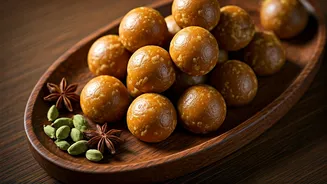
A staple prasad in countless temples across South India, especially during Pongal and other festivals, Sakkarai Pongal (or Chakkara Pongal) is the ultimate spiritual comfort food. This sweet dish is a beautiful medley of freshly harvested rice and moong dal, cooked until creamy and then sweetened generously. While some modern recipes use sugar, the authentic and far superior version uses jaggery. Organic, unrefined jaggery lends the pongal its classic golden-brown hue and a deep, mellow sweetness that sugar can’t match. It melds seamlessly with the mushy rice and dal, while hints of cardamom, edible camphor, and nutmeg create a truly divine flavour profile. Garnished with ghee-roasted cashews and raisins, every spoonful is a taste of pure, unadulterated tradition.
5. Puri Mahaprasad Khaja
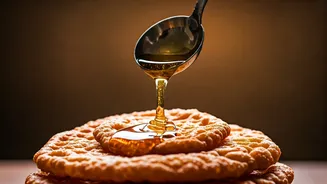
The Jagannath Temple in Puri, Odisha, is renowned for its 'Mahaprasad,' a staggering offering of 56 different food items (Chappan Bhog). Among the most sought-after is the Khaja—a crispy, layered pastry that's deep-fried and then soaked in syrup. While the temple version is iconic, you can recreate its spirit at home using jaggery. The process involves creating a dough of refined flour and ghee, rolling it into many thin layers, and frying until golden and crisp. The magic happens when you dip these flaky pastries into a warm syrup. By swapping sugar syrup for one made with organic jaggery, you create a Khaja with a deeper, more rustic flavour. The jaggery syrup coats the crispy layers, imparting a beautiful amber glaze and a treacle-like sweetness that is both complex and addictive. It’s a wonderful way to experience a piece of the legendary Mahaprasad.