




Start with a Digital Check
Before you grab your keys, grab your phone. Start by checking the latest weather forecasts from a reliable source. The government's official 'Mausam' app provides real-time weather information, forecasts, and warnings for storms and heavy rainfall directly
from the India Meteorological Department (IMD). Many navigation apps, like Google Maps and Mappls, also allow users to report waterlogging, road closures, and other hazards, giving you a crowd-sourced view of the route ahead. If authorities have issued warnings for your intended route, especially in hilly or coastal areas prone to landslides and flooding, consider postponing any non-essential travel.
Know the Dangerously Deep Numbers
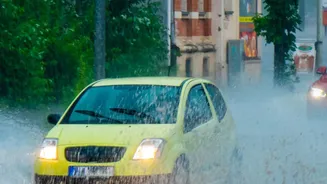
It’s incredibly difficult to judge the depth of standing or moving water. A simple rule to remember is: Turn Around, Don’t Drown. As little as six inches of moving water can knock an adult off their feet, and just twelve inches can be enough to float many passenger cars. Two feet of rushing water can carry away even larger vehicles like SUVs and pickup trucks. Most experts advise against driving through any water deeper than 10cm (about 4 inches) unless you are in a high-clearance vehicle. Even a small amount of water ingested through your car's air intake can destroy the engine, an issue known as hydrolocking.
Read the Visual Warning Signs
If you're already on the road and approach a waterlogged area, look for clues. Watch other vehicles ahead of you to gauge the water's depth. However, don't blindly follow if they are a different type of vehicle, like a truck or a bus. Look for the waterline on surrounding buildings, walls, or poles to get a sense of how deep the water is. If you cannot see the road markings or the kerb, it's a clear sign that the water is too deep to safely cross. Remember that floodwaters are often murky, hiding dangers like open manholes, deep potholes, and debris that could trap your vehicle or cause severe damage.
Drive Smart Through Unavoidable Water
If you absolutely must cross a shallow patch of water, do so with extreme caution. Drive slowly and steadily at a low speed (around 3-4 mph) to create a small bow wave, and try to keep your engine's revs higher than usual to prevent water from entering the exhaust pipe. Avoid stopping in the middle of the waterlogged stretch. Once you are through, gently tap your brakes a few times to help dry them out and ensure they are working effectively. Driving too fast through standing water can also lead to aquaplaning, where your tyres lose contact with the road surface, causing you to lose steering control.
What to Do If You Get Stuck
If your car stalls in rising water, your first priority is safety, not the vehicle. Do not try to restart the engine, as this can cause permanent damage. If the water is not moving rapidly, turn on your hazard lights, unbuckle your seatbelt, and try to exit the vehicle through a window or door to get to higher ground. If you are trapped in the car by rapidly moving water, it is often safer to stay in the vehicle, call for emergency services, and wait for help to arrive. Attempting to walk through fast-moving floodwater is extremely dangerous.