







From Practical Staple to Style Statement
For years, rainy season footwear has felt like a choice between the stylishly impractical and the practically drab. We’ve all sacrificed a favourite pair of sandals to a waterlogged street or resigned ourselves to uninspired plastic flip-flops. But now,
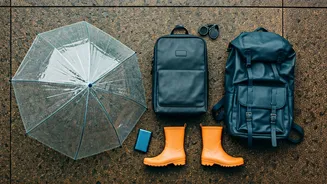
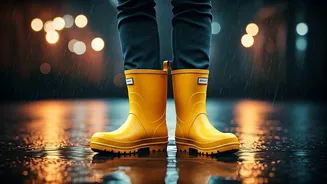
a hero has emerged from the sidelines. The gumboot, long associated with agricultural work and children’s rainy-day play, is having a major fashion moment. [12, 15] No longer just a functional necessity, it has become a deliberate style choice—a way to signal that you are conquering the monsoon with confidence and flair. Brands are now offering them in a spectrum of colours, patterns, and even sleek, office-appropriate designs, transforming the boot from a purely utilitarian item into a canvas for self-expression. [22]
A Brief History of the Boot
Before it was a rubber staple, the Wellington boot, as it’s formally known, began as a 19th-century leather riding boot popularised by Arthur Wellesley, the 1st Duke of Wellington. [3] He commissioned his shoemaker to adapt the existing Hessian military boot into something more practical for trousers and smarter for evening wear. [16] The style quickly became fashionable among the British aristocracy. [3] It wasn't until the development of vulcanised rubber and the demand for durable, waterproof footwear for soldiers in the trenches of World War I that the modern gumboot was born. [16, 19] Millions were produced to prevent trench foot, cementing the boot's reputation for being waterproof and resilient. [16, 24] After the wars, it became a go-to for farmers and outdoor workers, a symbol of pure function. [24]
The 2026 Monsoon Makeover
Today’s gumboots are a world away from their drab, purely functional ancestors. The modern iteration is all about choice and personality. Fashion-forward brands have introduced ankle-length Chelsea boot styles that are chic enough for a work commute, while others offer knee-high versions in bold, block colours and playful prints. [9, 11, 26] This shift is part of a broader trend where practicality and style are no longer mutually exclusive. [4, 15] In a fashion landscape where 'ugly' shoes have become status symbols and comfort is king, the gumboot fits right in. It embraces the so-called 'wrong shoe theory', where adding an unexpected footwear choice makes an entire outfit more interesting and unique. [9]
How to Style the Trend
The versatility of the modern gumboot is its greatest strength. For a classic, casual look, pair knee-high or ankle-length gumboots with skinny jeans or leggings and an oversized sweater. [4, 5] This creates a sleek silhouette that's perfect for running errands or a casual brunch. [4] To bring them into a more fashion-forward space, try pairing them with unexpected items. A pair of colourful gumboots can look incredibly chic with a flowy midi-dress or a skirt, creating a playful contrast between rugged and refined. [2, 4] For a bolder statement, tuck straight-leg jeans into your boots or wear them with shorts for a festival-inspired vibe. [2, 4] The key is to treat them not as an afterthought, but as the anchor of your outfit. [4]
More Than Just a Pretty Face
While their style credentials are now firmly established, let's not forget the gumboot's original purpose: unparalleled practicality. They offer complete waterproof protection, saving your feet—and your more expensive shoes—from the ravages of downpours and flooded streets. [14] The robust, often slip-resistant soles provide crucial stability on slick, uneven pavements, reducing the risk of falls. [18, 25] Furthermore, they act as a protective barrier against not just water, but also mud and environmental contaminants, preventing a host of potential skin infections that can thrive in damp conditions. [18] They are also incredibly low-maintenance; a quick rinse is all it takes to have them ready for their next outing. [14] In a season that demands so much of our wardrobe, the gumboot delivers on every front: style, safety, and sense.