



A stiff, aching back is a near-universal complaint, whether from sitting at a desk, a tough workout, or simple daily tension. The good news is that profound relief can come from a remarkably simple and gentle movement: the Cat-Cow pose.
What Exactly Is Cat-Cow?
Known in Sanskrit
as Marjaryasana-Bitilasana, Cat-Cow isn't a single static pose but a dynamic, flowing sequence between two positions. It’s one of the most fundamental and accessible movements in yoga, often used as a warm-up to gently awaken the spine. The exercise involves moving from a rounded spine (like an angry cat) to an arched spine (like a cow with a dipped back), coordinating the motion with your breath. This simple flow is praised by yoga instructors and physical therapists alike for its ability to improve spinal flexibility and promote better movement.
Step-by-Step: How to Perform Cat-Cow Correctly
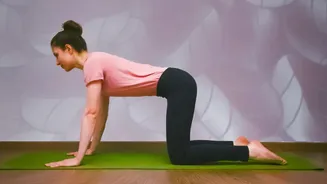
Proper alignment is key to unlocking the full benefits and ensuring the movement is safe. Start on a comfortable surface, like a yoga mat. Come onto your hands and knees in a 'tabletop' position. Your hands should be directly under your shoulders, and your knees should be directly under your hips. Keep your spine in a neutral, straight line and your gaze toward the floor. For Cow Pose: As you inhale, gently drop your belly toward the floor. Lift your chest and tailbone toward the ceiling, creating a 'U' shape with your spine. Draw your shoulder blades toward each other and look forward without crunching your neck. For Cat Pose: As you exhale, do the opposite. Round your spine up toward the ceiling. Tuck your tailbone under, draw your navel toward your spine, and gently release your head toward the floor, letting your chin fall toward your chest without force. The movement should feel like a wave flowing from your tailbone to the crown of your head. Aim to flow between the two poses for 5-10 rounds, linking one full breath to each movement.
The Core Benefits for Your Back and Beyond
The primary benefit of Cat-Cow is improved spinal mobility and flexibility. By moving the spine through both flexion (rounding) and extension (arching), it helps reduce stiffness and gently lubricates the joints. This can lead to better posture over time. The pose also engages the core muscles that support your spine. Furthermore, the rhythmic coordination of breath and movement has a calming effect, helping to relieve stress and tension held in the back, neck, and shoulders. It also gently massages abdominal organs, which can aid digestion and circulation.
Common Mistakes to Avoid
To get the most out of the pose and avoid strain, watch out for a few common errors. The most frequent mistake is moving too quickly and not coordinating with the breath. This should be a slow, mindful movement. Another error is initiating the movement from the neck instead of the tailbone; let the spine lead and the head follow. Also, be careful not to crunch the neck when looking up in Cow Pose or force the chin to the chest in Cat Pose. Finally, ensure your hands and knees are properly aligned under your shoulders and hips to maintain stability and prevent unnecessary pressure on your joints.
Modifications for Every Body
Cat-Cow is highly adaptable. If you have sensitive knees, place a folded blanket or towel underneath them for cushioning. For wrist pain, you can perform the pose on your fists or forearms instead of flat palms. If getting on the floor is a challenge, a seated version offers many of the same benefits. Sit tall in a sturdy chair with your feet flat on the floor and hands on your knees, then move through the same spinal arching and rounding motions. You can also perform a standing variation by placing your hands on a wall or the back of a chair.