





Why We're Drawn to Green
Science has a name for our love of nature: biophilia. Studies have consistently shown that spending time in green spaces can have profound effects on our well-being. It can lower stress by reducing cortisol levels, improve mood, and even enhance cognitive
function. In our fast-paced, digitally-driven lives, these natural sanctuaries offer a vital opportunity to disconnect, relax, and recharge. It's not just about escaping the city; it's about reconnecting with a fundamental part of our human experience. This connection is readily available across India, where diverse landscapes offer countless shades of green, each with its unique story and charm.
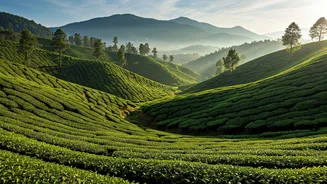
Munnar, Kerala: A Sea of Emerald Tea
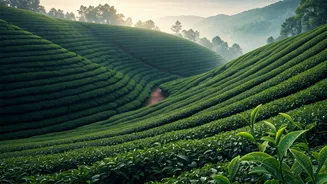
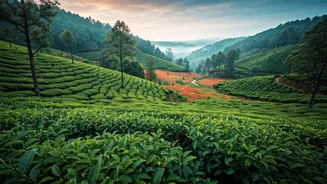
Imagine endless hills draped in a vibrant carpet of green. That is Munnar. Located in the Western Ghats, this Keralan hill station is world-famous for its sprawling tea plantations. Waking up to mist weaving through the valleys and the crisp scent of tea leaves in the air is an experience that stays with you. You can stroll through estates like Kolukkumalai, one of the highest tea plantations in the world, and witness the entire tea-making process from leaf to cup. The monsoon season, from June to September, is particularly magical, as the rain washes the landscape, leaving it impossibly lush and photogenic.
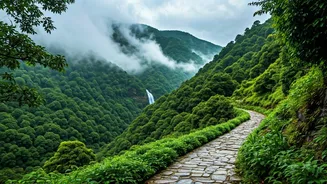
Coorg, Karnataka: The Scent of Coffee
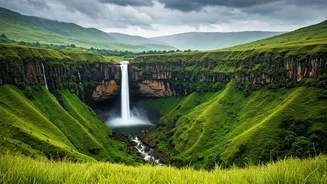
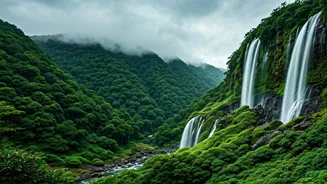
Known as the 'Scotland of India', Coorg's beauty lies in its misty hills, dense forests, and, most famously, its aromatic coffee estates. Unlike the open slopes of tea gardens, coffee in Coorg is often grown under the shade of large, native trees, creating a unique, canopied landscape that feels like a world of its own. Taking a guided tour through an estate offers a fascinating insight into the journey of coffee, from bean to brew. The region is blessed with numerous waterfalls and winding rivers, making it a haven for nature lovers. The air here, especially after a fresh spell of rain, carries a rich, earthy fragrance of damp soil and roasting coffee beans.
Meghalaya: Where Bridges Come Alive
In the rain-soaked hills of Meghalaya, the indigenous Khasi and Jaintia peoples have perfected a form of natural architecture that is simply breathtaking: the living root bridges. For centuries, they have guided the aerial roots of rubber fig trees across rivers and gorges, weaving them together to form strong, living structures that become more robust over time. These bridges, some of which are double-deckers, are a testament to a deep, symbiotic relationship between humans and nature. Trekking through the dense, tropical forests to reach these marvels, surrounded by the sound of gushing waterfalls and birdsong, is an adventure that feels both ancient and deeply spiritual.
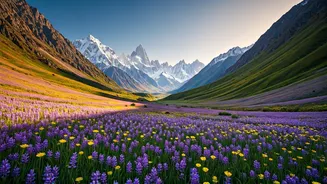
Valley of Flowers, Uttarakhand: A Himalayan Canvas
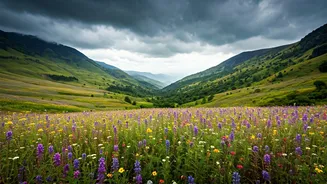
For a few months each year, a remote high-altitude valley in the Himalayas transforms into a vibrant spectacle of colour. The Valley of Flowers National Park, a UNESCO World Heritage Site, comes alive during the monsoon months of July and August when countless species of alpine flowers bloom in a breathtaking display. Set against a backdrop of snow-capped peaks and pristine glaciers, the meadows are carpeted with everything from blue poppies to pink primulas. The trek to the valley, starting from Govindghat, is an experience in itself, leading you through lush greenery and alongside the gushing Pushpawati River.