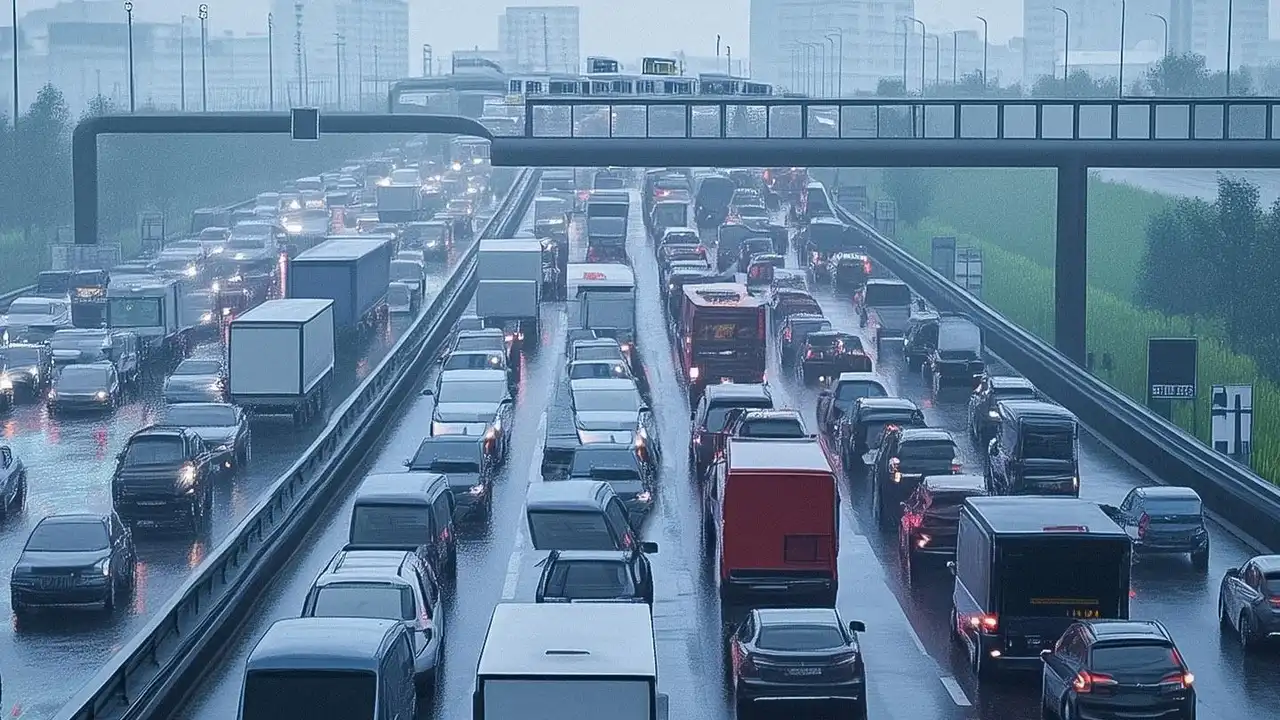





Starting November 1, Delhi is tightening its vehicle entry rules to combat winter pollution. For the lakhs of daily commuters from Noida and Gurugram, this means new restrictions and heavy fines. Here’s what you need to know to prepare.
The New Rule: What Exactly Is Changing?
As part of its
annual winter action plan to curb air pollution, Delhi will restrict the entry of vehicles registered outside the capital that do not meet Bharat Stage VI (BS-VI) emission standards. This rule will be in effect from November 1, 2026, to January 31, 2027. The measure specifically targets the influx of higher-polluting vehicles from neighbouring cities during the winter months, when air quality in the NCR typically plummets to hazardous levels. This is separate from, but complementary to, the Graded Response Action Plan (GRAP), which may impose further restrictions like the banning of BS-III petrol and BS-IV diesel cars based on the daily Air Quality Index (AQI). It's crucial for commuters to understand that this is an entry restriction for non-Delhi registered vehicles, in addition to other rules in place.
Which Vehicles Will Be Banned?
The ban applies to all petrol and diesel vehicles—both private and commercial—that are registered outside of Delhi and do not comply with BS-VI norms. This primarily includes older vehicles conforming to BS-III and BS-IV standards. According to transport department estimates, this move is expected to impact over 10 lakh vehicles in the surrounding NCR cities of Gurugram, Faridabad, Noida, and Ghaziabad. For context, Noida and Greater Noida have over four lakh non-BS-VI vehicles, while Gurugram and Faridabad have nearly two lakh. If your car, registered in Haryana or Uttar Pradesh, is a pre-BS-VI model, you will not be permitted to drive it into Delhi.
How to Check Your Vehicle’s Emission Norm
Many drivers may be unsure of their vehicle's emission standard. The easiest way to check is by visiting the official Parivahan Sewa website or using the mParivahan app. Navigate to the 'Know Your Vehicle Details' section and enter your vehicle's registration number. The results will display various details about your car, including a field for 'Emission Norms' or 'Norms', which will clearly state 'Bharat Stage VI', 'BS-IV', etc. You can also find this information printed on your vehicle's Registration Certificate (RC).
Enforcement and Penalties for Violators
Authorities plan to enforce the ban strictly at all major entry points to Delhi. Enforcement will be high-tech, relying on a network of Automatic Number Plate Recognition (ANPR) and AI-powered cameras to identify non-compliant vehicles attempting to enter the city. In addition to automated systems, around 300 enforcement personnel from the transport department will be deployed at border checkpoints to physically stop restricted vehicles. While the notification for this specific ban doesn't list a fine, violations of similar GRAP restrictions in the past have attracted a hefty penalty of ₹20,000 under the Motor Vehicles Act, giving a clear indication of how seriously these rules are taken.
Are There Any Exemptions?
Yes, there are a few important exemptions to this rule. The ban does not apply to any electric vehicles (EVs) or vehicles running on CNG. Furthermore, essential and emergency service vehicles, such as ambulances, fire tenders, and those used for government or enforcement duties, will be permitted entry regardless of their emission standard. Vehicles that are registered in Delhi are also not covered by this specific entry ban, though they are subject to other age-related and GRAP-based restrictions. If your outstater vehicle is a BS6 model, you can continue to enter Delhi.
Other Rules to Keep in Mind
Commuters should also be aware of another key rule being enforced : 'No PUC , No Fuel'. Starting November 1 , fuel stations across Delhi will be required to refuse petrol , diesel , or CNG to any vehicle that does not have a valid Pollution Under Control (PUC) certificate. This applies to all vehicles , regardless of their registration state or emission standard . Additionally , to discourage the use of private transport , parking fees at many authorised facilities in Delhi are set to double for the duration of the winter season , although parking at Metro stations is exempt from this hike .