







What is a Synthetic Cell?
Imagine building a car not by assembling pre-made parts, but by forging the metal, moulding the rubber, and weaving the upholstery from raw materials. That's the essence of a 'bottom-up' synthetic cell. Unlike genetic engineering, which modifies the DNA
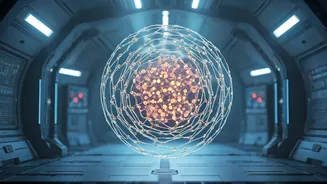
of existing organisms, this approach aims to construct a cell entirely from basic, non-living chemical components. The goal is to create a minimal life-like system that performs essential functions like growing, metabolising, and reproducing. The recent breakthrough, nicknamed 'SpudCell' by the University of Minnesota team that developed it, involves a simple lipid membrane enclosing a synthetic genome and the basic machinery needed to read its DNA and build proteins. While not considered fully 'alive'—it relies on a nutrient-rich environment to function—it represents a huge leap in recreating life's fundamental processes in the lab.
A New Toolkit for Biology
The ability to build a cell from known parts could fundamentally change how biological research is conducted. For decades, biologists have studied life by taking it apart—a 'top-down' approach. This has been incredibly successful, but it has its limits; even in the most-studied bacteria, the functions of many genes remain a mystery. By building a cell from the 'bottom-up', researchers know every single component and its intended role. This provides an unprecedented platform to study the essential requirements for life. What is the absolute minimum number of genes needed for a cell to function? How did the first life on Earth emerge from non-living chemistry? Synthetic cells offer a tangible way to test these profound questions. They serve as a chassis upon which scientists can add or remove components to see what happens, providing a clean, controllable system to understand the complex network of interactions that make a cell tick.
The Dawn of Cellular Factories
Beyond fundamental research, the long-term vision for synthetic cells is to harness them as microscopic factories. Today, we use genetically modified microbes to produce everything from insulin for diabetes to enzymes for detergents. However, these natural cells are highly complex and can be difficult to engineer predictably. Synthetic cells, designed from the ground up for a specific task, promise to be far more efficient and controllable. Imagine programmable cells designed to produce next-generation biofuels, new medicines, or even biodegradable plastics. Because they are not alive in the traditional sense, they can be designed to operate in harsh industrial conditions, such as high temperatures, where natural cells would perish. This could revolutionise manufacturing, making it more sustainable and decentralized.
Revolutionising Medicine
The potential applications in medicine are particularly exciting. Synthetic cells could be designed as smart drug delivery systems that target cancer cells with precision, releasing their therapeutic payload only upon detecting a tumour's specific chemical signature. This would drastically reduce the side effects associated with treatments like chemotherapy. They could also function as tiny biosensors within the body, detecting signs of disease at the earliest stages. Researchers envision patient-tailored treatments where synthetic cells are programmed specifically for an individual's biochemistry, avoiding problems like immune rejection. In the long term, this technology could pave the way for creating synthetic tissues and even organs for transplantation.
The Ethical Horizon
As with any powerful new technology, the creation of synthetic cells comes with profound ethical questions. The ability to create life-like systems from scratch forces us to reconsider the definition of life itself. There are significant biosafety and biosecurity concerns: what happens if a synthetic organism escapes the lab and interacts with natural ecosystems? Could this technology be misused to create harmful biological agents? Furthermore, questions of ownership and access are critical. To prevent the technology from being monopolized by large corporations, the team behind SpudCell has licensed it to a non-profit to ensure it remains open for researchers worldwide. These discussions are not holding the science back but are a crucial part of ensuring it develops responsibly.