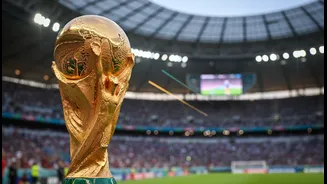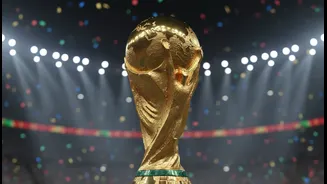





The Short, Agonizing Answer
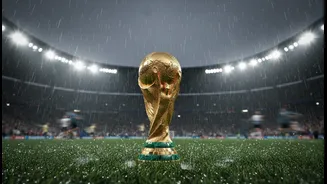
To answer the question directly: Lionel Messi has played in two FIFA World Cup finals. He reached the final with Argentina in both 2014 and 2022. But to leave it there would be to miss the point entirely. These were not just two matches; they were two vastly
different tales that represent the complete, dramatic arc of his international career—one of devastating heartbreak and one of glorious, career-defining redemption.
2014: The Agony in Rio de Janeiro
The first final was on July 13, 2014, at the iconic Maracanã Stadium in Brazil. Argentina faced a formidable German side that had just humiliated the host nation 7-1 in the semi-finals. At 27, Messi was at the absolute peak of his powers, expected to carry his nation to glory just as Diego Maradona had done in 1986. He was awarded the Golden Ball as the tournament's best player, but it was a hollow prize. The match itself was a tense, grinding affair. Argentina had clear chances, most notably a one-on-one opportunity for Gonzalo Higuaín that he pulled wide. Messi himself had a golden chance early in the second half, breaking through only to drag his shot agonizingly past the far post. The game remained goalless after 90 minutes. Then, in the 113th minute of extra time, German substitute Mario Götze controlled a cross on his chest and volleyed it into the net, securing a 1-0 victory for Germany. For Messi, it was the ultimate 'what if', a dream that dissolved into a nightmare just minutes from a penalty shootout.
2022: The Triumph in Lusail
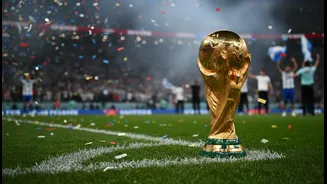
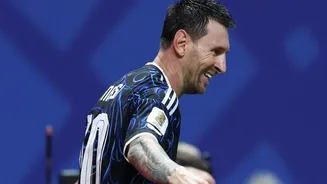
Eight years later, a different Messi stepped onto the pitch in Lusail, Qatar, for his second World Cup final on December 18, 2022. This time, the opponent was the defending champion, France, led by his then-club teammate Kylian Mbappé. Now 35, Messi was no longer the explosive force of 2014 but a master conductor, a leader who had willed his team through the tournament. What followed is widely considered one of the greatest finals in football history. Messi opened the scoring with a coolly taken penalty and was involved in Ángel Di María's goal for a 2-0 lead that seemed decisive. But in a stunning late twist, Mbappé scored twice in 97 seconds to force the match into extra time. In the extra period, Messi scored again to make it 3-2, seemingly the storybook winner. Yet again, France equalised through another Mbappé penalty, completing his hat-trick. The match went to a penalty shootout, where Argentina, led by the heroics of goalkeeper Emiliano Martínez, finally triumphed 4-2. This time, there was no heartbreak, only pure joy as Messi finally lifted the one trophy that had eluded him, cementing his status as arguably the greatest player of all time.
Two Finals, Two Different Legacies
The Messi of 2014 was a player defined by individual brilliance who couldn't quite drag his team over the finish line. His Golden Ball award that year felt like a consolation prize, a recognition of his talent in a tournament that ended in disappointment. He was the undisputed star, but the collective fell just short. In contrast, the Messi of 2022 was the heart and soul of a true collective. He was the captain in every sense, leading by example, scoring crucial goals, and inspiring a squad that fought for him as much as for the flag. He scored in the group stage, the round of 16, the quarter-final, the semi-final, and the final—the first player in history to do so. His victory in 2022 wasn't just a personal triumph; it was the culmination of a journey, a redemption story that completed his footballing narrative.