




Why Your Cat Climbs the Curtains
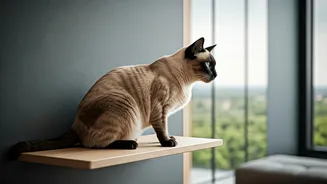
Before you invest in any feline furniture, it's essential to understand your cat's behaviour. Cats are not just predators; they are also prey animals. This dual instinct drives their need for high perches. From a high vantage point, a cat can survey its
territory for potential threats and opportunities (like an unsuspecting toy mouse) without feeling vulnerable. In a multi-pet household, vertical space provides an escape route and helps establish hierarchy. For a solitary cat in an apartment, climbing is a form of exercise and mental stimulation that breaks the monotony of an indoor life. When you see your cat scaling the bookshelf or curtains, it isn't being naughty—it's simply answering a deep, primal instinct to get up high.
Enter the Cat Superhighway
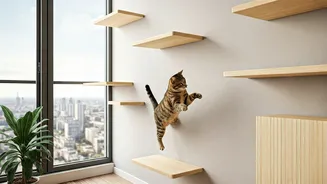
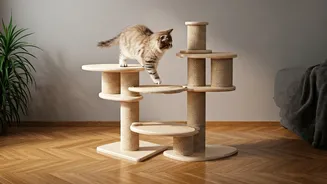
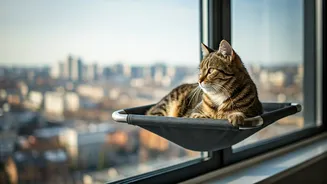
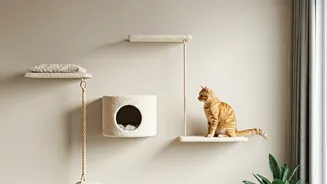
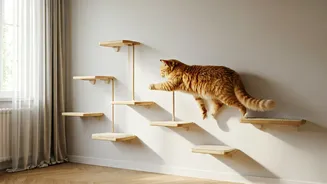
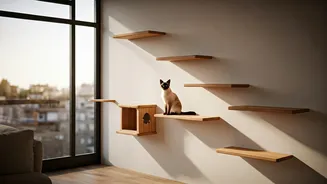
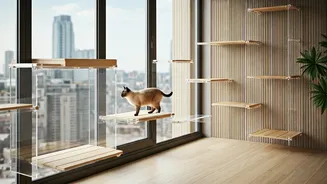
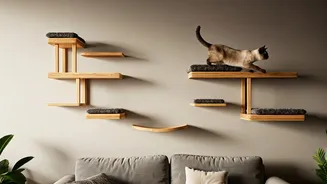
This is where multi-level wooden wall bridges come in. Think of them not as individual pieces of furniture, but as components of a 'cat superhighway.' This is a network of shelves, perches, hammocks, and bridges that are mounted on your walls, creating an elevated path for your cat to navigate. Unlike a bulky cat tree that occupies precious floor space, a wall-mounted system transforms unused vertical areas into a dynamic playground. It's a brilliant solution for smaller apartments, allowing you to enrich your cat's environment without cluttering your own living space. A well-designed system can be a stylish, architectural feature in your home, blending seamlessly with your decor.
Choosing the Right Materials
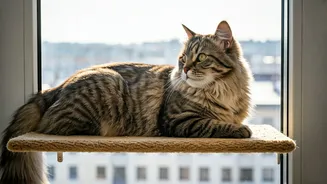
The market is flooded with options, but for durability and safety, solid wood is king. Look for bridges and shelves made from pine, birch, or other sturdy woods that won't bow or crack under your cat's weight. Plywood is a decent alternative, but ensure it's a high-quality, multi-ply variety. The surface is just as important. While sleek wood looks great, cats need grip. Many of the best designs incorporate sisal rope wraps or carpeted sections to provide secure footing. Sisal is an excellent choice as it also doubles as a scratching surface, potentially saving your sofa from your cat's claws. Avoid particleboard or MDF, as they can sag over time and may not hold screws securely, posing a significant safety risk.
What Makes a Great Wall Bridge?
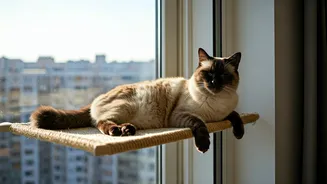
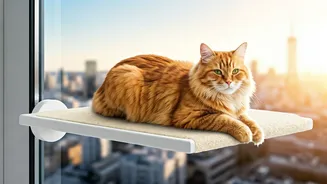
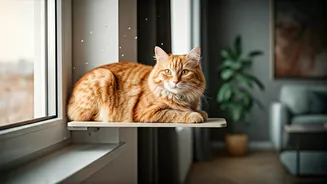
A cat bridge connects two points, such as two shelves or a shelf and a window perch. A good one has several key features. First, stability is non-negotiable. The bridge should be securely anchored at both ends. The individual slats or steps should be spaced appropriately for a cat to walk on confidently—not too far apart, not too close together. Rope bridges offer a fun, wobbly challenge for agile cats, but a solid wooden walkway might be better for senior felines or less confident climbers. The width should be sufficient for your cat to comfortably walk across without feeling precarious. Some of the best systems are modular, allowing you to add sections and change the configuration as you observe what your cat enjoys most.
Planning and Installation: Safety First
Before you drill a single hole, map out your cat's highway. The goal is to create a logical path. Start near a piece of furniture your cat can already climb on, like a sofa or a low table, to provide an 'on-ramp.' Connect this to a series of shelves leading to a high-up 'destination,' like a comfy perch with a view out the window. When it comes to installation, do not take shortcuts. Use a stud finder to locate the wooden studs behind your plasterboard walls. Anchoring heavy-duty furniture directly into studs is the only way to ensure it can support a leaping, playing cat. The hardware that comes with a kit might not be sufficient for your wall type; don't hesitate to purchase stronger wall anchors or screws from a hardware store. A securely installed cat highway is a source of joy; a poorly installed one is a dangerous accident waiting to happen.