
The Epicentre: Mathura & Vrindavan, Uttar Pradesh
To experience Janmashtami in its most authentic form, a journey to Mathura and Vrindavan is essential. Mathura, revered as Krishna's birthplace, and Vrindavan, where he spent his playful childhood, transform into a spiritual spectacle. The main celebrations
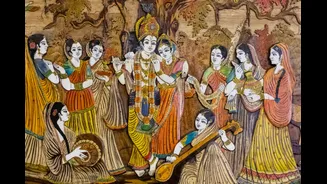
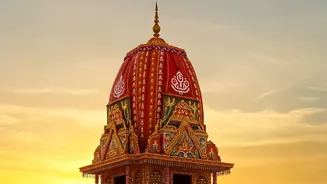
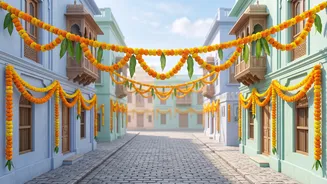
in Mathura are centered around the Shri Krishna Janmabhoomi Temple, where devotees gather for the midnight 'abhishek' or ritualistic bath of the deity, marking the exact moment of his birth. The air hums with continuous chants, hymns, and the sound of bells. Vrindavan, just a few kilometres away, is home to over 4,000 temples, including the famous Banke Bihari Temple and ISKCON temple, which host their own grand celebrations with elaborate flower decorations, kirtans, and Raas Leela performances depicting Krishna's life. For travellers, this twin-city experience offers a deep dive into the historical and devotional core of the festival.
The Urban Spectacle: Mumbai, Maharashtra
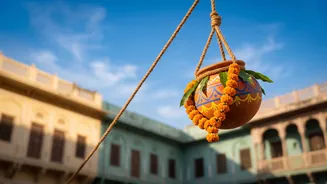
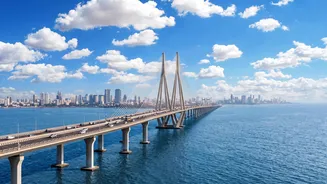
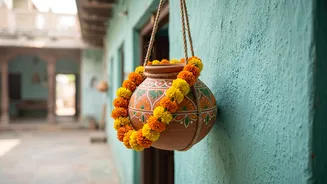
For a high-energy, community-driven celebration, Mumbai is the place to be. The city is famous for its Dahi Handi festivities, which take place on the day after Janmashtami. This tradition reenacts the story of a young, mischievous Krishna stealing butter. Teams of young people, called 'Govindas', form multi-tiered human pyramids to reach and break a clay pot ('handi') filled with curd, suspended high above the streets. Areas like Dadar, Thane, and Ghatkopar host major competitions with huge cash prizes, attracting massive crowds and even celebrities. The atmosphere is electric with music, dance, and the roar of the crowd chanting “Govinda Ala Re!”. It’s a thrilling cultural spectacle that showcases teamwork, skill, and unbridled joy.
The King's Abode: Dwarka, Gujarat
Celebrate Janmashtami in the legendary kingdom of Lord Krishna himself. Dwarka, one of the four sacred Char Dham pilgrimage sites, holds immense significance as the ancient city Krishna founded after leaving Mathura. The celebrations are centered at the magnificent Dwarkadhish Temple, which remains open all night for the festival. Devotees queue for hours to witness the powerful midnight 'aarti' and 'abhishek' ceremony. The entire temple town, situated by the Arabian Sea, is illuminated, with devotional songs and cultural programs creating a deeply spiritual ambiance. Visiting Dwarka for Janmashtami offers a unique opportunity to connect with Krishna's legacy as a king and statesman, in the very city he once ruled.
The Southern Tradition: Udupi, Karnataka
Experience a different flavour of Janmashtami in the coastal town of Udupi. The celebrations here are centered around the Sri Krishna Matha, a 13th-century temple founded by the philosopher-saint Madhvacharya. Udupi has its own unique traditions and follows a distinct calendar. A unique feature is the 'Kanakana Kindi', a small window through which devotees worship the deity. During the festival, special pujas are performed, and the air is filled with the sounds of classical devotional music. The day after Janmashtami, the temple hosts the 'Sri Krishna Leelotsava', also known as Vitla Pindi, where a clay idol of Krishna is taken out in a grand procession around Car Street, accompanied by folk artists and dancers. This offers a more serene but equally profound celebratory experience.
A Note on Dates for 2026
For your travel planning, it's important to know that Janmashtami will be celebrated across most of India on Friday, September 4, 2026. The main puja and birth celebrations occur at midnight, which means the festivities technically cross over into September 5. Some Vaishnava traditions and ISKCON may observe the main festival day on September 5. The vibrant Dahi Handi celebrations in Maharashtra are typically held the day after the primary Janmashtami date, which would be September 5, 2026. Always check local temple schedules closer to the date, as timings can vary slightly by region.