





First, A Quick Safety Check
Before you jump into any exercise, it's crucial to ensure your chosen bench is stable and secure. Give it a good push and a shake to check for any wobbles. Make sure it's dry and free of any debris. Always listen to your body; if an exercise causes sharp
pain, stop immediately. It's also wise to perform a light warm-up, like a brisk walk or some dynamic stretches, to prepare your muscles for the work ahead.
Bench Dips for Triceps
This is a classic move for targeting the muscles on the back of your arms. Sit on the edge of the bench, placing your hands shoulder-width apart on the bench next to your hips, fingers pointing forward. Slide your hips forward off the bench. For beginners, keep your knees bent at a 90-degree angle with your feet flat on the ground. To increase the difficulty, straighten your legs out in front of you, resting on your heels. Lower your body by bending your elbows until they reach about a 90-degree angle, keeping your back close to the bench. Push through your palms to raise your body back to the starting position. Aim for 2-3 sets of 10-15 reps.
Incline and Decline Push-ups
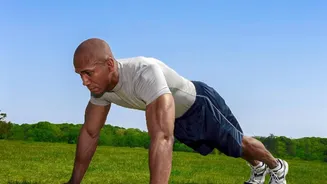
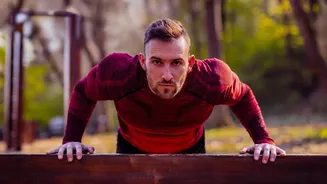
The bench allows you to modify the standard push-up to target different parts of your chest and shoulders. For an incline push-up, which is great for beginners and focuses on the lower chest, place your hands on the bench and your feet on the ground. For a decline push-up, which is more challenging and works the upper chest and shoulders, place your feet on the bench and your hands on the ground. In both variations, keep your body in a straight line from head to heels, engage your core, and lower your chest toward the surface your hands are on before pushing back up.
Bulgarian Split Squats
This exercise is a powerhouse for your legs, targeting your quads, hamstrings, and glutes while also challenging your balance. Stand about two feet in front of the bench, facing away from it. Extend your right leg back and place the top of your foot on the seat of the bench. Your left foot should be far enough forward so that when you lower down, your knee stays behind your toes. Keeping your torso upright, lower your hips until your front thigh is nearly parallel to the ground. Drive through your front heel to return to the start. Complete all reps on one side before switching.
Bench Step-Ups
A fantastic, low-impact move for your glutes and hamstrings that also gets your heart rate up. Face the bench and place your entire right foot firmly on the surface. Press through your right heel to 'step up' onto the bench, bringing your left foot to meet your right. Maintain control as you step back down with your left foot first, then your right. You can alternate legs with each rep or complete a full set on one side before switching to the other. To increase the intensity, drive your opposite knee up toward your chest as you step up.
Bench Leg Raises and Tucks
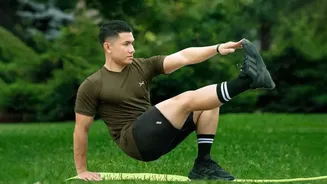
Use the bench to effectively target your core, especially the often hard-to-reach lower abdominals. Sit on the edge of the bench, holding the sides for support. Lean back slightly, keeping your back straight. For leg raises, keep your legs straight and lift them until they are perpendicular to the floor before slowly lowering them back down. For knee tucks, extend your legs out and then pull your knees toward your chest in a 'crunching' motion. Both movements should be slow and controlled, using your abs to do the work.
Box Jumps (With Caution)
For a more advanced, explosive movement, you can perform box jumps. This plyometric exercise builds power in your entire lower body. Stand in front of the bench with your feet hip-width apart. Squat down slightly and use your arms to help propel you as you jump, landing softly on the bench with both feet. It is crucial to land with your knees bent to absorb the impact. Always step back down; do not jump down, as this significantly increases injury risk. If you are new to this, start with step-ups to build strength and confidence first.