




Living with asthma means being mindful of your breathing. While prescribed medication is essential, research shows certain breathing exercises can be a helpful addition to your management plan, potentially improving quality of life.
Why Breathing Exercises Can Help
When you have asthma,
your airways can become inflamed and narrow, making it hard to breathe. Breathing exercises are non-pharmacological techniques that aim to help manage symptoms. They work by strengthening respiratory muscles like the diaphragm, promoting slower, more controlled breathing, and improving the flexibility of your rib cage. Studies suggest that while these exercises don't change the underlying condition, they can improve quality of life and help with symptoms of hyperventilation (over-breathing) that often accompany asthma. Think of them as a supportive tool to use alongside your regular treatment, not a replacement for it.
The Papworth Method: Breathing and Relaxation
Developed in the 1960s at Papworth Hospital, this method combines breathing retraining with relaxation techniques. It is typically taught by a physiotherapist and focuses on teaching you to breathe slowly and gently from your diaphragm (the large muscle under your lungs) and through your nose. The goal is to make this efficient breathing pattern a habit that you can apply throughout your daily activities. Research has shown that the Papworth Method can help reduce respiratory symptoms and improve the quality of life for people with asthma.
Buteyko Breathing: The 'Controlled Pause'
The Buteyko method is based on the theory that people with asthma tend to over-breathe (hyperventilate). This technique, developed by Ukrainian doctor Konstantin Buteyko, focuses on breathing slowly, gently, and through your nose to correct this pattern. A key exercise is the 'controlled pause', where you hold your breath after a normal exhalation until you feel the first urge to breathe in. Several clinical trials have found that the Buteyko method may reduce asthma symptoms and the need for reliever medication for some people, although it hasn't been shown to change underlying lung function.
Diaphragmatic and Pursed-Lip Breathing
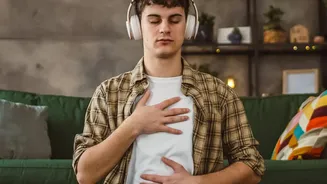
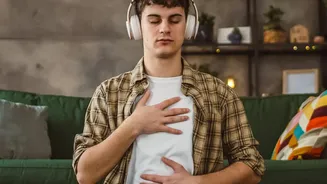
Two of the most commonly taught techniques are diaphragmatic (or 'belly') breathing and pursed-lip breathing. Diaphragmatic breathing focuses on engaging the large muscle below your lungs to take deeper, more efficient breaths. You can practice by placing one hand on your belly and one on your chest, and breathing in so that your belly rises instead of your chest. Pursed-lip breathing helps slow your breathing down, especially when you feel short of breath. To do it, you breathe in slowly through your nose and then breathe out for at least twice as long through pursed lips, as if you were about to whistle. This can help clear trapped air from the lungs.
A Note on Yoga and Pranayama
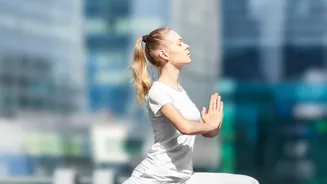
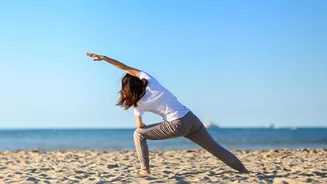
Traditional Indian practices of yoga and pranayama (yogic breathing) have also been studied for their effects on asthma. Many pranayama techniques incorporate slow, deep, and controlled breathing, which aligns with the principles of other breathing exercises. Research suggests that pranayama may improve asthma control and quality of life, but like other methods, it doesn't appear to significantly change core lung function test results. These practices can also help reduce stress and anxiety, which are common asthma triggers.