


Understanding Topsoil Crusting
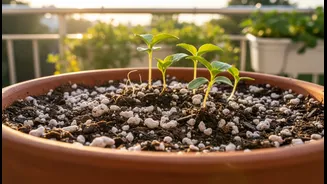
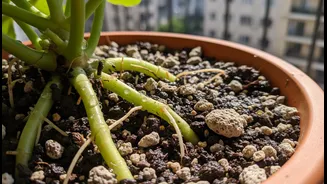
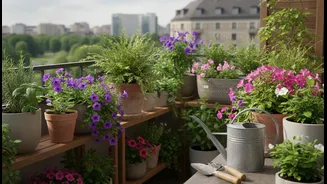
That hard, cracked layer on top of your potted soil is known as a physical soil crust. It forms when the force of water—like a continuous drenching from rain—shatters the small soil aggregates. The finer particles then settle into the gaps between larger
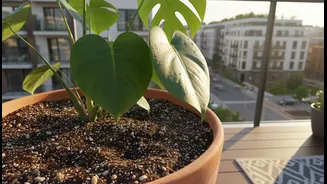
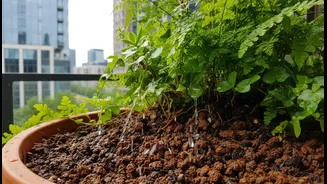
ones, and as the surface dries, they cement together, forming an impermeable cap. In a confined balcony pot, this process is accelerated. Unlike garden beds, pots have limited volume and can become compacted quickly, making them especially vulnerable to crust formation after repeated downpours.
Why a Crust Is Bad for Your Plants
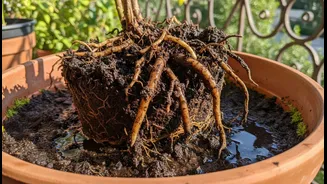
A soil crust does more than just look bad; it actively harms your plants. This hardened layer prevents water from penetrating the soil, causing it to run off the sides instead of reaching the roots. It also blocks oxygen flow, which is crucial as plants absorb most of their oxygen through their root systems. This lack of air and water creates a stressful environment that can lead to root rot, stunted growth, and difficulty absorbing essential nutrients. Over time, repeated drenching can also wash away, or "leach," nutrients from the pot, and the crusty barrier makes it harder to replenish them.
Meet Perlite: Your Soil's Best Friend
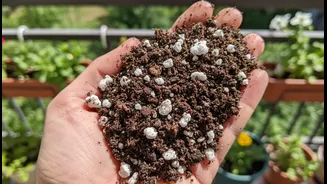
You’ve likely seen the small, white, lightweight specks in commercial potting mixes; that's perlite. It's not a type of styrofoam, but a natural volcanic glass that is heated to extreme temperatures until it pops like popcorn, expanding up to 20 times its original size. This process creates an incredibly lightweight, porous, and sterile material. With a neutral pH, it won't alter your soil's chemistry, and because it doesn't decompose, its benefits are long-lasting. Its primary role in gardening is to improve soil structure, especially for container plants.
The Science of Crust Prevention
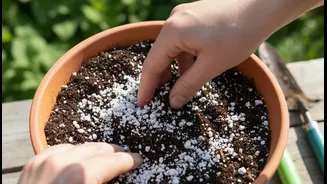
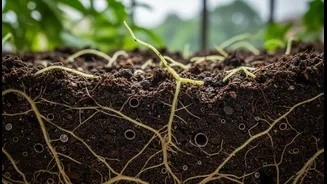
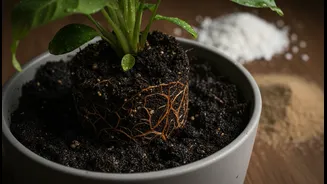
Perlite's unique physical structure is the key to preventing topsoil crusting. When mixed into soil, these rigid, irregularly shaped particles act as tiny barriers that keep soil particles from packing together. By physically separating the fine silt and clay particles, perlite prevents them from forming a dense, cemented layer when they dry. Instead of a solid cap, the soil surface remains loose and open. This allows rain to drain through the soil profile evenly rather than pounding the surface and causing compaction, effectively eliminating the conditions that lead to crust formation in the first place.
More Than Just Drainage
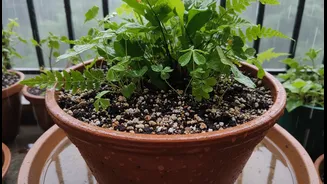
While preventing crusts is a major benefit, perlite's advantages don't stop there. The network of air pockets it creates throughout the potting mix dramatically improves aeration, ensuring roots have a constant supply of oxygen. This is vital in wet conditions to fend off fungal diseases and root rot. While perlite is famous for improving drainage, its porous surface also holds onto a small amount of water and nutrients, which it then releases to the plant roots. This creates a more stable growing environment, keeping soil from becoming either completely waterlogged or bone-dry—a perfect balance for pots on a rain-soaked balcony.
How to Use Perlite Effectively
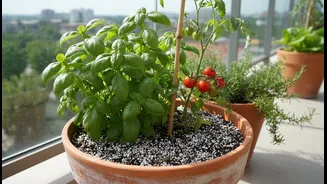
Incorporating perlite is simple. For general-purpose potting mixes for balcony plants, a good ratio is about 1 part perlite to 3 or 4 parts potting soil. If you are planting succulents, herbs, or other plants that require very sharp drainage, you can increase the ratio to 1 part perlite to 2 parts soil. When mixing, it's a good idea to slightly moisten the perlite first to minimise dust. Blend it thoroughly with your soil before potting your plants. This one-time addition will keep the soil structure loose and airy, providing lasting protection against compaction and crusting for the life of the plant in that pot.