








The Official Stance on Trade
Since 2019, formal trade relations between India and Pakistan have been largely frozen. Pakistan suspended bilateral trade after political developments in Jammu and Kashmir. This was followed by further restrictions from both sides after subsequent escalations.
Officially, only a very limited trade is permitted, primarily for essential items like pharmaceutical products and raw materials on humanitarian grounds. Despite this, central bank data from Pakistan shows continued, and even growing, payments for imports from India, pointing to a reality far more complex than the official policy suggests.
The Dubai Detour and Other Routes
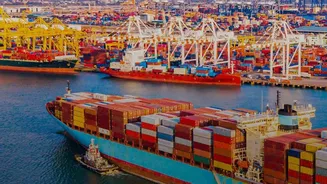
So, how are these goods crossing over? The primary method is through third-country routing. An economic think tank, the Global Trade Research Initiative (GTRI), estimates that Indian goods worth over $10 billion annually reach Pakistan indirectly. The most common route is via ports in the United Arab Emirates, particularly Dubai, as well as Singapore and Colombo. In this 'grey zone' strategy, Indian companies ship goods to these hubs. There, the items are stored in bonded warehouses, their labels and documentation are altered to show a new country of origin—like 'Made in UAE'—and then they are re-exported to Pakistan. This allows businesses to bypass direct trade restrictions.
What's on the Shopping List?
The goods making this indirect journey cover a wide spectrum, driven by persistent demand in Pakistan. Officially sanctioned trade is dominated by pharmaceuticals and organic chemicals, which accounted for over 96% of imports in 2025-26. This includes critical items like vaccines and active pharmaceutical ingredients (APIs), for which India is a competitive and reliable supplier. Beyond official channels, the indirect trade includes a much broader range of products. Before the restrictions, items like cotton, plastics, machinery, and various food products were major Indian exports to Pakistan. It is this wider basket of goods—from raw materials for the textile industry to consumer products—that now finds its way through costlier, indirect routes.
Market Forces vs. Political Barriers
This thriving indirect trade highlights a fundamental principle: market demand often finds a way to be met, regardless of political barriers. For many Pakistani industries, particularly pharmaceuticals and textiles, sourcing raw materials from India is not just a choice but an economic necessity due to price, quality, and proximity. The Pak-India Business Council has noted that the suspension has forced Pakistani businesses to import essential goods from more distant markets, significantly increasing transport and freight costs. For example, the pharmaceutical industry could save billions annually by sourcing directly from India. Similarly, the textile sector has faced high costs importing cotton from as far as Brazil and the United States.
The Cost of Indirect Trade
While this indirect trade keeps supply chains moving, it comes at a significant cost. The layers of logistics—shipping to a third country, warehousing, relabelling, and final shipment—add substantial expense. These costs are ultimately borne by Pakistani businesses and, eventually, the end consumers. This inflates the prices of finished goods, from medicine to clothing. According to one estimate, the trade suspension since 2019 has resulted in an estimated economic loss of $40 billion for Pakistan. This figure accounts for the higher costs of sourcing goods from elsewhere and the lost opportunities for efficient, direct trade. While middlemen in transit hubs profit, the economies of both India and Pakistan miss out on direct revenue and the benefits of a larger, formalised trading relationship, which the World Bank once estimated could be worth $37 billion.