




What Exactly Is an AI Tutor?
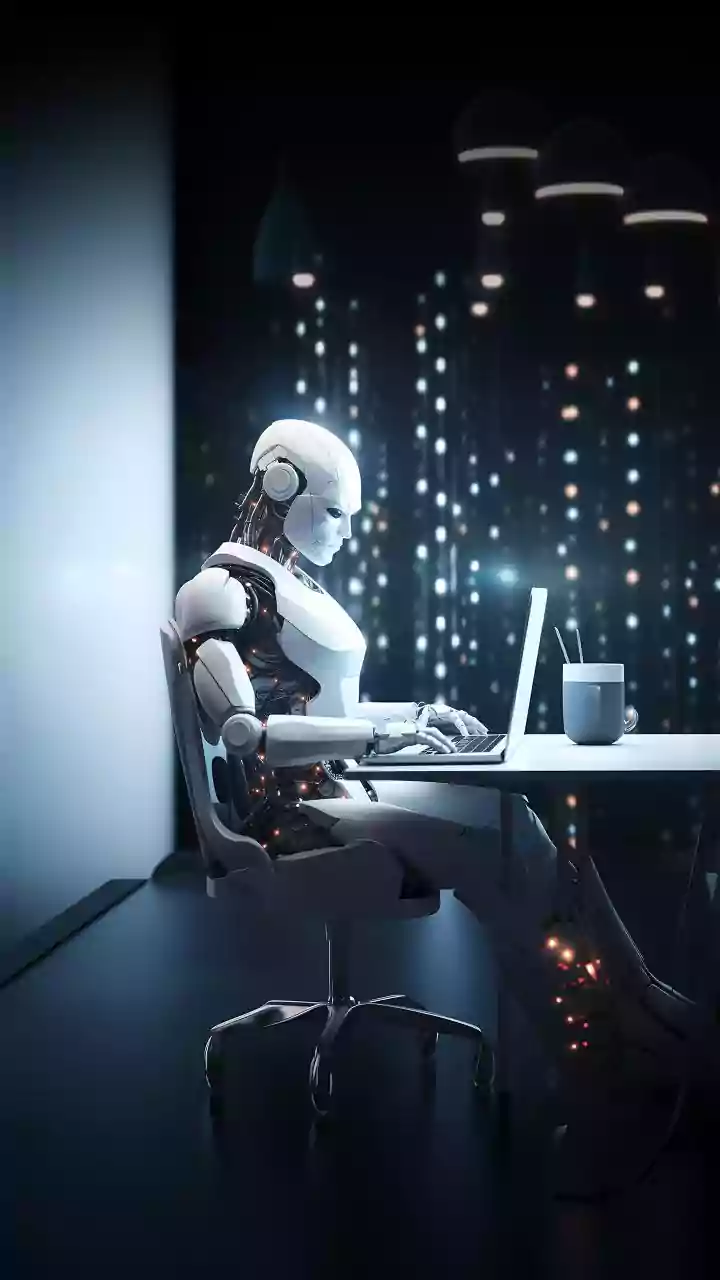
Think of the familiar chatbot, but with a PhD in every subject. An AI tutor is a sophisticated software program, powered by artificial intelligence, designed to simulate a one-on-one teaching experience. Unlike static video lectures or multiple-choice
quizzes, these tutors are interactive. Students can ask questions in their own words, request explanations for complex topics like the laws of thermodynamics or a difficult maths problem, and receive instant, tailored responses. These platforms aim to go beyond just providing answers; they guide students through the process of finding the solution themselves, acting as a Socratic learning partner rather than a simple answer key.
The Engine: How Does It Work?
The magic behind these AI tutors lies in Large Language Models (LLMs), the same technology that powers tools like ChatGPT. These models have been trained on a vast amount of text and data from the internet, books, and academic papers. EdTech companies then fine-tune these general models on their specific educational content—textbooks, lesson plans, and question banks. This specialization ensures the AI provides responses that are not only accurate but also aligned with the curriculum, whether it's for the CBSE boards, ICSE, or competitive exams like JEE and NEET. The 'real-time' and 'interactive' aspects come from the AI's ability to understand a student's query, assess their previous responses, and instantly generate a new question or explanation to keep the learning process moving forward.
The Promise: A Personal Coach for Every Student
The potential benefits are enormous, especially in a country like India with its diverse student population and high-stakes examination culture. The biggest promise is personalization at scale. An AI tutor can identify that a student is struggling with algebra but excelling in geometry and adjust the difficulty and focus accordingly. This is something a human teacher with 40 students in a classroom simply cannot do for everyone. Furthermore, accessibility is a huge draw. An AI tutor is available anytime, anywhere, perfect for late-night study sessions or clearing a doubt just before an exam. For many families, it could offer a more affordable and consistent alternative to expensive private tuitions. This democratisation of personalised support could help level the playing field, giving every student a dedicated learning companion.
A Reality Check: The Hurdles and Concerns
However, the technology is not a magic bullet. A significant concern is accuracy. LLMs are known to 'hallucinate'—that is, confidently present incorrect information as fact. In an educational context, this could be disastrous, leading students to learn the wrong concepts. EdTech companies are building safeguards, but the risk remains. There's also the question of equity. While AI tutors are cheaper than human ones, they still require a reliable internet connection and a smartphone or computer, which are not universally available across India. Moreover, there are pedagogical concerns. Will over-reliance on an AI tutor weaken a student's ability to problem-solve independently or seek help from human teachers and peers? Education is not just about information transfer; it's also about mentorship, inspiration, and emotional connection—qualities an AI cannot yet replicate.
What It Means for Indian Education
The rise of AI tutors is set to challenge the traditional 'coaching class' model that dominates the Indian educational landscape. Instead of one teacher broadcasting to hundreds, students can have a private, infinitely patient guide. This could shift the focus from rote memorization to genuine conceptual understanding. Schools and teachers may also find these tools valuable. An AI can handle the repetitive task of explaining basic concepts, freeing up teachers to focus on higher-order skills like critical thinking, debate, and collaborative projects in the classroom. The most likely future is not one of AI replacing teachers, but of a hybrid model where AI acts as a powerful assistant to both students and educators.