






A Celestial Double Feature
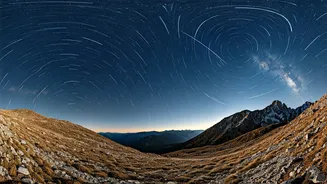
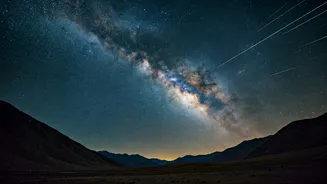
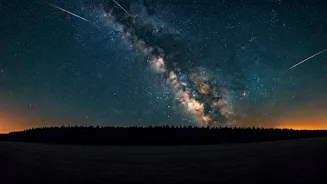
Skywatchers are in for a treat this month as two meteor showers, the Southern Delta Aquariids and the Alpha Capricornids, reach their peak activity in the final days of July. Both showers are expected to peak around the night of July 29-30, 2026. The
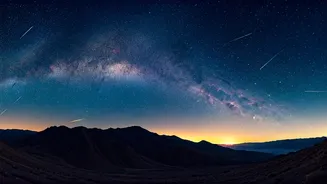
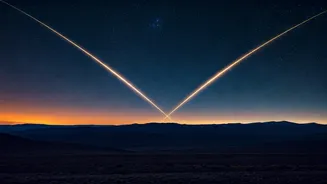
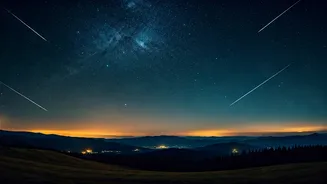
Southern Delta Aquariids are known for producing a steady stream of faint meteors, with up to 20 per hour under ideal conditions. The Alpha Capricornids, while less frequent at about five per hour, are famous for producing exceptionally bright and slow-moving fireballs that can brilliantly streak across the sky. This cosmic coincidence provides a perfect opportunity to step outside and look up, but there's a significant catch this year that puts the focus squarely on the quality of our nighttime environment.
The Challenge of a Bright Moon
Unfortunately, the 2026 peak of these showers coincides with a major obstacle for stargazers: a nearly full moon. The moon will reach its full phase on July 29, meaning the sky will be illuminated by its bright glare throughout the prime viewing hours. This intense moonlight will make it very difficult to see the fainter meteors of the Delta Aquariid shower, effectively washing them out. While the bright fireballs of the Alpha Capricornids have a better chance of piercing through the lunar glare, expectations should be managed. For a better chance to see a higher number of meteors, experts suggest looking in the week before the peak, between July 21 and July 26, when the moon sets earlier and leaves the pre-dawn sky dark.
Your Guide to Stargazing
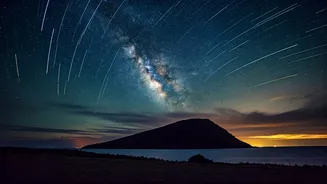
To maximise your chances of catching a shooting star, the basic rules of meteor watching apply. The most important step is to get away from city lights. Your naked eye is the best tool for the job; binoculars and telescopes have too narrow a field of view for spotting meteors. Find a safe, open area with an unobstructed view of the sky. Lie back on a blanket or reclining chair to take in as much of the sky as possible without straining your neck. Allow your eyes at least 20-30 minutes to fully adapt to the darkness, and avoid looking at your phone. Patience is key. Meteors often come in spurts, so settle in for a comfortable wait. The best viewing time is typically after midnight and into the pre-dawn hours, when the radiant point of the showers is highest in the sky.
The Disappearing Night
The difficulty of viewing this year's July meteors serves as a powerful, real-time illustration of a much larger issue: light pollution. For most people in India, the orange glow of 'skyglow' from cities and towns has all but erased the stars from view. Research indicates that over 80% of the world's population lives under light-polluted skies, a problem that is growing faster in India than the global average. This excessive and misdirected artificial light doesn't just obscure our view of the cosmos; it has documented negative impacts on human health, disrupting sleep patterns and contributing to health disorders. It also wreaks havoc on nocturnal wildlife, affecting the navigation, hunting, and breeding patterns of countless species.
In Search of True Darkness
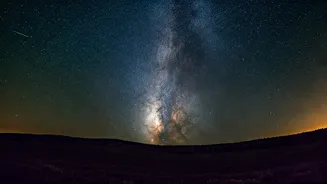
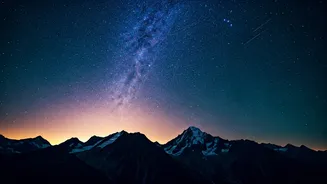
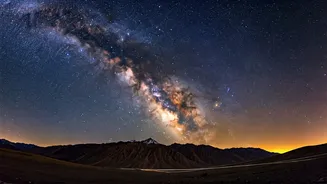
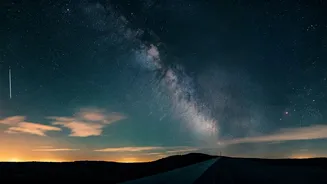
The growing awareness of light pollution has fueled a desire to find and preserve naturally dark skies. India is beginning to embrace this, with the establishment of its first official Dark Sky Reserve in Hanle, Ladakh. Other regions known for their pristine skies include Spiti Valley in Himachal Pradesh and parts of the Thar Desert in Rajasthan. In a significant step, Maharashtra's Pench Tiger Reserve was designated India's first Dark Sky Park in early 2024, combining wildlife conservation with the preservation of the night sky. These locations are becoming havens for astro-tourists seeking the profound experience of seeing the Milky Way arch across a sky filled with thousands of stars—a sight that has inspired humanity for millennia but is now a rarity for many.