






The High Cost of Digital Clutter
The modern knowledge worker's desk is no longer a physical space but a digital one, cluttered with countless applications, websites, and notifications. We juggle emails in one tab, project plans in another, chat messages in a separate app, and reference
documents scattered across a dozen more. This constant shuffling, known as context switching, comes with a significant cognitive penalty. Research shows that every time we switch tasks, our brain needs time to reload the new context, a process that can take up to 23 minutes to fully recover from. This creates what psychologists call "attention residue," where a part of our focus remains on the task we just left. The cumulative effect is not just lost time, which can amount to a significant portion of the workday, but also increased stress, mental fatigue, and a higher chance of errors. This state of persistent cognitive overload, or digital fatigue, impairs our ability to perform deep, focused work and can lead to burnout.
Enter the AI Synthesizer
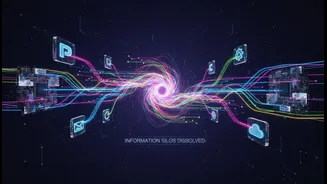
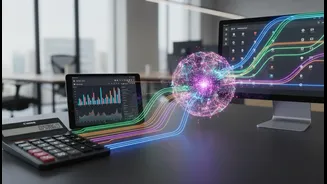
Imagine an intelligent assistant that doesn't just live in one app but operates across all of them. This is the core idea behind cross-app AI workspace synthesis. Instead of you manually hunting for a sales figure in an email to put into a presentation while referencing a chat conversation, a synthesis tool does it for you. These platforms act as a unified layer on top of your existing software stack—your emails, documents, spreadsheets, and chat apps. They use artificial intelligence, particularly large language models, to understand the content and context of your information, no matter where it's stored. The goal is to break down the digital walls between applications, creating a single, cohesive environment where information can be found, combined, and acted upon without constant tab-hopping.
How Synthesis Tames the Chaos
So, how does it work in practice? A cross-app AI tool connects to your various applications like Google Workspace, Microsoft 365, Slack, and others. Once connected, it can perform complex, multi-step tasks based on a single natural language command. For example, you could ask it to: "Summarise the key action points from my last three meetings with Project X, draft an update email to the team based on the latest project document, and schedule a follow-up call for next week." The AI would access your calendar for meeting notes, find the relevant document in your cloud storage, analyse the content, write a draft email in your style, and then access your calendar again to find a free slot. This process, which would have required you to navigate at least three different applications and hold multiple streams of information in your head, is executed seamlessly by the AI. It essentially turns your scattered apps into a single, queryable database.
Beyond a Tidy Desktop
The benefits of this approach extend far beyond simple convenience. The primary advantage is the dramatic reduction in cognitive load. By outsourcing the work of finding and collating information, you free up mental bandwidth for higher-level thinking, such as strategy, creativity, and problem-solving. This reduces the mental exhaustion that comes from managing an overwhelming number of information sources. Secondly, it enhances focus. With fewer interruptions and less need to context switch, you can maintain a state of deep work for longer periods, leading to higher quality output. Finally, it unlocks hidden knowledge. Information trapped in an old email thread or a forgotten document can be surfaced by the AI when it's relevant to a current task, ensuring that valuable insights aren't lost in the digital clutter.
The Future of Digital Work
Cross-app AI synthesis represents a fundamental shift in how we interact with our digital tools. For years, the solution to every new problem was another specialised app, leading to a fragmented and overwhelming digital ecosystem. Now, the focus is shifting towards integration and intelligence. As AI models become more capable, these unified workspaces will become more powerful, evolving from assistants that fetch information to proactive partners that can anticipate needs, manage workflows, and even automate routine decision-making. This doesn't mean humans become obsolete; it means we can delegate the tedious, administrative aspects of knowledge work to our AI counterparts and concentrate on the tasks that require uniquely human skills. The aim is to make technology work for us, not the other way around, finally clearing the digital fog and allowing for a more focused, productive, and less stressful workday.