


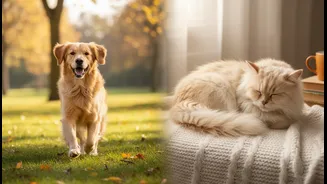



The Pet Effect on Our Brains
For decades, we've believed in the 'pet effect'—the idea that having an animal companion is inherently good for our mental and physical health. The general science backs this up to an extent. Interacting with animals has been shown to decrease cortisol,
the body's primary stress hormone. At the same time, it can boost the production of oxytocin, often called the 'love hormone,' which is crucial for social bonding. This hormonal cocktail creates a sense of calm and well-being. Whether it’s a dog's enthusiastic greeting or a cat's quiet purr on your lap, these moments of connection have a real, measurable biological impact. This foundational knowledge is why many of us instinctively turn to our furry friends after a tough day.
What the New Study Found
A recent study published in Frontiers in Psychology adds a fascinating and complex layer to this understanding. Researchers in the Netherlands followed 188 dog and cat owners, pinging them multiple times a day to record their mood, stress levels, and interactions with their pets in real-time. The study confirmed that interacting with both dogs and cats provided a short-term boost in positive feelings like happiness and cheerfulness. However, when it came to buffering stress in the moment, the results were surprising. Neither pet seemed to reduce their owner's stress levels when the owner was actively feeling stressed. The study suggests that while pets make us happier overall, the belief that a quick cuddle can instantly erase a stressful moment might be more complicated than we thought.
The Curious Case of Cats and Stress
The study uncovered a particularly interesting wrinkle when it came to cats. While interactions with dogs had a neutral effect during stressful times (they didn't make it better, but they didn't make it worse), some data suggested that intense interactions with a cat while stressed were associated with stronger negative feelings. Before cat lovers get defensive, the researchers offer a speculative explanation. Cat interactions are often more passive and emotionally nuanced. When a person is stressed and seeks intense comfort, a cat's independent nature might not meet that specific need, potentially leading to a feeling of being rebuffed. The researchers caution that this finding was tentative and requires more study, but it highlights how a cat's typical behaviour might not align with our human expectations during moments of high anxiety.
The Unwavering Canine Companion
Dog owners, on the other hand, experienced a different dynamic. While interacting with their dog during a stressful event also didn't directly lower stress in that moment according to the Dutch study, it didn't amplify negative feelings either. The role of a dog in stress management might be less about in-the-moment crisis support and more about a long-term lifestyle influence. Dog ownership often encourages physical activity through walks and play, which is a proven stress reducer. They provide structure and routine, and their social nature can help connect us with other people. A dog's consistently enthusiastic and responsive affection provides a different kind of support—one that is active, engaging, and predictable, which can be a powerful antidote to the chaos of a stressful life over the long run.
It's All About the Right Match
Ultimately, the researchers behind the new study concluded that one species isn't 'better' than the other at managing stress. The key takeaway is that dogs and cats appear to provide similar overall emotional benefits, but through different mechanisms. The choice depends heavily on the owner's personality, lifestyle, and needs. An active individual might find a dog's energy a perfect outlet for their stress, while a more introverted person might find the quiet, non-demanding companionship of a cat more soothing. One of the lead researchers, Dr. Sanne Peeters, noted that the best results likely come from a good owner-pet 'match.' It's not about finding the perfect pet, but the perfect pet for you.