



The Solar System’s Strangest Clock
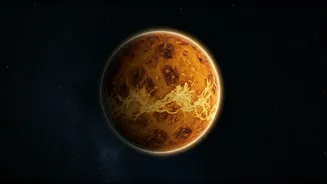
Imagine a world where you could celebrate your first birthday before the sun has even set on the day you were born. Welcome to Venus. This seemingly simple statement is not science fiction; it’s a fact of planetary mechanics. A year on Venus—the time
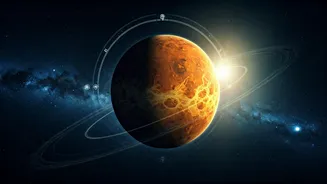
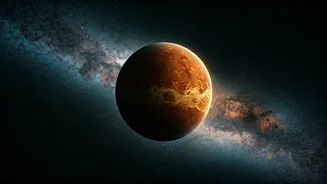
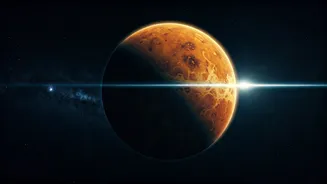
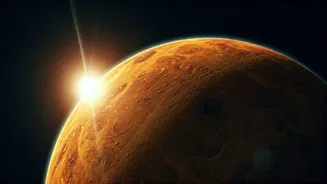
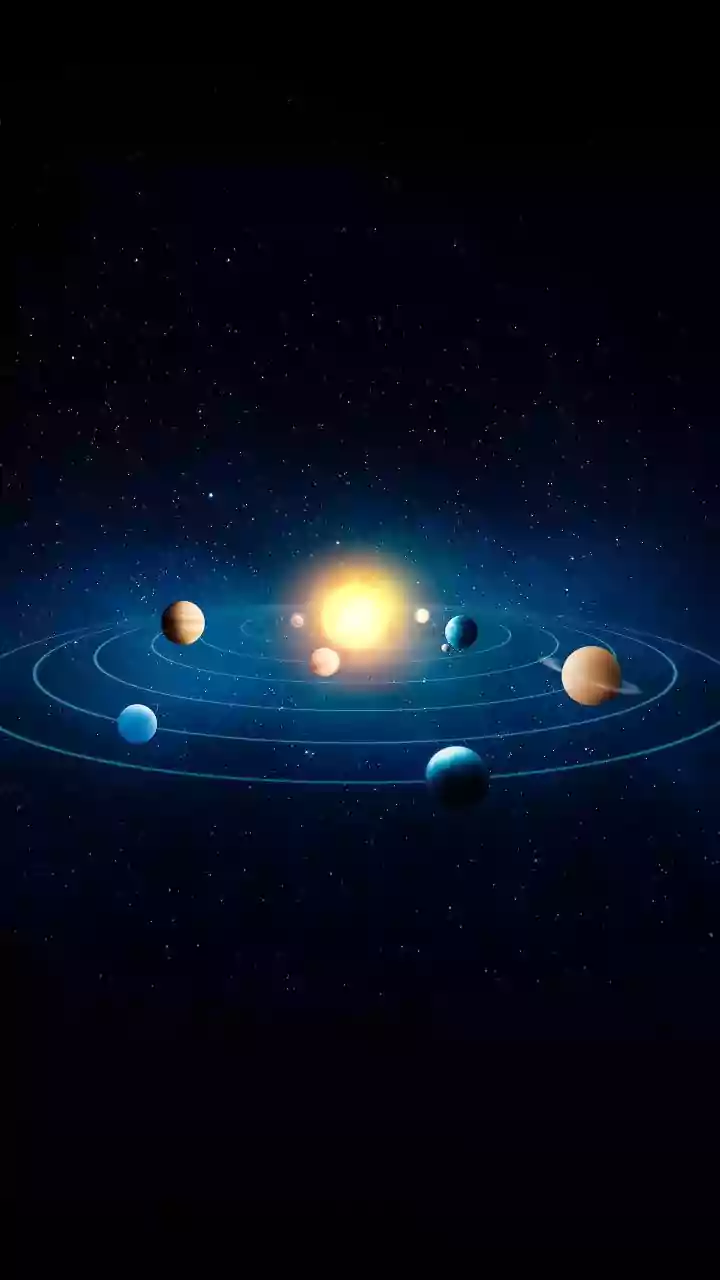
it takes to complete one full orbit around the sun—is approximately 225 Earth days. This is a fairly quick trip compared to Earth's 365 days. Here’s where it gets truly strange: the time it takes for Venus to complete just one full rotation on its axis, what we call a sidereal day, is a sluggish 243 Earth days. So, yes, a single Venusian day is indeed longer than an entire Venusian year. It’s a concept that breaks our Earth-centric understanding of time, making Venus one of the most peculiar places in our cosmic neighbourhood.
Wait, There Are Two Kinds of 'Day'?
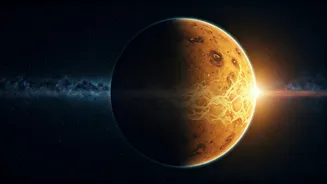
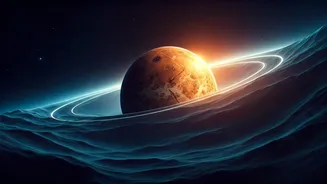
To fully grasp this, it’s important to distinguish between two types of days. A 'sidereal day' is the time it takes for a planet to rotate 360 degrees on its axis. On Earth, this is about 23 hours and 56 minutes. When the headline says a Venusian day is 243 Earth days long, it’s referring to this sidereal day. However, there's also the 'solar day', which is the time it takes for the sun to appear in the same position in the sky (e.g., from one noon to the next). On Earth, this is our familiar 24-hour day. Because Venus rotates backwards (more on that in a moment) while it orbits the sun, its solar day is actually much shorter than its sidereal day. One sunrise-to-sunrise cycle on Venus takes about 117 Earth days. So, while a full spin takes longer than a year, you would experience roughly two 'days' (in the sunrise-sunset sense) in a single Venusian year. Confusing? Absolutely. But it’s all part of what makes Venus so fascinating.
The Slow, Backward Spin
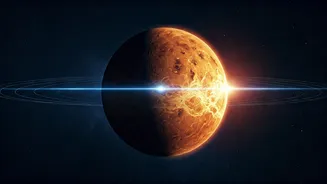
The primary reason for this temporal weirdness is Venus's incredibly slow and retrograde rotation. While most planets in our solar system, including Earth, spin counter-clockwise on their axis, Venus spins clockwise. If you could stand on its surface, you would see the sun rise in the west and set in the east. This rotation is also agonizingly slow. A person on Venus's equator would experience a rotational speed of just 6.5 km/h—a comfortable jogging pace. For comparison, Earth’s equator spins at a blistering 1,670 km/h. This lethargic, backward spin means the planet barely turns as it speeds along its orbit, creating the bizarre mismatch between the length of its day and its year.
Why Is Venus So Strange?
Scientists don't have a single, definitive answer for why Venus is the solar system's oddball, but there are a couple of leading theories. One popular hypothesis suggests that early in its history, Venus was struck by a massive planet-sized object. Such a cataclysmic impact could have not only slowed its original rotation to a near-standstill but potentially reversed it entirely. Another theory points to Venus’s incredibly thick and heavy atmosphere—90 times denser than Earth’s. Over billions of years, powerful atmospheric tides, creating friction between the dense air and the solid planet, may have acted as a brake, gradually slowing its spin down to its current crawl. It’s possible a combination of these factors is responsible. Whatever the cause, it turned Venus into a planet unlike any other.
A World of Extremes
This strange timekeeping is just one feature of a truly hellish world. Venus is the hottest planet in the solar system, with surface temperatures averaging 465°C—hot enough to melt lead. Its surface is permanently shrouded in thick clouds of sulphuric acid, and the atmospheric pressure is so intense it would crush you instantly. It’s a runaway greenhouse effect in action, a cautionary tale written in the sky. The fact that its day-year cycle is as extreme as its climate only adds to its alien nature. It’s a world that is both our 'twin' in size and our complete opposite in almost every other way.