







Breaking Down the Numbers
The headline figure of a 1.7 million net job gain is the result of a complex calculation. According to a Gartner report from November 2026, AI is expected to create approximately 10.6 million new jobs globally by 2030 while eliminating 8.9 million existing
ones. This challenges the narrative of a 'job apocalypse', suggesting a period of intense transformation rather than outright destruction. The report underscores that the most advanced organisations view AI not as a tool for labour replacement, but as a catalyst to reinvent their operations. It’s also important to distinguish between jobs lost and jobs that are simply deferred; Gartner notes that business decisions influenced by AI have already led to postponed hiring for millions of roles, a trend expected to continue.
The Transformation, Not Elimination, of Work
While up to 1.8% of the global workforce may experience job loss directly due to AI by 2030, a much larger group will face a different reality: transformation. Gartner projects that over 20% of all workers, or about 435.5 million people, will have to adapt to fundamental changes in their roles. Their responsibilities, workflows, and processes will evolve as AI is integrated. This shift means that for many, the core of their job will change, moving away from routine tasks and towards work that requires human oversight, creativity, and strategic input. Firms that have already adopted AI are seeing stronger growth in labour demand than those that have not, indicating technology can support human capabilities.
Which Sectors Will See the Biggest Changes?
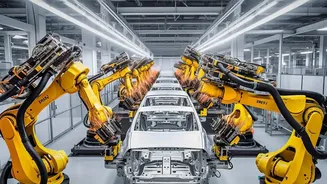
The impact of AI will not be uniform across industries. The technology sector, where nearly 70% of the workforce has high AI exposure, is paradoxically poised for the largest net increase, gaining 1.9 million jobs while losing 400,000. Asset-intensive industries like manufacturing will see a near balance, with 6.4 million jobs created and 6 million lost. The public sector, however, is projected to face a net loss of 500,000 roles. For India specifically, the challenge is twofold: creating jobs for a growing workforce while adapting to these technological shifts, as many current jobs are in sectors less immediately exposed to AI, which could slow the transition to higher-productivity roles.
The Rise of New and 'Augmented' Roles
The jobs being eliminated are typically those involving repetitive, data-heavy tasks that algorithms can perform more efficiently. However, this automation is creating demand for entirely new roles. Demand for AI and machine learning specialists is surging, alongside positions that didn't exist a few years ago, such as prompt engineers and AI auditors. Beyond these new technical jobs, AI is also augmenting existing professions. By handling the routine parts of a job, AI frees up human workers to focus on areas where they excel: critical thinking, client engagement, verification, and strategic decision-making. This creates a future where the most valuable professionals are not those who can be replaced by AI, but those who can effectively direct it.
Preparing for the AI-Powered Future
The key takeaway from these forecasts is the undeniable need for adaptation. For both individuals and businesses in India, the coming years will be defined by reskilling and upskilling. While reports from NASSCOM suggest India has a high rate of AI skill penetration, a significant skills gap remains, with companies struggling to hire enough qualified talent. As AI adoption continues, the demand for human-centric skills like collaboration, emotional intelligence, and complex problem-solving will intensify. The focus must shift from performing routine tasks to supervising automated systems and leveraging AI-driven insights. For India's large and young workforce, this means prioritising continuous learning and developing the uniquely human skills that AI cannot replicate.