








Data: The All-Seeing Eye
Effective conservation starts with knowing what you're protecting. In the dense forests and vast landscapes of India, technology acts as an all-seeing eye, providing crucial intelligence that was once unimaginable. Geospatial technologies like GIS and satellite
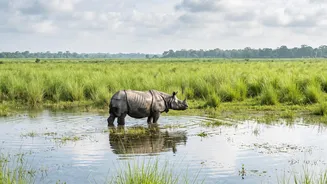
imagery help monitor deforestation, map wildlife corridors, and track habitat changes in real-time. For instance, in Kaziranga National Park, GIS helps officials monitor the one-horned rhinoceros population and manage the impact of seasonal floods. The most revolutionary tool, however, has been the camera trap. These devices, often enhanced with Artificial Intelligence (AI), have transformed wildlife monitoring. India's globally acclaimed tiger census relies heavily on camera traps to identify individual tigers by their unique stripe patterns, allowing for accurate population estimates. Beyond counting animals, AI-powered systems like TrailGuard can now distinguish between an animal and a human intruder, sending real-time alerts to anti-poaching units and dramatically reducing response times. In Kerala, the HAWK system digitises crime data to identify poaching hotspots and patterns, turning scattered information into predictive intelligence. This data-driven approach allows authorities to allocate limited resources effectively, focusing patrols where they are needed most.
Enforcement: The Thin Green Line
Data is useless without the ability to act on it. This is where enforcement comes in, forming the frontline of wildlife defence. India has a robust legal framework, principally the Wild Life (Protection) Act of 1972, which prohibits the hunting of endangered species and establishes protected areas. However, the law's effectiveness hinges on the dedicated personnel who implement it on the ground—the forest guards and rangers who form the 'thin green line'. These individuals face immense challenges, including vast territories to patrol, sophisticated international poaching networks, and significant personal risk. Despite these hurdles, enforcement is a critical deterrent. Specialised agencies like the Wildlife Crime Control Bureau (WCCB) work to dismantle trafficking rings that smuggle everything from tiger bones to pangolin scales. The problem is compounded by practical challenges, such as low conviction rates, procedural difficulties in prosecuting wildlife crimes, and a lack of resources. Strengthening this pillar requires not just more boots on the ground, but also better training, inter-agency coordination, and judicial sensitisation to the unique nature of wildlife offences. When technology-driven data and strong enforcement converge, the results can be powerful, leading to more arrests and seizures.
Local Action: The Heart of Conservation
For decades, the dominant model of conservation was exclusionary, creating 'fortress' parks that often alienated the very communities living alongside wildlife for generations. Today, there is a growing consensus that this approach is unsustainable. Long-term success in wildlife protection is impossible without the active support and involvement of local and indigenous communities. These communities possess invaluable traditional ecological knowledge and are often the first to notice unusual activity in their ancestral lands. When they are seen as partners rather than obstacles, they become the most effective guardians of biodiversity. Across India, community-led initiatives are yielding remarkable results. In Nagaland, villages have transformed community-owned forests into safe havens for Amur falcons and other species once hunted. In Arunachal Pradesh, the Bugun tribe partnered with the Forest Department to create a community reserve to protect the critically endangered Bugun Liocichla, a bird found nowhere else in the world. Similarly, communities around Bihar's Valmiki Tiger Reserve have engaged in ecotourism, reducing human-tiger conflict and providing alternative livelihoods. By ensuring that conservation benefits flow back to the people who bear the costs of living with wildlife, these models build a foundation of trust and shared purpose.