






What Is a Super New Moon?
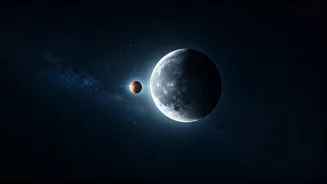
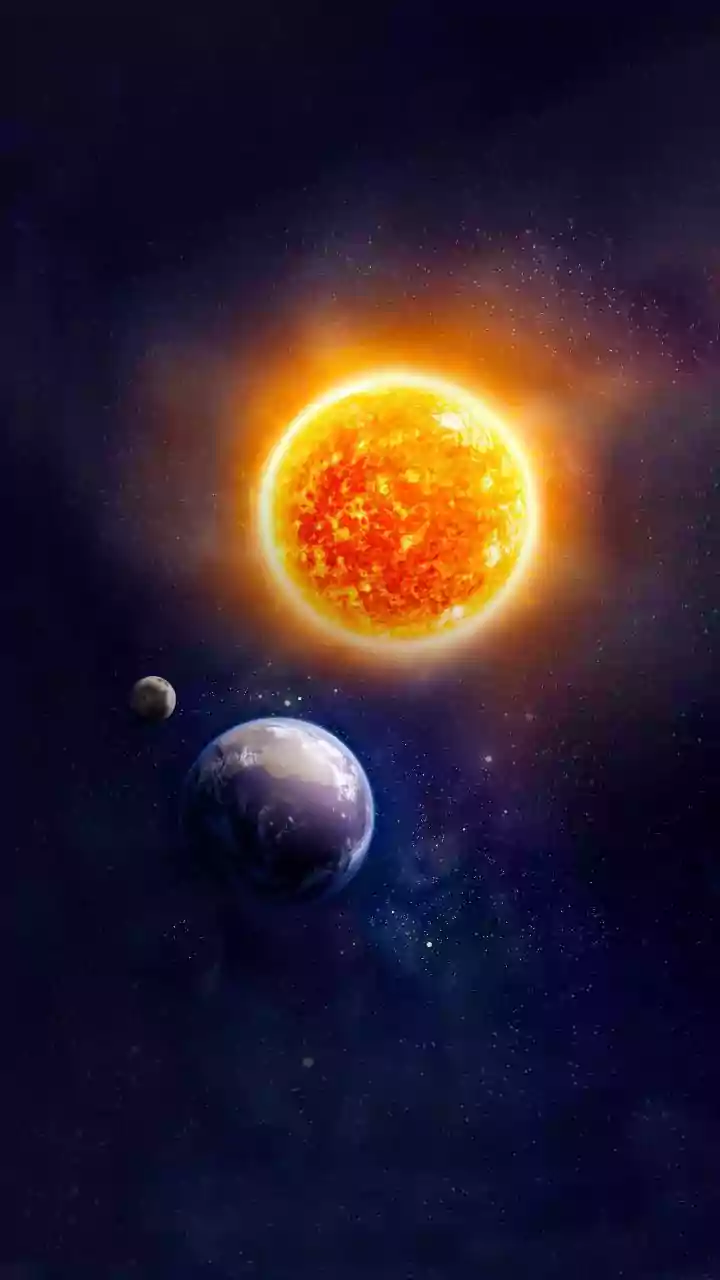
Let's break down the name. A 'New Moon' occurs when the Moon is positioned between the Earth and the Sun. From our perspective, the side of the Moon facing us is not illuminated by sunlight, making it essentially invisible in the night sky. A 'Supermoon'
happens when the Moon's orbit brings it to its closest point to Earth, known as the perigee. So, a 'Super New Moon' is simply a new moon that occurs when the Moon is near its perigee. While the 'super' part makes it sound dramatic and does have a stronger gravitational effect on tides, for stargazers, the most important part of the equation is 'new moon'. It means our biggest source of natural light pollution, the Moon itself, is completely out of the picture, leaving behind a deep, dark sky.
Why This Creates the Perfect Canvas
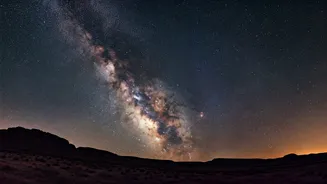
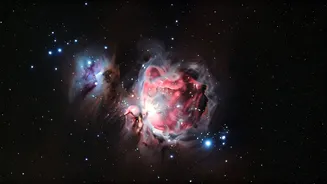
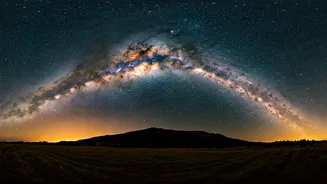
Imagine trying to watch a film in a brightly lit room. You’d miss all the subtle details in the darker scenes. The night sky works the same way. The faint, ethereal glow of the Milky Way, which is the galaxy we live in, is composed of billions of distant stars. This light is incredibly delicate and easily washed out. Even a sliver of a crescent moon can be bright enough to obscure the Milky Way's magnificent core. During a new moon, however, the sky is at its darkest possible state. This 'moonless' condition is the absolute best time for deep-sky observation. It allows the faint light from distant nebulae, star clusters, and the grand sweep of our own galaxy to shine through in all its glory.
Escape the City Glow
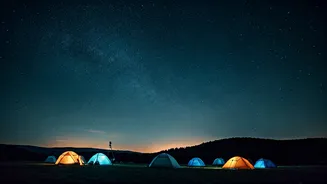
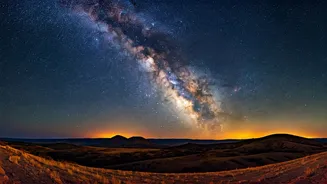
The biggest challenge for most of us, especially in cities like Mumbai, Delhi, or Bengaluru, isn't the Moon—it's man-made light pollution. The constant glow from streetlights, buildings, and vehicles creates a bright haze that blankets the night sky. To truly take advantage of the moonless night, you need to find a 'dark site'. This means travelling at least 50-100 kilometres away from a major city centre. Use online tools like a light pollution map (like lightpollutionmap.info) to find areas with darker skies near you. National parks, remote farmlands, and hill stations are often excellent choices. Even finding a local park or an open field on the outskirts of your town can make a significant difference.
How to Find the Milky Way
Once you're in a dark location, finding the Milky Way is easier than you think. First, give your eyes time to adjust to the darkness—it can take up to 20 minutes for them to become fully sensitive. Avoid looking at your phone screen, as its bright light will ruin your night vision. To find the Milky Way, you can use a stargazing app like Stellarium or SkyView on your phone (use the red-light mode to preserve night vision). These apps use your phone's GPS and compass to show you exactly where to look. Generally, in the Northern Hemisphere, the bright, dense core of the Milky Way is most visible during the summer months, appearing as a hazy, cloud-like band stretching across the sky, often low towards the southern horizon.
Gearing Up: Less Is More
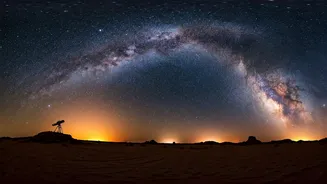
You don't need an expensive telescope to enjoy this celestial show. In fact, the Milky Way is so vast that it's best appreciated with a wide field of view. The most important tool you have is your own eyes, once they are dark-adapted. A simple pair of binoculars is the perfect next step. They will gather more light than your eyes alone, revealing a stunning amount of detail and turning that faint, cloudy band into a river of countless tiny stars. A comfortable reclining chair and a warm blanket can make the experience far more enjoyable, allowing you to lie back and soak in the cosmic view for hours.
Capturing the Cosmos on Your Phone
Think you need a professional camera? Think again. Many modern smartphones are capable of capturing decent images of the Milky Way. You will need a small, stable tripod to keep your phone perfectly still. Switch your camera app to 'Pro' or 'Expert' mode to manually control the settings. Set the ISO between 1600 and 3200, open the aperture as wide as possible (the lowest f-number), and set the shutter speed to between 15 and 30 seconds. Use a self-timer to avoid shaking the phone when you start the exposure. The results may not be Hubble-quality, but capturing your own photo of our galaxy is an incredibly rewarding experience.