
The Red Planet’s Gathering Storms
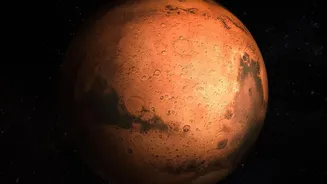
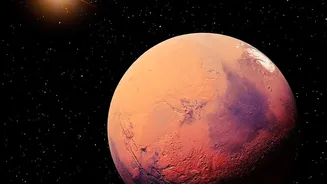
Imagine a dust storm so vast it covers an entire continent, or even the whole planet. On Mars, this is a reality. While some storms are local, others can grow into what scientists call “planet-encircling dust events”. These are not just small whirlwinds;
they are colossal weather systems that inject massive amounts of fine, sand-like particles high into the thin Martian atmosphere. For weeks or even months, they can turn daylight into a dim, reddish twilight across the globe, dramatically changing the planet's climate by absorbing sunlight and warming the upper atmosphere. These events happen every three to four Mars years (about six to eight Earth years), and scientists are still working to understand exactly how they form and evolve.
A Rover's Worst Nightmare
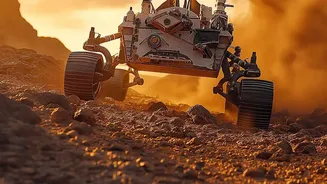
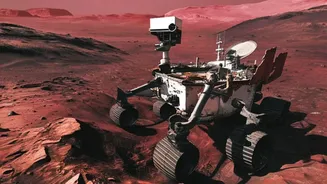
For a solar-powered rover, a global dust storm is a direct threat to its survival. The problem is twofold. First, the thick dust cloud blots out the sun, sometimes blocking up to 99% of direct sunlight. This drastically cuts the power generated by the rover's solar arrays, starving it of the energy needed to operate, communicate, and, most critically, keep its internal electronics warm against the bitter Martian cold. Second, as the storm subsides, the dust settles, coating everything in a fine layer. If this dust covers the solar panels, it permanently reduces their efficiency, even after the skies clear. This is precisely what led to the end of the legendary Opportunity rover mission. After more than 14 years of exploration, a planet-encircling storm in 2018 cut off its power source, and the rover was never heard from again.
The Weather Satellite Network for Mars
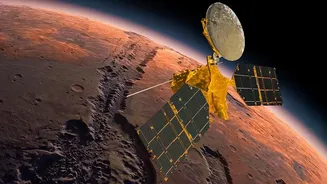
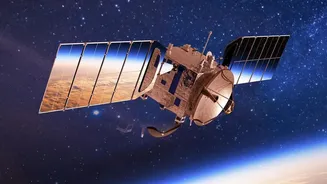
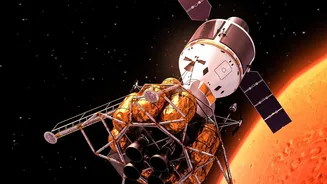
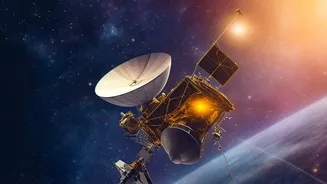
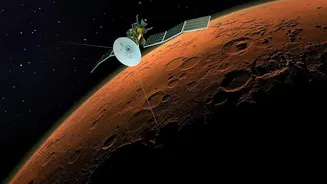
You cannot stop a Martian dust storm, but you can see it coming. This is where a fleet of orbital spacecraft becomes essential. Orbiters like NASA’s Mars Reconnaissance Orbiter (MRO) and Mars Odyssey act as a sophisticated weather service for the Red Planet. The MRO is equipped with instruments like the Mars Color Imager (MARCI), which captures a daily global map of the planet, allowing scientists to spot storms as they begin and track their growth in real-time. Another instrument, the Mars Climate Sounder, measures atmospheric temperatures, detecting the warming effect of dust being lofted high into the atmosphere. This orbital teamwork provides mission controllers on Earth with the vital data needed to protect assets on the surface.
From Forecast to Survival Mode
When orbiters detect a major storm brewing, engineers on Earth spring into action. They use the storm tracking data to make critical decisions for solar-powered vehicles like the now-retired InSight lander. Long before the storm hits, they can command the rover to cease all non-essential science activities to conserve energy. The goal is to enter a low-power hibernation state, using just enough energy to run mission-critical heaters and the master clock. This allows the rover to ride out the storm, waiting for the skies to clear enough to begin recharging its batteries. For the Opportunity rover, this strategy successfully saved it from a major storm in 2007, but the even more intense storm of 2018 proved too much for the aging explorer to handle.
Future-Proofing Power on Mars
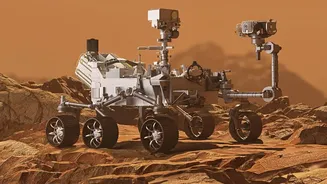
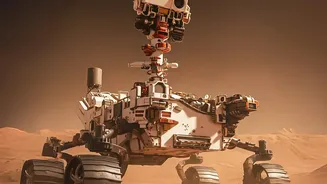
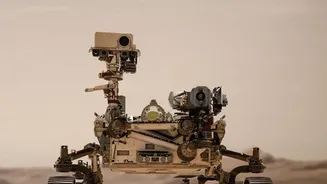
The tragic loss of Opportunity highlights the vulnerability of solar power. In response, some missions like the Curiosity and Perseverance rovers use a different power source: a Radioisotope Thermoelectric Generator (RTG), which is essentially a nuclear battery. These rovers are largely immune to dust storms. However, solar technology remains a crucial and cost-effective option for many missions. Engineers are developing lighter, more efficient solar panels and exploring new dust-clearing technologies. These include electrostatic systems that use electric fields to repel dust and even clever techniques like using a robotic arm to trickle sand nearby, letting the wind carry it across the panels to knock dust loose. This constant innovation ensures that even with the threat of storms, the sun can continue to power our exploration of Mars.