






In-Cabin or In The Hold: What’s the Difference?
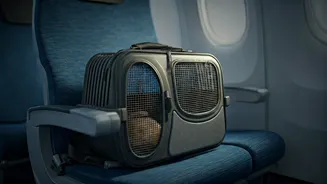
The first decision is where your pet will travel. Most Indian airlines offer two options, depending primarily on your pet's size and weight. Small dogs and cats can sometimes travel in the cabin with you. Airlines like IndiGo and Air India have policies
for in-cabin travel, but with strict weight limits. Typically, the combined weight of your pet and its carrier must be under 7-10 kg. The pet must remain in its carrier, stowed under the seat in front of you for the entire flight. For larger pets, the only option is to travel in the cargo hold. This can be as checked baggage on the same flight as you, or as manifest cargo, which is handled separately. The cargo hold is temperature-controlled and pressurised, but it's a different environment than the cabin.
The Booking Process: Don't Leave It Late
You cannot simply show up at the airport with your pet. Booking a spot for your animal companion must be done in advance, often at least 48-72 hours before your flight. Most online travel agencies cannot process pet bookings, so you'll need to contact the airline directly via their customer service helpline or at a city ticketing office. Be aware that airlines have a limit on the number of pets allowed on each flight—often just two—so booking early is crucial to secure a spot. This is especially true for in-cabin travel. You should always confirm the airline's specific policy for your route before booking your own ticket, as some routes or aircraft types may not accept pets.
Essential Paperwork: Your Pet's Passport to Fly
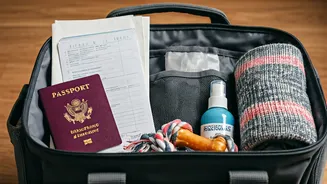
Having the correct documentation is non-negotiable. Every airline in India requires a 'fit-to-fly' health certificate from a registered veterinarian. This certificate must typically be issued within 10 days of travel, though some airlines may ask for one issued within 24-72 hours. Alongside the health certificate, you will need proof of up-to-date vaccinations, with the rabies vaccination being the most important. It's a good idea to carry both digital and printed copies of all documents. For some domestic travel, you may also need a No Objection Certificate (NOC) from the Animal Welfare Board of India (AWBI), which can be applied for online.
Choosing the Right Carrier
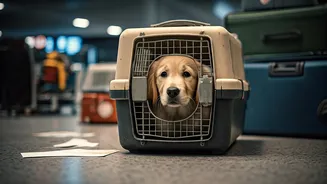
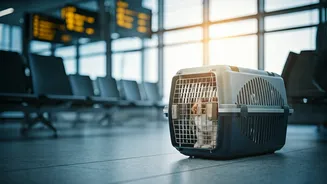
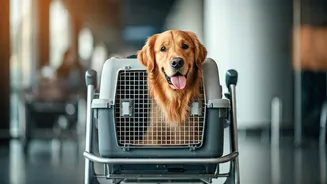
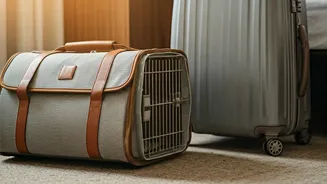
Your pet's carrier is its home for the journey, and airlines have strict requirements. For in-cabin travel, a soft-sided, well-ventilated, and leak-proof carrier is standard. It must be small enough to fit under the seat in front of you; a common dimension is around 17.5 x 12 x 9 inches, but you must check your specific airline's rules. For pets travelling in the cargo hold, a hard-sided, IATA-compliant crate is mandatory. The crate must be large enough for your pet to stand up, turn around, and lie down comfortably. To reduce stress on the day of travel, get the carrier weeks in advance and help your pet get accustomed to it at home.
Breed and Health Restrictions
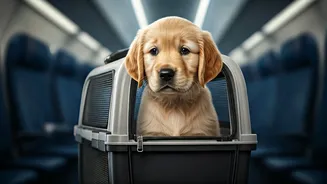
Not all pets are cleared for takeoff. Airlines have restrictions based on age, health, and breed. Puppies and kittens must generally be at least 8-10 weeks old to fly. Pregnant pets are usually not allowed. A significant restriction applies to brachycephalic, or snub-nosed, breeds like Pugs, Bulldogs, Boxers, and Persian cats. These animals are highly susceptible to respiratory distress and heatstroke during air travel, so many airlines refuse to carry them in the cargo hold or have very strict temperature-based rules for their transport. Even for in-cabin travel, owners of these breeds may face extra scrutiny.