

The Unseen Threat From Our Sun
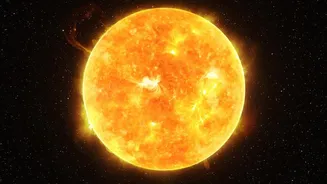
Our sun, the life-giving star at the center of our solar system, has a volatile side. It constantly sends out a stream of charged particles known as the solar wind. But sometimes, it unleashes much more powerful outbursts. These events, collectively known as space
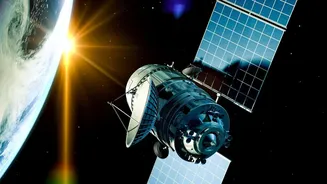
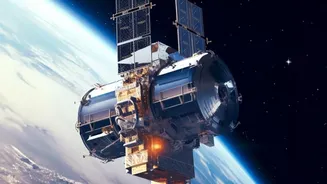
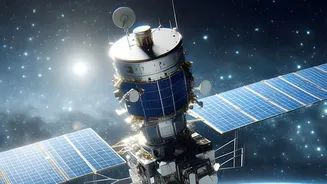
weather, include solar flares—immense explosions on the sun's surface—and coronal mass ejections (CMEs), which are massive clouds of plasma and magnetic fields hurled into space. While Earth's magnetic field and atmosphere protect us on the ground, satellites orbiting above are far more exposed. When these solar storms are aimed at Earth, they can bombard our orbital infrastructure with high-energy particles, creating a hazardous radiation environment.
Satellites in the Firing Line
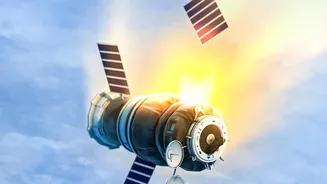
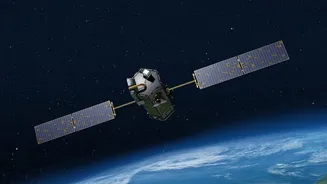
For a satellite, a severe space weather event is like flying through a storm of microscopic bullets. This radiation can cause several types of damage. One of the most common issues is the 'single-event upset' (SEU), where a single high-energy particle strikes a sensitive electronic component, flipping a bit in its memory from a 0 to a 1 or vice-versa. This can result in phantom commands or system errors. Over time, the cumulative effect of radiation, known as the 'total ionizing dose', can degrade a satellite's solar panels and damage its instruments, shortening its operational life. In more extreme cases, severe charging from plasma can cause electrical discharges that permanently destroy components. Solar storms can also heat Earth's upper atmosphere, causing it to expand and increase drag on satellites in low-Earth orbit, which can cause them to lose altitude.
A Global Network of Solar Watchers
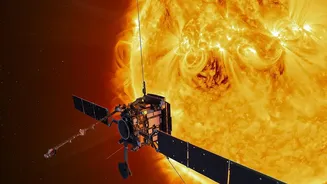
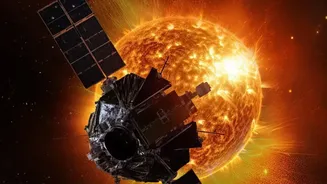
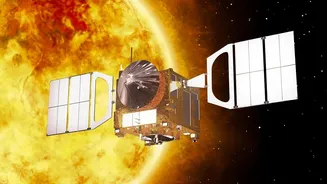
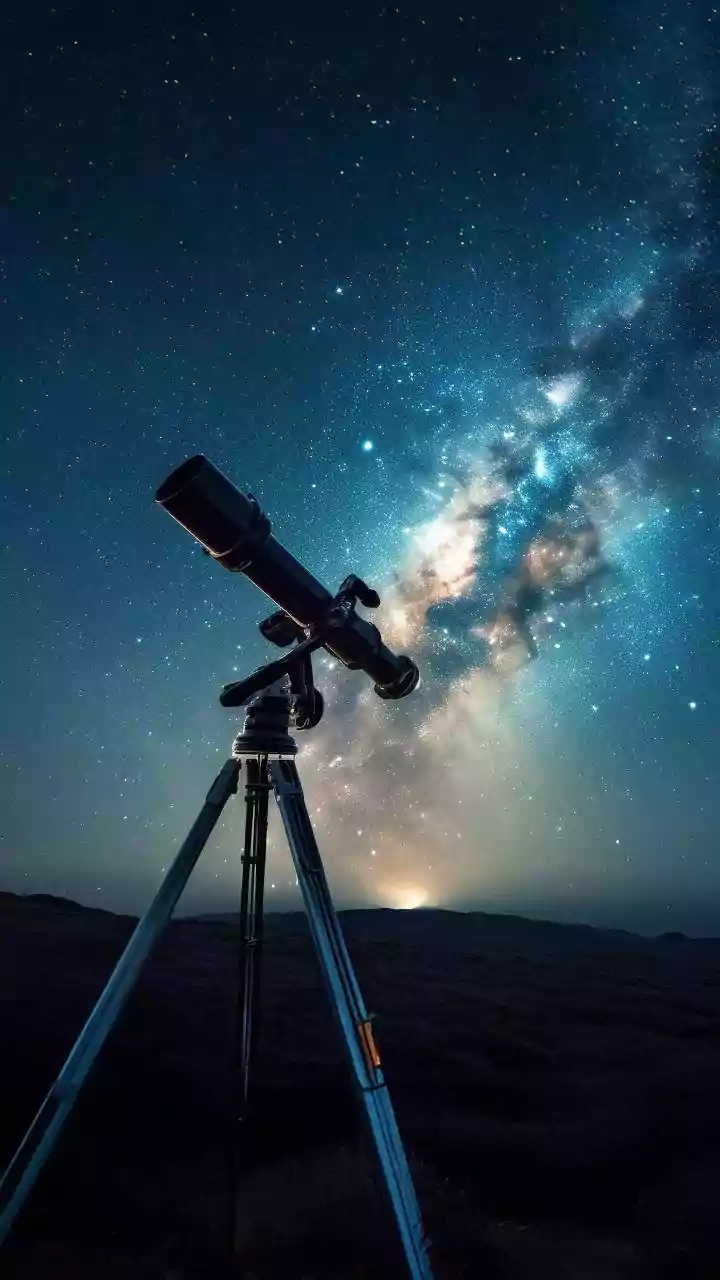
Just as meteorologists forecast weather on Earth, space weather forecasters monitor the sun to predict these solar storms. This crucial task is performed by a network of organizations around the world. In the United States, the primary civilian agency is NOAA's Space Weather Prediction Center (SWPC). The SWPC operates 24/7, using data from a host of satellites and ground-based observatories to keep an eye on the sun's activity. Satellites like the Geostationary Operational Environmental Satellites (GOES) and the Deep Space Climate Observatory (DSCOVR) provide real-time imagery of the sun and measure the solar wind. This allows forecasters to see CMEs as they erupt and predict when they will arrive at Earth, typically one to three days later.
From Forecast to Protective Action
Receiving a forecast for a major solar storm is the critical first step; what happens next is what saves the satellites. When the SWPC or a similar agency issues a warning, satellite operators spring into action. Based on the forecast's severity, an operator can take several protective measures. For example, they might temporarily power down non-essential or particularly sensitive electronic components, placing the satellite into a 'safe mode'. This reduces the risk of damage from electrical upsets or burnouts. Operators can also choose to reorient the spacecraft, using its structure to shield its most vital components from the incoming particle storm. In some cases, they might delay critical maneuvers, like orbit adjustments, until the storm has passed. These proactive measures, made possible by accurate forecasting, are essential for mitigating the risks and ensuring the longevity of multi-million dollar assets that provide services we rely on daily.