



The Sound, The Pressure, and The Static
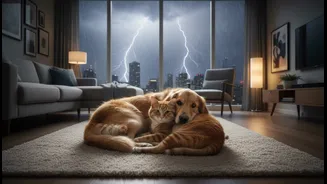
The most obvious culprit for your pet's distress is the deafening crash of thunder. Dogs and cats have hearing far more sensitive than ours, making the unpredictable booms feel overwhelming and threatening. But noise is only part of the story. Pets are
also incredibly sensitive to changes in barometric pressure, often sensing the drop long before the first raindrop falls. This can put them on edge hours before the storm arrives. Furthermore, thunderstorms generate static electricity in the air. This can build up in a pet’s coat, creating an uncomfortable tingling or even delivering small, startling shocks, adding a physical discomfort to their psychological fear.
The Apartment Amplification Effect
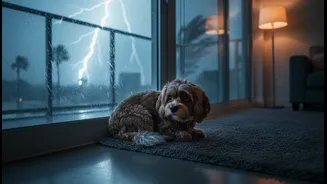
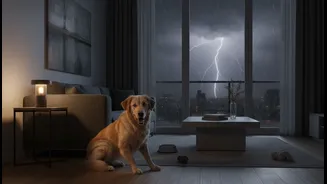
Living in an apartment, particularly in a high-rise building, can inadvertently amplify these stressors. Being higher up might place your pet closer to the epicentre of the noise and the dramatic flashes of lightning, making the experience more intense. The architecture of a building can cause sounds to echo and reverberate in unusual ways. Unlike a house with a garden where a pet might find a familiar earthy spot to ground themselves, an apartment offers fewer escape routes. This can lead to a feeling of being trapped, with nowhere to run from the sensory overload, which can heighten their panic.
Create a Monsoon Safe Haven
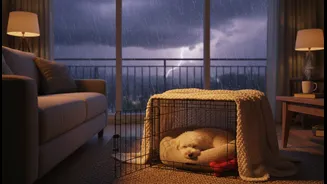
The single most effective thing you can do is create a 'safe space' where your pet can retreat. This doesn't have to be fancy. It could be a crate covered with a heavy blanket, a closet, or even the space under a desk. The ideal spot is one that is interior, windowless if possible, and muffles sound and light. Fill it with their favourite soft bedding and a toy or two. Encourage them to use this space when they are calm so they build a positive association with it. Never force them into the space; allow them to enter and exit freely as they need to feel in control.
Muffle, Distract, and Stay Calm
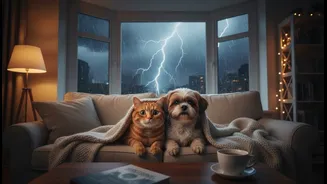
You can actively manage the environment to reduce the storm's impact. Close curtains and blinds to block out the frightening flashes of lightning. Turn on a TV, radio, or a white noise machine to create background noise that can help drown out the thunder. Distraction is also a powerful tool. Engage your pet in a gentle game of tug, or offer them a long-lasting treat or a food puzzle. This can shift their focus from fear to a more positive activity. Most importantly, your own behaviour matters. Pets are highly attuned to our emotions. If you act anxious, it will validate their fear. By remaining calm and composed, you send a powerful signal that everything is okay.
Tools of the Trade and When to Call a Pro
Several products on the market can help. Compression vests, often called 'thunder shirts', apply gentle, constant pressure that has a calming effect on many animals, much like swaddling an infant. Pheromone diffusers for both dogs and cats can also create a more serene atmosphere. However, it's important to recognise when the fear is severe. If your pet's anxiety leads to destructive behaviour, house soiling, or attempts to escape that could cause injury, it's moved into the realm of a true phobia. In these cases, it's crucial to consult your veterinarian. They can rule out any underlying health issues and discuss behavioural modification strategies or, in severe instances, prescribe short-term anti-anxiety medication to help your pet cope safely.