


Our Invisible Stowaways
Whenever humans travel, trillions of microscopic organisms travel with them. This isn't a problem on Earth, but in the pristine environment of the Moon, it poses a significant challenge. The principle of planetary protection dictates that we must avoid
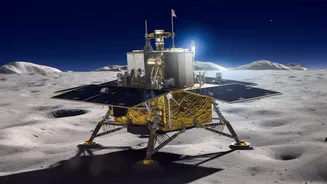
contaminating other celestial bodies with Earth-based life. The primary concern is scientific. If we want to search for signs of past or present lunar life—however unlikely—or study the Moon’s untouched chemistry, we can't have our own microbes confusing the results. A recent NASA-led study highlights this very issue, finding that microbes commonly found in human environments could temporarily survive in certain lunar locations. This makes understanding where they might persist a top priority before missions like Artemis establish a long-term presence.
The Moon's Microbial Refuges
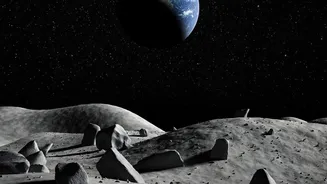
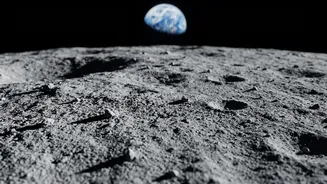
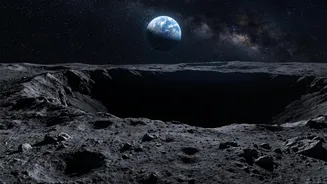
While most of the Moon's surface is hostile to life, bombarded by unfiltered ultraviolet radiation and subject to extreme temperature swings, not all areas are created equal. The most promising hideouts for Earth microbes are the 'permanently shadowed regions' (PSRs) near the lunar poles. These are craters and depressions that haven't seen direct sunlight in billions of years. The Sun's low angle at the poles means that crater rims and other terrain features cast long, permanent shadows, creating ultra-cold traps shielded from harsh radiation. A recent study published in Science Advances modeled conditions at several candidate landing sites for NASA's Artemis program, including Nobile Rim and de Gerlache Rim. It confirmed that these shadowed, frigid areas could provide the perfect conditions for hardy microbes to survive.
Creating a Microbial Risk Map
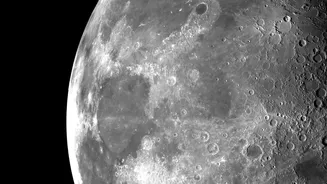
Scientists are not physically swabbing the lunar surface yet. Instead, they are using sophisticated computer simulations to create risk maps. These models combine high-resolution data on the Moon's topography, temperature, and radiation levels—much of it from NASA’s Lunar Reconnaissance Orbiter—with the known survival limits of specific Earth-based microorganisms. The study looked at several microbes typically found on spacecraft, including bacteria like Staphylococcus aureus and fungi like Aspergillus niger. The results showed that some fungi, in particular, are remarkably resilient to radiation and could survive for days or even weeks in these protected niches. The resulting maps show potential 'survivable niches' that can range from the floor of a large crater to an area as small as an astronaut's boot print.
Survival Is Not Growth
It is crucial to distinguish between survival and growth. The research indicates that microbes could persist in a dormant, 'cryptobiotic' state, but it does not suggest they could reproduce or form colonies. The Moon lacks the key ingredients for life as we know it to thrive, most notably stable liquid water. However, the fact that microbes could survive for extended periods is significant. This means that areas targeted for future scientific investigation could be compromised by organisms brought on a previous mission. These microbial maps will therefore be an essential tool for mission planners. They will help NASA and other space agencies decide where to land, what paths rovers should take, and which areas must be designated as off-limits to protect their scientific value.