





A New Strategy for the Red Planet
NASA is shifting its approach to planetary exploration. Instead of relying solely on massive, decade-long missions developed in-house, the agency is embracing public-private partnerships to spur innovation more quickly and affordably. On July 8, 2026,
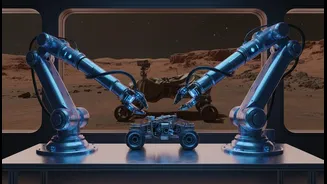
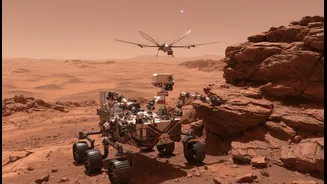
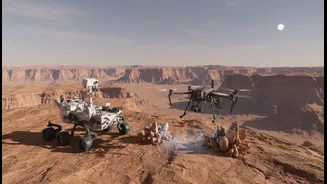
NASA announced seven contract awards under a new initiative called STRIDE, which stands for Science Transport and Robotic Innovation for Deployment and Exploration. These awards, totaling approximately $17 million, bring a diverse group of companies into the fold, tasking them with developing the advanced robotic mobility systems needed for future Mars missions. This strategy allows NASA to tap into the agility and specific expertise of the commercial sector, creating a varied toolkit of technologies that can be deployed on upcoming missions. The goal is to develop robots that can go farther, access tougher terrain, and investigate scientifically rich areas that are currently out of reach.
The Companies Building a Martian Future
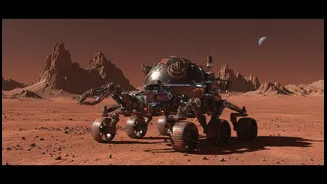
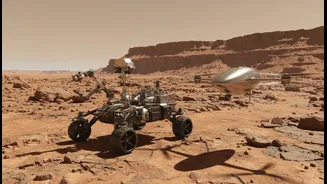
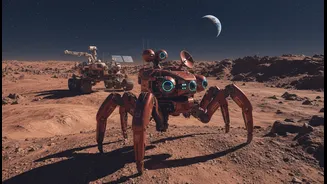
The seven companies selected represent a mix of established aerospace players and innovative newcomers. The list includes AeroVironment, the company behind the groundbreaking Ingenuity Mars helicopter, alongside Astrobotic, Honeybee Robotics, and Intuitive Machines, all of which have deep experience in space systems. Also included are Venturi Astrolab, Ground Control Robotics, and MEI Technologies, each bringing unique capabilities to the table. This selection signals NASA's intent to foster a competitive ecosystem for Martian exploration technology. By funding a range of concepts, the agency is betting that this investment will yield breakthroughs in everything from wheeled rovers and aerial drones to legged robots capable of navigating treacherous landscapes like crater walls or subterranean caves.
Beyond Wheels: Overcoming Martian Obstacles
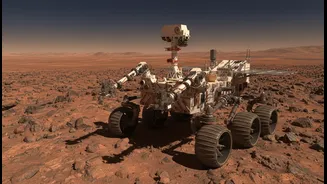
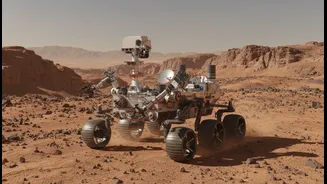
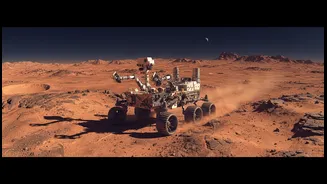
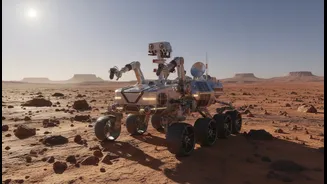
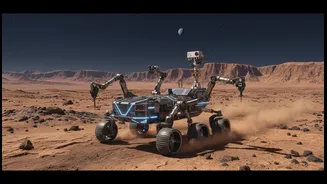
For decades, Mars exploration has been defined by rovers with wheels. While incredibly successful, rovers like Curiosity and Perseverance have their limits, struggling with sandy terrain or steep inclines. The STRIDE initiative is explicitly designed to overcome these limitations. The technologies developed under these contracts will likely include advanced suspension systems for greater stability, new wheel designs that can better handle soft sand, and even bio-inspired robots that walk or jump. The focus is on creating a new class of explorer capable of accessing scientifically valuable, yet hard-to-reach, locations. Imagine a multi-limbed robot rappelling into a canyon to study ancient geological layers, or a swarm of small, autonomous drones mapping lava tubes that could one day shelter human astronauts. These contracts are the first step toward making such scenarios a reality.
Smarter Robots for Faster Science
Mobility is only part of the equation. A major bottleneck in Martian exploration is the communication delay between Earth and Mars, which can be as long as 20 minutes each way. This forces rover drivers on Earth to plan every move with extreme caution, slowing down the pace of discovery. A key part of developing future robotics is enhancing their autonomy. By equipping next-generation robots with advanced AI, they can make more of their own decisions, like navigating around an unexpected obstacle or identifying a scientifically interesting rock for analysis without waiting for instructions from Earth. This will dramatically increase the efficiency of missions, allowing a robot to cover more ground and conduct more science in a single Martian day. The technology funded by these contracts will enable robots to become true field geologists, working semi-independently to unlock the planet's secrets.