



The quest to make artificial intelligence sound truly human has a new frontier: Hindi. OpenAI is rolling out new voice options for ChatGPT that aim for more natural conversations, a significant move for one of its largest and most diverse markets.
Meet Neer and Leher, Your New AI Voices
OpenAI
has officially introduced new Hindi voice options for ChatGPT as part of its GPT-Live-1.1 model update. The two new voices, named Neer and Leher, are designed to make voice interactions feel more familiar and comfortable for Hindi-speaking users. This update is not just about translation; it focuses on improving intonation, vocal expression, and the overall cadence of spoken Hindi to move beyond robotic responses. The goal is to allow users to have more fluid conversations, whether for learning a new topic, managing daily tasks, or simply exploring ideas. This rollout is part of a broader expansion that adds 13 new voices across seven languages, including French, German, and Korean, signalling a clear global strategy. For users in India, the availability of Neer and Leher will depend on their account and app version, with a gradual release planned across the country.
Why India is a Top Priority
India has rapidly become ChatGPT's largest consumer user market in the world, making it a critical focus for OpenAI's growth. Recognizing this, the company has identified voice as a key strategic priority to deepen its reach. According to OpenAI's India Managing Director, Prabhjeet Singh, a significant portion of the Indian population prefers speaking to typing, especially on mobile devices. This 'voice-first' behaviour is particularly prevalent in a country with vast linguistic diversity and varying levels of text literacy. By investing in high-quality Hindi and other vernacular languages, OpenAI aims to make its technology accessible to a billion people who don't use English as their primary language. This focus is not just about consumers; it's also about empowering developers and businesses by providing tools that work seamlessly in local contexts, including the common practice of 'Hinglish' where users mix Hindi and English in the same sentence.
The Challenge of Sounding 'Natural'
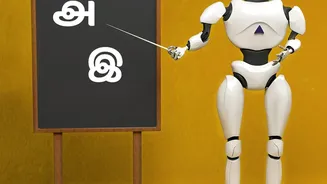
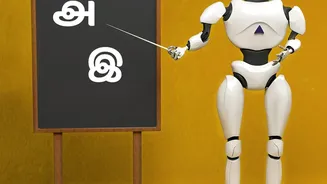
Creating an AI voice that sounds natural in Hindi is far more complex than simple text-to-speech conversion. The language has unique phonetic and prosodic characteristics, like retroflex sounds and nasalized vowels, that have no direct English equivalent. A major hurdle is prosody—the rhythm, stress, and intonation of speech. When AI models trained primarily on English data attempt to speak Hindi, they often apply English stress patterns, resulting in speech that sounds technically correct but culturally 'wrong' to a native listener. Furthermore, natural conversation involves more than just perfect pronunciation; it includes pauses, filler words ('ji', 'haan'), and a conversational flow that formal, translated scripts often lack. The new update with GPT-Live-1.1 aims to address this by improving how the AI handles interruptions and uses more varied, less repetitive phrases while searching for information, making the interaction feel less like a transaction and more like a genuine conversation.
The Future of AI Interaction in India
This enhancement of voice capabilities is more than just a feature update; it represents a significant step toward a more inclusive and accessible digital future in India. As AI becomes more conversational, it lowers the barrier to entry for millions of people who may be less comfortable with text-based interfaces. This could have a profound impact on everything from education, where students can practice conversations in different languages, to small businesses using AI for customer service and marketing. For a nation that is increasingly audio-first, with a booming market for podcasts and voice notes, a naturalnding AI assistant can integrate more seamlessly into daily life. By prioritising voice and regional languages, OpenAI is not just adapting its product for a new market; it's acknowledging that the future of AI must be multilingual and culturally aware to truly benefit all of humanity.